
Students at 500 Universities to Design Semiconductor Chips
- Students at 315 Indian universities designing chips now.
- Driven by new courses, labs & industry-government tie-ups.
- Aims self-reliance in semiconductors; many chips to fabrication.
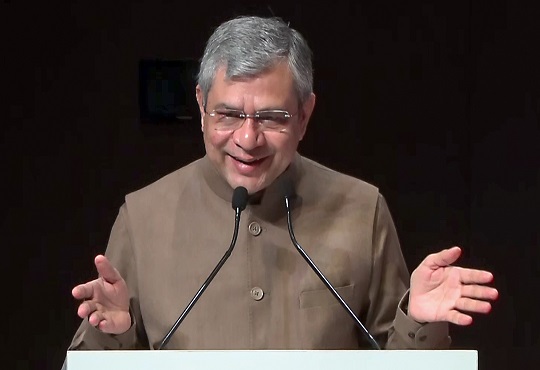
During an event showcasing the progress under the India Semiconductor Mission and several academic initiatives, Union Minister of Electronics and Information Technology Ashwini Vaishnaw revealed that students from 315 universities and engineering colleges all over India are engaged in designing semiconductor chips as part of the countrys efforts to create indigenous chip design capabilities.
The minister explained that student participation dramatically increased because of the continuous government efforts to incorporate chip design as a subject in undergraduate and postgraduate syllabi. The development has been facilitated by the setting up of advanced VLSI and semiconductor design labs in many colleges along with the introduction of core courses and electives on topics such as chip architecture, design verification, fabrication process, and EDA tools.
Moreover, solid partnerships between universities and top industry players like Qualcomm, Intel, AMD, Indian semiconductor companies, and government entities have contributed to the creation of a robust ecosystem. Through national programmes, students have the possibility of working with open, source and licensed EDA software, and they get an opportunity to participate in design challenges, hackathons, and live industry projects, which, in some cases, lead to the tape, out of actual silicon chips.
Also Read: India and Canada Expand Education Ties with McGill AI Centre
According to Vaishnaw, quite a few of these student, designed chips are already at the stage of fabrication, thanks to foundry partnerships and government, supported shuttles (multi, project wafer runs). He referred to it as a generational shift which will eventually empower India to go beyond just being a consumer of semiconductors and becoming a major designer and manufacturer later on.
The initiative is on the same wavelength as the grand vision of Atmanirbhar Bharat in the field of semiconductors which desires not only to cut down import dependency but also to generate high, skilled jobs and place India at the global value chain for AI chips, automotive electronics, defence systems, and IoT gadgets. The minister emphasized that students participation at such a level is nothing short of historic and it will lead to a massive reservoir of chip designers being trained within a few years.
It is predicted that this step will fortify Indias semiconductor ecosystem, enable start, ups in fabless design, and further the goal of national security and technological, as well as economic, self, reliance in the most critical areas.
Current Issue
.jpg)