
Digital Twins and Intelligent Systems in Agriculture
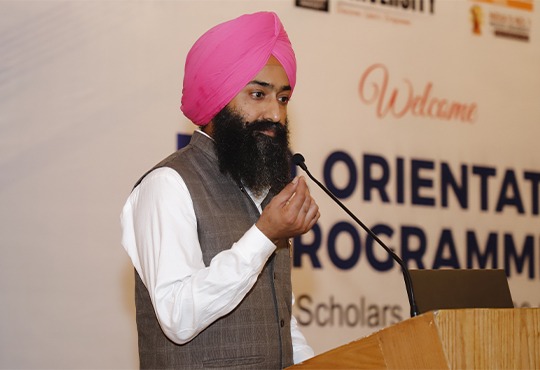 Prof. (Dr.) Simrandeep Singh, Professor and Associate Dean, University Centre for Research and Development (UCRD), Chandigarh University in an interaction with Higher Education Review shared his views on how digital twins are transforming the way farmers and agricultural researchers understand, monitor, and manage crops, soil, water, and farm operations in real time. He also discussed the role of AI, IoT sensors, drones, satellite imagery, and predictive analytics in developing accurate digital twins of agricultural ecosystems, their potential to help farmers anticipate crop stress, disease outbreaks, pest infestations, and changing weather conditions, and how they can enable the simulation of irrigation, fertilisation, crop rotation, and planting strategies before implementation.
How are digital twins transforming the way farmers and agricultural researchers understand, monitor, and manage crops, soil, water, and farm operations in real time?
A digital twin in agriculture is essentially a living, virtual replica of a physical farm system such as crops, soil, water bodies, and equipment that is continuously updated with real-world data. What makes this transformative is the shift from periodic, manual observation to continuous, data-driven awareness. Traditionally, a farmer's understanding of soil moisture, nutrient levels, or plant health depended on visual inspection or occasional lab testing, which meant decisions were often made after a problem had already taken hold. With a digital twin, sensors embedded in the field feed data on soil temperature, moisture, pH, and nutrient composition into a virtual model that mirrors the actual crop cycle in near real time.
This creates a feedback loop where researchers can observe how a crop is likely to respond to a given intervention before it is applied on the ground. For farm operations, it means machinery scheduling, labour allocation, and input application can all be simulated and optimised virtually first. The value lies not just in monitoring but in the ability to correlate multiple data streams such as weather, soil, crop growth stage, and market conditions within a single coherent model. This integrated view allows both smallholder and large-scale farmers to move from fragmented, intuition-based management to a more systemic and evidence-based approach, ultimately improving productivity while reducing waste of water, fertiliser, and energy.
Also Read: Why Emotional Intelligence Is the Future of Effective Management
What role can AI, IoT sensors, drones, satellite imagery, and predictive analytics play in building accurate digital twins of agricultural ecosystems?
Each of these technologies contributes a distinct layer to the digital twin, and their real power emerges when they are integrated rather than used in isolation. IoT sensors placed in soil and on equipment provide granular, ground-level data which include moisture content, temperature gradients, and micro-nutrient levels that satellites and drones cannot capture at the same resolution. Drones add a spatial dimension, flying over fields to capture high-resolution imagery that reveals variability within a single plot, such as patches of stress or uneven germination that would be invisible from the ground. Satellite imagery, meanwhile, offers the macro view: it tracks vegetation indices, land use patterns, and broader climatic trends across large geographies and over long time horizons, which is particularly useful for regional planning and insurance or policy purposes.
Artificial intelligence is the layer that makes sense of this flood of heterogeneous data. Machine learning models can detect patterns across thousands of data points that a human analyst would never notice, whether that is an early spectral signature of disease stress in drone imagery or a subtle correlation between soil electrical conductivity and yield variation. Predictive analytics then takes this a step further, using historical and real-time data to forecast outcomes such as expected yield, disease probability, or optimal harvest windows. Together, these technologies do not just describe the current state of a farm; they allow the digital twin to anticipate future states, which is the essence of what separates a digital twin from simple monitoring software.
How can digital twins help farmers predict crop stress, disease outbreaks, pest infestations, and changing weather conditions before they significantly impact yields?
The predictive strength of digital twins comes from their ability to simulate cause-and-effect relationships rather than simply reporting current conditions. When a digital twin is fed continuous data on temperature, humidity, leaf wetness duration, and historical disease incidence, it can identify the environmental thresholds at which a particular pathogen or pest is likely to proliferate, often days before visible symptoms appear in the field. This is because many crop stresses manifest first at a physiological or spectral level that changes in chlorophyll fluorescence or canopy temperature, for instance, well before they become visible to the human eye. Drone-based multispectral imaging combined with AI pattern recognition can pick up these early warning signs and flag specific zones within a field for closer inspection or targeted intervention.
By integrating hyperlocal weather forecasts with crop growth-stage models, a digital twin can alert a farmer to an approaching frost, heatwave, or heavy rainfall event and simulate its likely impact on the current crop stage, whether that is flowering, grain filling, or harvest readiness. This allows for anticipatory action, such as adjusting irrigation before a heat spell or delaying fertiliser application ahead of expected rain to prevent runoff. The cumulative effect is a shift from reactive crop protection, where farmers respond after damage is visible, to proactive risk management, where interventions are timed precisely to prevent or minimise loss. This has significant implications not just for yield stability but for reducing the overuse of pesticides and fungicides, since interventions become targeted rather than routine.
Can digital twins enable farmers to simulate different irrigation, fertilisation, crop rotation, and planting strategies before implementing them in the field? What potential does this create for resource-efficient agriculture?
This is one of the most practically valuable applications of digital twin technology. Because the virtual model mirrors real soil, crop, and climate conditions, it becomes a sandbox in which different management strategies can be tested without any physical or financial risk. A farmer can simulate, for example, how a 20 percent reduction in irrigation during a particular growth stage would affect yield, or compare the long-term soil health outcomes of different crop rotation sequences over a five-year horizon. Because these simulations run on historical and real-time data specific to that farm, the results are far more reliable than generic agronomic recommendations that may not account for local soil type, microclimate, or water availability.
The resource-efficiency implications are substantial. Water is often the most constrained input in agriculture, and simulation allows farmers to identify the precise irrigation schedule that maximises yield per unit of water rather than simply applying water on a fixed calendar. Similarly, fertiliser application can be modelled to match actual plant uptake curves, reducing both cost and the environmental burden of nutrient runoff. Crop rotation and planting density scenarios can be tested for their effect on soil organic matter, pest cycles, and long-term productivity, allowing farmers to make decisions that balance short-term yield with long-term land sustainability. In essence, digital twins convert farming decisions from one-time, irreversible commitments into iterative, testable choices, which is a fundamental shift in how risk is managed in agriculture.
As climate change increases uncertainty around rainfall, temperature, and extreme weather, how can intelligent agricultural systems support more resilient and climate-smart farming decisions?
Climate change has made historical averages far less reliable as a basis for planning, which is precisely the gap that intelligent agricultural systems are suited to address. Rather than relying on long-term seasonal norms, digital twins integrated with real-time climate data and predictive models can continuously update their forecasts as conditions evolve, giving farmers a rolling, adaptive picture of risk rather than a static one. This allows for what might be called dynamic agronomy, where planting dates, crop variety selection, and input schedules are adjusted in response to the specific conditions of a given season rather than fixed practices repeated year after year regardless of circumstance.
Resilience also comes from the ability to model multiple future scenarios simultaneously. A digital twin can simulate outcomes under a delayed monsoon, an early heatwave, or an unusually wet harvest period, allowing farmers and policymakers to prepare contingency plans in advance rather than scrambling to respond after the fact. At a broader level, aggregating digital twin data across many farms within a region can help identify climate vulnerability hotspots, informing decisions on crop diversification, water infrastructure investment, or insurance mechanisms. For smallholder farmers who often bear the highest climate risk with the least buffer capacity, even modest early warning capabilities can be the difference between a manageable setback and a devastating loss. Climate-smart agriculture, in this sense, is less about a single technology and more about building an information ecosystem that keeps pace with a rapidly changing and increasingly unpredictable environment.
Also Read: The Crucial Role of Higher Education in Building Future Ready Workplaces
What are the biggest challenges in creating reliable digital twins for agriculture, particularly when dealing with diverse soil conditions, microclimates, crop varieties, and fragmented farmland?
The single greatest challenge is heterogeneity. Unlike a factory or an engine, where physical parameters are relatively controlled and repeatable, agricultural land varies enormously even within a few hundred metres, let alone across regions. Soil composition, drainage, microclimate, and crop variety can all differ significantly between adjacent plots, which mean a digital twin calibrated for one farm or even one section of a farm may not generalise well to another. Building models that are both locally accurate and broadly scalable requires large volumes of high-quality, ground-truth data, which is often simply not available in many farming regions, particularly where smallholder and fragmented landholding patterns dominate.
Fragmented farmland compounds this problem in a practical sense as well. Deploying sensor networks, drones, and connectivity infrastructure is far more cost-effective on large, contiguous farms than on small, scattered plots where the economics of instrumentation become difficult to justify for an individual farmer. Data connectivity itself remains a constraint in many rural areas, where inconsistent internet access limits the real-time data transmission that digital twins depend on. There are also challenges of data standardisation and interoperability, since sensors, drones, and satellite platforms often use different formats and protocols, making integration technically demanding. Finally, there is the human and institutional challenge of building trust and digital literacy among farmers, many of whom may be justifiably sceptical of complex technological systems unless they can see clear, demonstrable benefit relative to their existing knowledge and practices. Addressing these challenges requires not just better algorithms but context-sensitive deployment models, shared infrastructure, and strong extension support.
How can universities and research institutions accelerate the development of digital twin technologies by bringing together expertise in agriculture, AI, robotics, data science, and environmental sciences?
Universities are uniquely positioned to serve as neutral, interdisciplinary hubs where the fragmented expertise required for agricultural digital twins can be brought together in a coordinated way. No single discipline holds all the answers here; agronomists understand crop physiology and soil science, computer scientists and AI researchers build the predictive models, robotics engineers develop the sensing and automation hardware, and environmental scientists contextualise findings within broader ecological and climate systems. Institutions that actively break down departmental silos and create joint research centres or labs focused specifically on agricultural digital twins can accelerate innovation considerably compared to isolated, single-discipline research efforts.
Equally important is the role universities can play in creating living laboratories, meaning research farms and field stations where these technologies can be tested under real agronomic conditions over multiple seasons, rather than being validated only in controlled or simulated environments. This kind of longitudinal, field-based validation is essential for building models that are robust to the variability discussed earlier. Universities also have a critical role in capacity building, training the next generation of agronomists and engineers who are comfortable working across disciplinary boundaries, and in extending this technology to farming communities through outreach and extension programmes. Partnerships with government agricultural departments, industry, and farmer cooperatives further help ensure that research outputs translate into field-level impact rather than remaining confined to academic publications. Institutions that combine strong interdisciplinary research capacity with genuine field engagement are best placed to drive meaningful progress in this space.
Looking ahead, could digital twins become a foundation for autonomous and precision agriculture, and what technological or ethical questions must be addressed before that becomes a reality?
Digital twins are likely to become a foundational layer for precision and increasingly autonomous agriculture, precisely because they provide the continuously updated, integrated model of farm conditions that autonomous systems need to make reliable decisions. As sensor costs continue to decline and connectivity improves in rural areas, it is reasonable to expect digital twin adoption to extend well beyond large commercial farms into smallholder and mid-sized operations, particularly if delivered through shared infrastructure or cooperative models that spread the cost burden.
That said, several important questions need careful attention before this vision is fully realised. On the technological side, model reliability and generalisability across diverse agroecological zones remains unresolved, and premature reliance on autonomous decision-making in poorly validated systems could cause real economic harm to farmers who have limited margin for error. Data infrastructure, interoperability standards, and rural connectivity also need substantial investment. On the ethical and social side, questions of data ownership are paramount: farmers must retain control over and benefit from the data generated on their land, rather than having it extracted primarily for the commercial gain of technology providers. There are also legitimate concerns about equity of access, since without deliberate policy intervention, these technologies could widen the gap between well-resourced large farms and smallholders who cannot afford the upfront investment. Questions of accountability in autonomous systems, particularly when an automated decision leads to crop loss, also need clear frameworks. Addressing these questions thoughtfully, alongside the technological development itself, will determine whether digital twins genuinely democratise agricultural resilience or simply concentrate its benefits among those already best positioned to capture them.
About the Author:
Dr. Simrandeep Singh is Professor and Associate Dean-Research at Chandigarh University, with over 16 years of academic and research experience. He holds a Ph.D. in Image Processing and completed a Post-Doctoral Fellowship in Artificial Intelligence and Machine Learning at IIT Ropar, specializing in agriculture-focused cyber-physical systems using advanced imaging and AI/ML.
Current Issue
.jpg)