DRBCCC Hindu College: Advancing Science Education with Research, Innovation & Social Responsibility
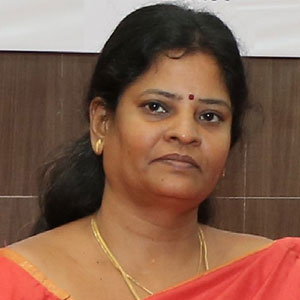
By Dr G. Kalvikkarasi, Principal

Modern science education demands more than theoretical knowledge; it requires hands-on exploration, interdisciplinary thinking, and the ability to translate ideas into impactful solutions.
When institutions integrate cutting-edge STEM education with research incubation, industry collaboration, and sustainability-focused community engagement from the undergraduate level, students gain practical exposure, innovation skills, and social responsibility essential for thriving in competitive global environments.
DRBCCC Hindu College embodies a transformative, future-ready educational framework.
Founded in 1969 under the visionary leadership of Dharmamurthi Rao Bahadur Calavala Cunnan Chetty Charities, DRBCCC Hindu College stands today as a distinguished centre of higher learning committed to academic excellence, social service, and holistic student development.
Located in Pattabiram, Chennai, and affiliated with the University of Madras, the college supports over 4,000 students, many of them first-generation learners, through scholarships, inclusive infrastructure, and student-centric pedagogy.
The institution is deeply rooted in the legacy of its founder, Dharmamurthi Rao Bahadur Calavala Cunnan Chetty Garu, a born-to-serve philanthropist whose last will dedicated his wealth to public welfare, establishing a Trust that continues to uplift communities through education, healthcare, and charitable service.
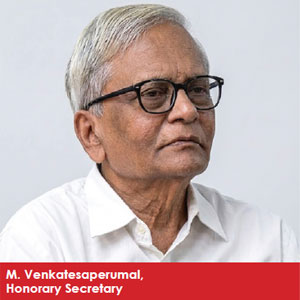
M. Venkatesaperumal, the college's Honourary Secretary, says, “Our founder’s vision extended beyond merely establishing a campus; it was part of a broader dream, to create an institution that uses education to transform lives and develop character. To this day, every effort we pursue continues to embody that vision”.
Science Education with a Future-Ready Vision
Across the world, science education is increasingly shaped by research innovation, technological advancement, interdisciplinarity, and industry alignment. DRBCCC Hindu College is advancing this vision by building an ecosystem that integrates scientific thinking with practical learning, research mentoring, and real-world problem-solving.
The college offers contemporary programs such as Computer Science, BCA, Data Science, Artificial Intelligence, and Electronics, aligned with emerging technologies and market needs.
Though the curriculum is prescribed by the University of Madras, DRBCCC Hindu College strengthens it through certification courses, virtual labs, industrial internships, hackathons, and collaborations with IIT Madras, Satish Dhawan Space Centre (SDSC) SHAR (ISRO)at Sriharikota, ICMR, CLRI, and Kalpakkam Atomic Research Centre.
Speaking more on this, Dr G. Kalvikkarasi, Principal, says, “Our students receive early exposure to research through workshops, laboratory immersion, and interdisciplinary projects, supported by advanced science and computing labs, robotics initiatives, and prompt engineering training”.
The college’s incubation cell and Research Park, aligned with the United Nations Sustainable Development Goals, foster innovation through prototype development, start-up mentoring, and science festivals. Real product development and in-campus commercialization empower students to merge scientific creativity with entrepreneurial skills.
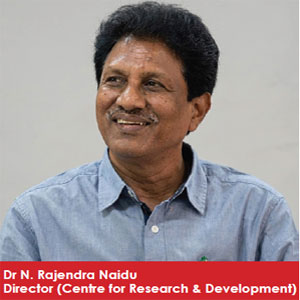
Dr N Rajendra Naidu, Director, remarks, “The infrastructural developments at DRBCCC Hindu College— modern classrooms, upgraded labs, and research spaces— show our commitment to student growth. These upgrades enhance Science education with advanced equipment, hands-on learning, and an environment that fosters discovery”.
Environmental Perspective & Community Impact
What sets the college apart is its emphasis on science for social good. Under the flagship Centre for Climate Literacy and Campaign, the institution runs extensive programs on environmental conservation, renewable energy awareness, pollution prevention, and climate change mitigation. Tree-planting activities, zero-plastic campus regulations, environmental rallies, and outreach initiatives foster strong ecological awareness.
The community education program ensures that students engage directly with local neighbourhoods, assess social and environmental challenges, and design research-based solutions. This connection between classroom learning and grassroots reality nurtures empathy, civic responsibility, and leadership.
Through ISRO visits, stargazing collaborations with district Astro Clubs, and scientific communication training, the college inspires curiosity and encourages students to visualise themselves as future scientists and innovators.
Placement Preparedness & Industry Collaboration
To understand national expectations for employable science graduates, DRBCCC Hindu College has partnered with more than 70 organisations for internships, project training, and industrial exposure. Hackathons with corporate connections such as Zoho, involvement in spoken tutorials of IIT Bombay, GATE, and JAM training, and participation in SWAYAM, IBM, and Google courses help students build strong digital and analytical skills.
Alumni networks, personality development workshops, communication skill clubs, and mock interview sessions further strengthen career readiness. Scholarships exceeding ?43 lakh annually ensure that financial limitations never restrict scientific aspirations.
As India shifts toward research-led education and deep-tech entrepreneurship, DRBCCC Hindu College demonstrates how higher education institutions can empower first-generation learners and rural youth to engage in global scientific progress through innovation, sustainability, and industry integration.
By blending knowledge with character, technology with ethics, and research with community service, the institution continues to pave the way for future-ready scientists, innovators, and leaders.
In conclusion, DRBCCC Hindu College stands as a model for transforming science education through research, industry collaboration, and social responsibility. By integrating technology, innovation, sustainability, and experiential learning, the institution prepares students not only for competitive careers but for meaningful contributions to society and the global scientific landscape.