
How to Prepare Students for the Future of the Fashion Industry
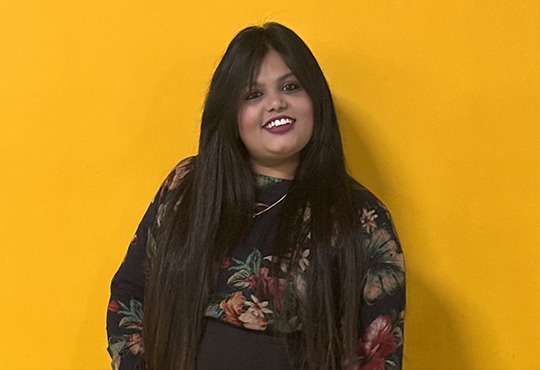 Khusbu Kumari Gupta, Assistant Professor, Army Institute of Fashion & Design (AIFD), Bengaluru in an interaction with Higher Education Review shared her views on how fashion education can evolve to keep pace with the rapidly changing global fashion industry. She discussed ways fashion institutes can strengthen industry exposure through internships, live projects, mentorship programs, and industry collaborations. She also highlighted the importance of equipping students with a comprehensive understanding of the fashion value chain, spanning design, sourcing, manufacturing, marketing, retail, and consumer engagement.
How can fashion education evolve to keep pace with rapid changes across the global fashion industry?
Fashion education has to keep moving with the industry while continuing to give students a strong foundation in the fundamentals of fashion. In my experience of teaching fashion students, I have noticed that the industry changes much faster than a traditional curriculum can sometimes respond. New technologies, changing consumer behaviour, sustainability concerns, digital platforms and new forms of fashion communication are influencing almost every stage of the fashion process.
At the same time, I do not think that keeping up with change means continuously replacing the basics. Students still need to understand textiles, garment construction, design principles, fit, colour, production and the relationship between material and product. These fundamentals become even more important when students begin working with advanced digital tools.
I feel the curriculum needs to become more flexible and application-oriented. Instead of treating design, textiles, production, technology and business as completely separate areas, students should be encouraged to understand how these areas connect. For example, a design decision is also a material decision, a costing decision and eventually a production decision.
Another important change is the way students learn. Classroom teaching can be supported by industry visits, live projects, workshops, internships, exhibitions and interaction with professionals. These experiences help students understand that fashion is not only about creating an attractive design; it is also about solving practical problems within time, cost, quality and market requirements.
Fashion education should therefore prepare students to keep learning even after graduation. We cannot predict every role that will exist in the next five or ten years, but we can give students the foundation, curiosity and adaptability to learn new tools and respond to changing industry requirements.
What skills are today’s fashion students expected to develop beyond traditional design, particularly in technology, business, sustainability and digital innovation?
When I look at students entering the fashion industry today, I feel that a good design portfolio alone is no longer enough. Creativity continues to be at the heart of fashion, but students also need to understand what happens to an idea after it is designed.
Technical knowledge remains important. Students should understand fibres and textiles, fabric behaviour, garment construction, pattern development, fit and production processes. These fundamentals help them make realistic design decisions. Alongside this, digital competency has become increasingly important. Students should be comfortable exploring tools for digital illustration, 3D garment development, visualisation, presentation and emerging AI-assisted workflows.
There is also a growing need for business awareness. A student may create an excellent design, but the design has to work within a particular customer segment, price point, production capability and market context. Understanding costing, sourcing, merchandising, retail, branding and consumer behaviour helps students see fashion as a complete business rather than only a creative activity.
Sustainability is another area that should not be treated as an isolated topic. Students need to think about material selection, waste, durability, production methods, product life and responsible consumption while making design decisions.
I would also place communication and collaboration very high on the list. Fashion is a team-based industry, and students regularly have to explain their ideas, receive feedback, work with technical teams and adapt their concepts.
Ultimately, I think students need a combination of creative thinking, technical understanding, digital literacy, business awareness, sustainability consciousness and human skills. The ability to connect these areas is becoming increasingly valuable.
Also Read: What Do Indian Students Need to Know Before Studying in Germany?
How can fashion institutes strengthen industry exposure through internships, live projects, mentorship and collaborations?
Industry exposure should begin much earlier than the final internship. An internship is important, but students should not experience the industry for the first time only when they are about to graduate.
A progressive approach can make industry exposure more meaningful. Students can begin with industrial visits and interactions with professionals and gradually move towards workshops, live assignments, short-term projects, industry briefs, internships and industry-mentored projects. Each stage can introduce a different level of responsibility.
For example, an industrial visit can help students understand how a garment actually moves through a production environment. A live project can then require them to respond to a practical brief, while an internship allows them to experience workplace expectations, deadlines, teamwork and professional communication. These experiences build on one another.
Mentorship can also play an important role. Students often understand a concept differently when it is explained by someone who is currently working in the field. Professionals can discuss practical challenges that may not always be visible in textbooks or classrooms.
Another important aspect is feedback. Industry interaction becomes much more valuable when students receive feedback on their work and are given an opportunity to improve it. Rather than simply observing an industry process, students should be encouraged to ask questions, document their observations and connect what they see with what they have learned academically.
I also believe that industry exposure should not be limited to large fashion brands or manufacturing companies. There are valuable learning opportunities with artisans, textile producers, entrepreneurs, exporters, retailers, digital fashion professionals, designers and smaller businesses.
The purpose of industry exposure should ultimately be to help students understand the difference between knowing something and being able to apply it professionally.
How can fashion education prepare students to understand the complete fashion value chain, from design and sourcing to manufacturing, marketing, and retail and consumer engagement?
One area I feel needs more attention in fashion education is helping students see the complete journey of a garment. Students naturally become very focused on the design stage, but a successful fashion product involves many decisions before and after the design is created.
A simple design concept eventually connects with fibre and fabric selection, sourcing, costing, sampling, pattern development, production planning, quality control, merchandising, marketing, retail and consumer response. If students understand these connections early, they begin to make more practical design decisions.
For example, choosing a particular fabric is not only an aesthetic decision. The availability of the fabric, its cost, performance, construction requirements and production suitability also matter. Similarly, a garment designed for a particular consumer group has to consider price, lifestyle, comfort, occasion and market positioning.
I think this understanding can be developed through interdisciplinary assignments. A student could be given a design brief and asked not only to develop the garment but also to identify the target consumer, select appropriate materials, prepare a basic costing, consider production requirements and think about how the product would reach the customer.
Students should also understand that the value chain does not end at retail. Consumer feedback, product performance and changing preferences can influence future design decisions. With digital platforms and e-commerce, the relationship between brands and consumers has become even more immediate.
When students understand this complete chain, they start seeing themselves not simply as designers but as professionals contributing to a larger fashion ecosystem. This broader understanding can also help them communicate more effectively with people working in other functions.
How can fashion education foster entrepreneurial thinking and emerging opportunities beyond conventional fashion careers?
For me, entrepreneurship in fashion education is not only about encouraging every student to start a fashion label. It is about developing the ability to identify a problem, understand a customer and create a practical solution.
The fashion industry offers many opportunities beyond the traditional designer role. Students can explore areas such as styling, fashion communication, visual merchandising, digital content, e-commerce, sourcing, sustainable product development, customization, textile-based enterprises, digital fashion services and technical support.
Entrepreneurial thinking can be introduced through classroom projects. Instead of simply asking students to create a product, educators can ask them to identify a target customer, understand a need, develop a product or service, estimate its cost and consider how it could reach the market. This changes the exercise from purely creative work into a more complete professional experience.
Students can also benefit from understanding small-scale production and the realities of running a business. Even a creative entrepreneur needs to understand costing, sourcing, inventory, customer communication, timelines and quality.
Another important aspect is encouraging students to recognize their own strengths. One student may be particularly strong in design, another in textiles, another in digital tools, while someone else may have strong communication or business skills. Entrepreneurship can create opportunities to combine these different abilities.
I would therefore see entrepreneurship as a mindset that can be useful whether a student eventually starts a business, works in an organization or develops an independent professional practice. The important qualities are curiosity, initiative, problem-solving, willingness to experiment and the ability to learn from both successful and unsuccessful outcomes.
Also Read: Designing Beyond the Five Senses
What gaps exist between fashion institutes and industry expectations, and how can they be addressed?
The gap between fashion education and industry is not always about a lack of technical knowledge. In many cases, the bigger challenge is the gap between classroom learning and real-world application.
Students may understand a concept academically, but the workplace introduces variables that are difficult to reproduce completely in a classroom. A fabric may not be available as expected, a production deadline may change, a buyer may revise a requirement, a costing may need to be reduced, or a garment may require modification because of fit or manufacturing limitations.
These situations require students to apply their knowledge while making decisions under practical constraints. This is where stronger interaction between education and industry can help.
Curriculum development can involve greater consultation with professionals so that institutions understand changing skill requirements. At the same time, industry can provide live briefs, project feedback, workshops and mentorship rather than engaging with institutions only for recruitment.
I also feel that educators need opportunities to remain connected with industry developments. Faculty exposure to current technologies, production practices and market changes can help bring contemporary examples into the classroom.
Assessment methods can also evolve. Instead of evaluating only the final design, students can be assessed on their research, decision-making, documentation, problem-solving and ability to respond to feedback.
The objective should not be to make education exactly like industry. Educational institutions have a different responsibility: they need to provide a strong conceptual foundation while preparing students for application. A productive relationship between academia and industry can help create that balance.
How important are communication, collaboration, adaptability and problem-solving in preparing students for the fashion industry?
In fashion, very few things are achieved by one person working alone. A garment may begin with a designer's idea, but it can involve textile professionals, pattern makers, sampling teams, production personnel, merchandisers, buyers, marketers and retailers before it reaches the consumer. Because of this, communication and collaboration are not additional employability skills; they are part of professional fashion practice.
Students need to be able to explain their ideas clearly, understand feedback and communicate with people who may not have the same technical or creative background. A designer may need to explain a concept to a production team, while a merchandiser may need to communicate buyer requirements back to the design team.
Adaptability is equally important. Fashion is influenced by changing trends, technology, consumer behaviour and market conditions. Students will encounter situations where their first idea does not work or where a project needs to change direction. Rather than viewing this as failure, education can help students understand it as part of the design and problem-solving process.
I think problem-solving should therefore be built into everyday learning. Students can be given constraints such as limited materials, a particular price point, a specific consumer group or a production challenge and asked to find solutions.
Group projects are particularly useful because they expose students to different working styles and viewpoints. They also teach students how to divide responsibilities, manage disagreements and meet shared deadlines.
Ultimately, employers are not only looking for students who can produce creative work. They also need people who can communicate, collaborate, respond to change and take responsibility for solving problems.
What emerging roles and career opportunities will shape the fashion industry, and how should institutions prepare students?
I think the most interesting career opportunities in fashion will increasingly appear where different areas of knowledge come together. The industry is already creating roles that combine fashion with technology, sustainability, data, digital communication and new forms of consumer engagement.
Digital product development, 3D fashion, virtual prototyping, AI-supported design workflows, digital merchandising, e-commerce, sustainable product development, circular fashion and fashion technology are some of the areas that students should become familiar with. At the same time, there will continue to be opportunities in traditional areas such as apparel production, merchandising, textile development, styling, retail and fashion communication.
The important point is that institutions should not try to predict every future job title. Instead, they should prepare students with capabilities that can transfer across changing roles. A student who understands design fundamentals, textiles, production, digital tools, sustainability and communication will have a broader base from which to adapt.
I also think students should be encouraged to build portfolios that demonstrate how they think, rather than only showing finished garments. A strong portfolio can include research, experimentation, material development, digital work, problem-solving and the reasoning behind design decisions.
Technology should be part of this preparation, but it should not replace hands-on learning. Students still need to understand materials, construction and the physical behavior of garments.
The future of fashion education, in my view, lies in creating a balance between craft and technology, creativity and commercial understanding, individual expression and collaboration. If students leave their education with the ability to keep learning and adapt their skills to new situations, they will be better prepared for an industry that is itself constantly changing.
About the Author:
Khusbu Kumari Gupta is an Assistant Professor at the Army Institute of Fashion & Design (AIFD), Bengaluru, with expertise in fashion design, textiles, apparel technology, and digital fashion education. She has experience in teaching, curriculum development, academic coordination, event management, social media, and research.
Current Issue