
IIT Bombay Launches Programme to Boost Semiconductor Startups
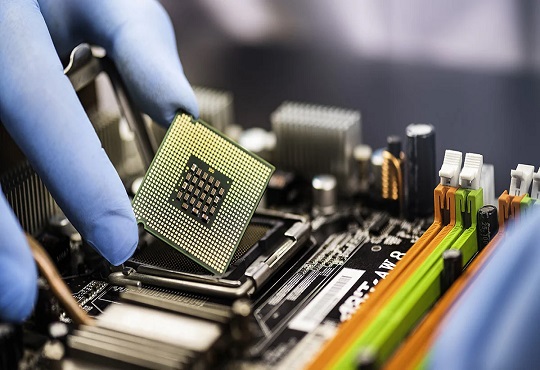
IIT Bombay's SINE launches ACE, a semiconductor-focused accelerator selecting six to eight deep-tech startups for industry mentoring, pilot opportunities and potential equity investments of up to ₹5 crore.
The Society for Innovation and Entrepreneurship (SINE) at the Indian Institute of Technology (IIT) Bombay has launched SINE ACE (Acceleration through Collaborative Engagement), an industry-focused accelerator designed to help deep-tech startups advance their technologies towards commercialisation. The initiative begins with a semiconductor-focused cohort, bringing together industry partners, investors, academic experts and government organisations to strengthen India's domestic semiconductor innovation ecosystem.
Announced on November 11, 2026, the programme aims to address challenges faced by deep-tech ventures, including lengthy technology validation cycles, limited access to specialised infrastructure, manufacturing requirements and difficulties in securing early commercial customers. Unlike conventional accelerator models that primarily focus on business mentoring and fundraising, ACE combines technical support with industry engagement, proof-of-concept development and potential commercial partnerships.
Also read: The Role of Universities in Workforce Development and Skills Training
The inaugural cohort will select six to eight semiconductor startups from across India. Eligible ventures must have reached Technology Readiness Level (TRL) 4 or above, indicating that they have developed a working, laboratory-validated prototype.
The selected startups will be matched with industry partners and receive structured mentoring from three experts representing industry, SINE and IIT Bombay, and the investment ecosystem. Participants will also gain access to specialised masterclasses, technical expertise and facilities at IIT Bombay, along with opportunities to undertake proof-of-concept projects and pilot programmes with corporate partners.
The semiconductor cohort will address areas such as edge AI computing, advanced materials and packaging, mission-critical chips for defence and aerospace, data-centre silicon, electronic design automation, fabrication and testing. These focus areas are intended to help startups improve product readiness, manufacturing capabilities and market adoption.
The first cohort is supported by Ather Energy, ElectraEV, ideaForge, Inflexor Ventures, MeitY Startup Hub, SemiX, Speciale Invest and Y-Point Ventures. These partners will contribute industry problem statements, technical and business mentoring, potential use cases and investment connections.
The programme will also connect participating startups with investors to support their next stages of growth. Promising ventures may be considered for equity investments of up to ₹5 crore from SINE or its venture capital fund, Y-Point, alongside potential investments from associated investors. Funding remains subject to evaluation and individual investment decisions rather than representing a guaranteed grant for every participant.
Also read: The Role of Universities in Workforce Development and Skills Training
SINE ACE follows a sector-specific accelerator model, with each cohort focusing on a technology area of national importance. Following semiconductors, future editions are envisaged in quantum technologies, artificial intelligence in manufacturing and robotics, space and defence technologies, nuclear energy and advanced materials.
The initiative builds on SINE's experience in supporting technology-led entrepreneurship since 2004. Having supported more than 500 startups through incubation, mentoring, infrastructure and industry partnerships, the organisation aims to strengthen the transition from research and technology development to commercial deployment.
Through ACE, IIT Bombay seeks to connect India's deep-tech founders with the technical resources, industrial customers and investment networks required to develop globally competitive technology ventures.
Current Issue