IIT Madras Develops SEANAV for Autonomous Ship Navigation
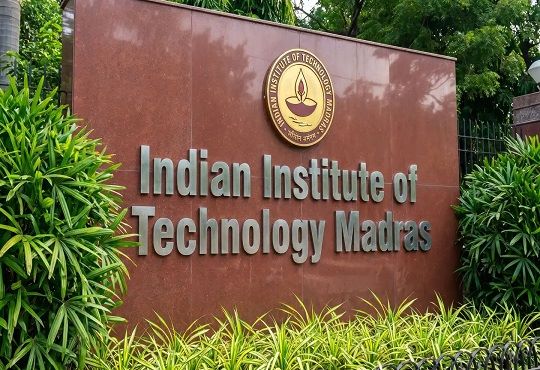 IIT Madras develops SEANAV, an AI-powered digital twin platform that simulates maritime environments to test autonomous vessels, improve collision avoidance and strengthen shipping safety.
The Indian Institute of Technology (IIT) Madras has developed SEANAV, a real-time digital twin platform designed to test and validate autonomous maritime navigation systems in simulated ocean environments. The technology aims to improve shipping safety by allowing researchers to evaluate autonomous vessels under different weather, wave and traffic conditions before real-world deployment.
Developed by IIT Madras's Department of Ocean Engineering, SEANAV uses the Unity3D engine to create virtual representations of ships, ocean conditions, sensors and maritime traffic. The simulator has been calibrated using a 320-metre benchmark tanker to replicate commercial shipping operations.
Also Read: How Vibe Coding, AI Copilots are Redefining Software Development
The platform integrates artificial intelligence (AI) with data from LiDAR, marine radar and stereo vision cameras to detect nearby vessels, estimate their positions and support navigation decisions. It also simulates practical challenges such as sensor noise, communication delays, fog, rain and low visibility.
Researchers have demonstrated autonomous path-following and AI-based collision avoidance using the platform. It also supports multiple vessels operating simultaneously, enabling navigation systems to be tested in congested waterways while following international collision-prevention regulations.
The team has developed DetectShips, a dataset containing 14,000 real ship images for vessel detection and classification. Another component, StereoLiD, combines stereo vision and LiDAR data to improve target localisation and depth estimation.
SEANAV also features a virtual reality interface compatible with Meta Quest headsets. It enables maritime professionals and trainees to practise emergency response, collision avoidance, port approaches and vessel manoeuvring in simulated environments.
The technology could support port operations, coastal surveillance, search-and-rescue missions and maritime defence. Researchers are also exploring its application at major Indian ports, including Chennai, Mumbai, Visakhapatnam and Kochi.
Also Read: Skills Needed to Succeed in the Next Decade in the Age of AI
Led by Dr Suresh Rajendran, the research involved Dr Athira M. Nambiar of SRM Institute of Science and Technology and other IIT Madras researchers. The findings have been published in the Journal of Offshore Mechanics and Arctic Engineering.
The next development phase will focus on creating digital twins of major Indian ports, validating the platform through physical scale models and advancing VR-based pilot training.
Current Issue