IITs to Train 6,000 Students in Robotics and Space Tech
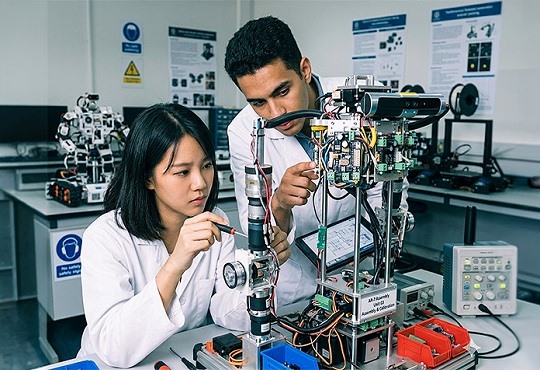
The Mehta Family Foundation plans to partner with multiple IITs to create 6,000 academic opportunities in Robotics, Physical AI and Space Technology by 2027, supported by more than 120 faculty members.
The Bhupat and Jyoti Mehta Family Foundation plans to collaborate with multiple Indian Institutes of Technology (IITs) to expand specialised education and research opportunities in Robotics, Physical Artificial Intelligence (AI), and Space Engineering and Technology from the 2027 academic session. The initiative aims to build academic capacity for approximately 6,000 students over the next eight to ten years, strengthening India's talent pipeline in emerging technology sectors.
Under the proposed expansion, 5,000 opportunities will be created in Robotics and Physical AI, while another 1,000 will focus on Space Engineering and Technology. The programmes will cover undergraduate, postgraduate and doctoral education, with more than 120 dedicated faculty members expected to support teaching and research activities.
Also read: JIIT Opens Pre-Admission Counselling for Class 12 Students
The proposed Robotics and Physical AI programmes will integrate mechanical engineering, electrical engineering, software development, machine learning, computer vision, sensing and control systems. Students will explore applications across healthcare, defence, agriculture and industrial manufacturing. Research areas are expected to include foundation models, digital twins, humanoid and legged robots, swarm robotics and soft robotics.
The initiative also plans to introduce industry-linked capstone projects and a paid industry-residency semester at one of the participating IITs. The curriculum is expected to address practical challenges associated with deploying robotics in Indian operating conditions, including heat, dust, power availability and cost constraints. These areas could support applications such as agricultural automation, rural healthcare solutions and robotics for small-scale manufacturers.
The Space Engineering and Technology component will create academic opportunities in satellite navigation, space robotics and human spaceflight. A dedicated School of Space Science and Technology is also planned at one of the participating IITs to strengthen specialised education and research in space-related disciplines. However, the institute that will host the school has not yet been identified.
Also read: The US Visa Crisis and Why Students Are Looking Elsewhere
The proposed expansion builds on the foundation's existing engagement with six IITs since 2019. Through this collaboration, it has supported the establishment of eight schools and centres focusing on data science and AI, healthcare and biomedical engineering, and sustainability. These initiatives have collectively recorded more than 4,000 admissions across undergraduate, postgraduate and doctoral programmes.
The new programmes aim to extend this institutional collaboration into robotics, Physical AI and space technology. By combining academic instruction, practical projects and advanced research, the initiative seeks to prepare students for emerging opportunities in manufacturing, automation, healthcare and the space sector.
Current Issue