Jai Shriram Engineering College: Engineering Excellence Rooted In Innovation & Industry
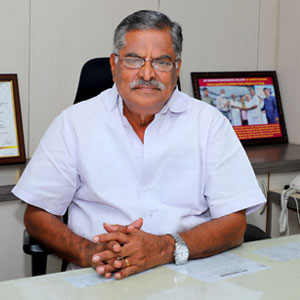
By M Govindasamy, Chairman

Tamil Nadu has long stood as one of India’s foremost hubs for engineering education, producing a steady stream of skilled professionals who have contributed significantly to both national and global industries.
From established legacy institutions to emerging centers of excellence, the state’s engineering ecosystem continues to evolve in response to rapid technological advancement and shifting industry demands.
Today, students are no longer looking for degrees alone; they seek institutions that offer industry exposure, innovation-driven learning, and future-ready skills. In this competitive and dynamic landscape, Jai Shriram Engineering College is steadily gaining recognition.
With its autonomous status, industry-integrated curriculum, and strong emphasis on practical learning, the college is attracting students who aspire to build impactful engineering careers. Its growing popularity lies in its ability to blend academic rigor with real-world application, making it a promising destination for next-generation engineers.
At the heart of Jai Shriram Engineering College’s academic philosophy is its commitment to delivering education that is both relevant and forward-looking
Redefining Learning through Industry-Aligned Education
At the heart of Jai Shriram Engineering College’s academic philosophy is its commitment to delivering education that is both relevant and forward-looking. As an autonomous institution, it enjoys the flexibility to design and continuously update its curriculum in alignment with the emerging industry trends.
This has enabled the seamless integration of cutting-edge domains such as artificial intelligence, data science, cybersecurity, cloud computing, robotics, and the Internet of Things into the academic framework.
The institution goes beyond conventional teaching methods by adopting progressive pedagogies like flipped classrooms, inquiry-based learning, and project-based learning. Digital platforms such as Moodle and Google Classroom complement traditional teaching, while interactive displays and immersive technologies like AR and VR make learning more engaging and effective.
This blend of technology and pedagogy ensures that students are not passive learners but active participants in the educational process.
Equally significant is the institution’s strong emphasis on outcome-based education, where the focus is on developing problem-solving abilities, analytical thinking, and technical competence, skills that are essential for success in modern engineering careers.
Seamless Integration of Industry and Practical Exposure
A key differentiator for Jai Shriram Engineering College is its deep-rooted connection with industry. The institution has built a robust ecosystem, where academic learning is closely aligned with industrial practice. Strategic partnerships, particularly with Bharani Hydraulics, provide students with opportunities for industrial visits, In-plant training, internships, and exposure to real-time engineering operations.
Guest lectures, technical talks, and industry-sponsored projects further enrich the learning experience by bringing in perspectives from experienced professionals. Students are encouraged to work on live projects that mirror industry challenges, enabling them to apply theoretical knowledge in practical contexts.
This continuous interaction with industry not only enhances technical proficiency but also helps students understand workplace expectations and professional standards.
In addition, structured training programs, placement support, and career development initiatives ensure that graduates are well-prepared to transition smoothly into the workforce.
Discipline-Specific Excellence with Future-Ready Focus
Each engineering discipline at the college is designed to address current and future industry needs. The Civil Engineering program incorporates sustainable construction practices, smart infrastructure concepts, and advanced surveying techniques using tools like GPS and Total Station, preparing students to contribute to modern urban development.
In Computer Science, AI and IT streams, students are exposed to advanced domains through a choice-based credit system, allowing them to specialize in areas such as AI, machine learning, data science, and cybersecurity. Hands-on projects, including AI-driven applications, cloud-based systems, and full-stack development, ensure practical mastery.
The Electronics and Communication Engineering program offers exposure to embedded systems, IoT, wireless communication, and signal processing, supported by well-equipped laboratories and industry training. Meanwhile, the Electrical and Electronics Engineering curriculum reflects the global shift toward sustainability, with a dedicated focus on renewable energy systems, smart grids, power electronics, and energy analytics.
Mechanical Engineering students benefit from extensive use of modern tools such as AutoCAD and SOLIDWORKS, along with hands-on experience in additive manufacturing through a dedicated Centre of Excellence. This enables them to move from design to prototype, fostering innovation and product development skills aligned with Industry 4.0 practices.
Fashion Technology uses AI tools like CLO 3D to enable virtual design, trend forecasting, and reduce physical waste and adopting sustainable materials and eco-friendly processes to minimize environmental impact. Together, AI and sustainability help create efficient, low-waste, and data-driven fashion systems.
Innovation, Interdisciplinary Learning, and Entrepreneurial Spirit
Innovation is a defining pillar of Jai Shriram Engineering College. The institution actively promotes interdisciplinary collaboration, encouraging students from various engineering streams to work together on projects addressing real-world challenges. Whether it is smart infrastructure, renewable energy systems, or IoT-based solutions, these collaborative initiatives mirror the complexity of modern engineering problems.
Facilities such as the Idea Lab and multiple Centres of Excellence provide students with access to advanced tools, prototyping equipment, and research support. These spaces serve as incubators for creativity, enabling students to experiment, innovate, and transform ideas into tangible solutions.
The college also places strong emphasis on entrepreneurship. Through its Entrepreneurship Development Cell, Institution Innovation Council, and StartupTN Pre-Incubation Centre, students receive mentorship, training, and support to develop startup ideas. Courses on intellectual property rights and innovation management further strengthen this ecosystem, encouraging students to think beyond traditional career paths.
A Vision for the Future
Looking ahead, Jai Shriram Engineering College is focused on building a globally competitive and innovation-driven academic environment. Plans are underway to strengthen international collaborations, expand research initiatives, and integrate artificial intelligence into teaching and learning processes.
The institution is also working toward creating a smart campus ecosystem, enhancing sustainability initiatives, and establishing new centres of excellence in emerging technologies.
By combining academic flexibility, industry integration, advanced infrastructure, and a strong culture of innovation, the college is positioning itself as a leader in next-generation engineering education.