How Technology Is Transforming Careers in Ancient Studies
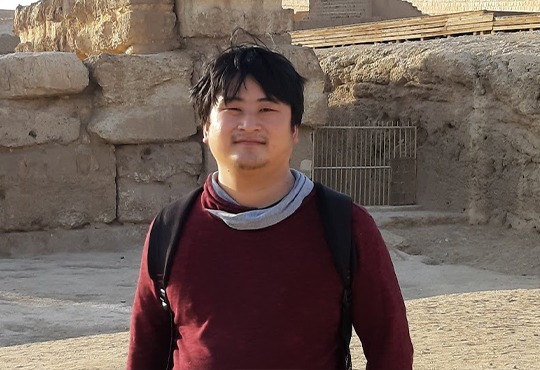 Dr. So Miyagawa, Associate Professor, University of Tsukuba in an interaction with Higher Education Review shared his views on how digital Egyptology is creating technology-driven career opportunities in archaeology, heritage conservation, and ancient studies, why students are increasingly exploring careers that combine archaeology, history, and advanced digital technologies and more.
Dr. So Miyagawa is the Associate Professor of Linguistics and Egyptology at University of Tsukuba, where he combines ancient language studies with artificial intelligence and digital humanities research. Specializing in Coptology, Ancient Egyptian linguistics, and computational language analysis, he earned his doctorate from University of Göttingen and is the creator of THOTH AI, an advanced platform for analyzing and translating Ancient Egyptian and Coptic texts.
How is Digital Egyptology creating technology-driven career opportunities in archaeology, heritage conservation, and ancient studies?
Digital Egyptology changes not only the tools we use but also the questions we can ask about the ancient world, and in doing so it opens up new career paths. In my own research on ancient Egyptian and Coptic, the study of language and computer science has become inseparable. The careful reading of texts, their preservation and systematic arrangement, the annotation of their elements, and the consultation of vast corpora are all part of a single process. This shift creates a need for professionals who can bridge the ancient sources, their representation, and the digital systems that display them.
In particular, hybrid roles are emerging that were virtually nonexistent a generation ago, such as digital epigrapher, project manager, data curator, and computational linguist. A manuscript project may require a specialist in a particular language and a palaeographer, but also imaging specialists who can recover damaged texts and data scientists who structure the output. GIS, photogrammetry, and long-term storage are likewise essential in archaeology.
I would stress that technical skills alone are not enough. Data is never isolated; it is produced through scholarly decisions about transcription and translation. The long-term opportunity belongs to those who combine genuine expertise in the ancient evidence with critical thinking and digital skills, rather than to those who possess any of these in isolation.
Why are students increasingly exploring careers that combine archaeology, history, and advanced digital technologies?
Students are drawn to these interdisciplinary paths because the study of the past is inseparable from modern skills. Since many of them already have a background in computer science, programming with ancient texts and applying data analysis or imaging feels natural, yet the questions that drive them remain deeply human: language, memory, religion, personal identity, and the preservation of fragile heritage.
In my teaching environment, students are often drawn to the idea of creating something as part of their research, whether a collection of documents, an annotation layer, or a digital edition. This does not diminish the value of traditional skills. On the contrary, once they begin to work digitally, it becomes apparent how completely the work depends on their knowledge of the language, the script, and the material object. A second, more practical reason is flexibility. Students of Egyptology or Coptic who can also manage records, write scripts, and produce digital or 3D documentation become a valuable resource for universities, museums, libraries, archives, and the cultural sector in general. In a highly competitive job market, this breadth of knowledge is a sensible preparation.
There is also the intellectual thrill of posing questions at a new scale, comparing large collections or mapping historical connections within a discipline. However, I caution my students that technology is not a shortcut. The most successful digital researchers are those who combine an interest in the material with care, an evidence-based approach, and persistence.
Also Read: Skills Needed to Succeed in the Next Decade in the Age of AI
Could Digital Egyptology become one of the most exciting interdisciplinary career paths for the next generation of researchers and historians?
It is one of the most effective integrative fields today, precisely because it connects the questions of the past and the present. Egyptology has always required a broad perspective such as language, writing systems, and a deep knowledge of archaeology, religion, art, and historical change but the digital approach has made the connections between these disciplines more visible, more collaborative, and more technically integrated. My own journey, from classical Coptic grammar to computational linguistics, has shown me that this field rewards those who can speak several disciplines at once.
Young researchers are drawn to work with ancient materials, whether by building collections of Coptic texts, comparing different manuscript forms digitally, or contributing to transparent virtual reconstructions that help create new knowledge. This work requires historical thinking, technical skill, and a particular humility, because digital methods quickly reveal how incomplete our evidence really is. Because ancient Egypt holds a significant and sometimes contested place in global culture, and because rigorous projects can transform our understanding of it, there is also a social responsibility in this field.
I would also like to acknowledge the challenges. Keeping pace with both ancient languages and modern methodologies is very demanding, and the university system still tends to treat such work as a niche within a single department. Yet for students who are drawn to the ancient world but unwilling to abandon a modern approach, it is rare to find an environment that combines historical depth with methodological rigour, and, in my view, it possesses a unique beauty.
How are universities and cultural institutions using AI, data science, and digital tools to modernize ancient studies and heritage research?
Universities and cultural institutions are renewing the study of the classics in various ways, from infrastructure to analysis, and infrastructure is the foundation on which everything else depends. Each institution builds structured, annotated, and referenced resources that allow books, objects, images, and archaeological reports to be searched, compared, and analysed. In fields such as Egyptology and Coptic studies, where the evidence is fragmentary and scattered across the globe, collections of texts and dictionaries transform dispersed material into reliable and accessible knowledge.
On the analytical side, artificial intelligence is now used for tasks once considered too large or complex to be feasible, such as recognising handwriting in historical images, automatic linguistic annotation, the detection of textual reuse, and the machine translation of low-resource ancient languages. Retrieval-augmented methods, which connect language models to well-curated databases of scholarly knowledge, are very promising, because they ground the output in verifiable sources rather than in uncontrolled hallucination. Still, for limited and historically fixed languages such as ancient Egyptian and Coptic, every answer is a conjecture that requires verification by experts.
Teaching changes with this as well. When students learn an ancient language through a digital corpus, they learn not only to use a dataset but also to examine how knowledge is constructed from that data. Cultural institutions are likewise digitising their collections and creating interoperable catalogues that reveal the relationships between objects held in different repositories. Sustainability remains a recurring issue, because when funding runs out, collections and exhibitions can disappear. The ultimate goal of digitisation, therefore, is not merely to enter data but to build sustainable and ethical partnerships.
Current Issue