Top Workforce Trends HR Leaders Must Know
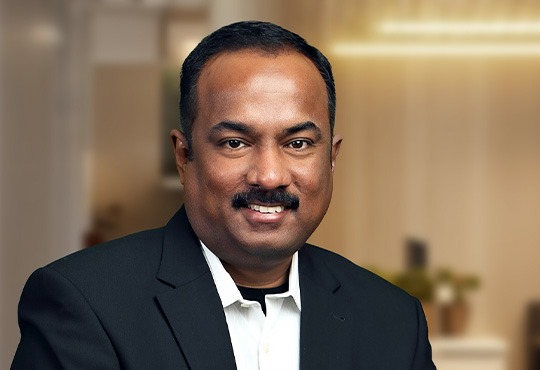 Ranjith Menon, Sr. Vice President - Corporate Human Resources, HGS - Hinduja Global Solutions in an interaction with Higher Education Review shared his views on the most significant workforce trends currently reshaping organizations, and how should HR leaders prepare for them, how AI and automation are changing job roles, workforce planning, and the skills organizations expect from employees and more.
What are the most significant workforce trends currently reshaping organizations, and how should HR leaders prepare for them?
I believe the biggest workforce shift is not any single trend, but the fact that several changes are happening at once. AI is changing how work is performed, skills are ageing faster, employees expect greater flexibility and transparency, and businesses are operating in an environment where plans can change very quickly. For HR, that changes the fundamental question. We can no longer think only in terms of how many people we need. We have to think much more deeply about what capabilities the business will need and how quickly we can build them.
That means workforce planning has to move closer to business strategy. HR should understand where the organization is trying to grow, which roles may change, what skills could become scarce, and which capabilities can be developed internally rather than always bought from the market. It also means looking beyond traditional job descriptions. Increasingly, work will be organized around skills, projects and outcomes, not just positions.
The other shift I would emphasize is adaptability. Organizations will not be able to predict every technological or market change correctly. The stronger organizations will be those that can recognize change early, move talent quickly, re-skill people and make decisions without creating unnecessary anxiety. In my view, future-readiness is less about predicting the future perfectly and more about reducing the time it takes an organization to respond to it.
How is AI and automation changing job roles, workforce planning, and the skills organizations expect from employees?
I do not think the most useful question is whether AI will replace jobs. Jobs are made up of many different activities, and AI will affect those activities differently. Some routine work will be automated, some analytical work will become much faster, and in other areas AI will act as an assistant. The role itself may remain, but the mix of work inside that role will change substantially.
That has an important implication for workforce planning. Instead of asking only which jobs will disappear or be created, organizations should examine which tasks can be automated, which can be augmented, and where human judgement remains essential. In many roles, the value of domain knowledge, critical thinking, creativity, communication and judgment may actually increase because employees will spend less time producing information and more time deciding what to do with it.
There is also a development issue that deserves more attention. Many professionals learned judgment by first doing routine work, making mistakes and gradually gaining experience. If AI performs more of that entry-level work, organizations will have to rethink how younger employees build judgment and context. PwC's 2026 research is already showing greater demand for traditionally senior skills such as judgment and leadership in AI-exposed junior roles.
So AI literacy cannot simply mean knowing how to use a tool. It must include knowing when to trust the output, when to challenge it, and when human accountability cannot be delegated.
Also Read: How Future-Ready HR Creates Purpose-Driven Career Journeys
How can HR leaders effectively address the growing skills gap and build a culture of continuous learning and reskilling?
The skills gap is often discussed as if it can be solved by increasing the number of training hours. I do not think that is enough. The real issue is whether organizations know which capabilities they will need, understand the skills they already have, and create opportunities for people to use what they learn.
HR should begin with business priorities rather than a course catalogue. If the organization expects growth in AI-enabled operations, analytics, digital customer experience or new markets, what capabilities will that require? Which employees already have adjacent skills? Who can be reskilled? Where will we genuinely need to hire from outside? That creates a much more practical learning agenda.
We also need to broaden our definition of learning. Some of the most valuable development happens through stretch assignments, rotations, mentoring, projects and exposure to unfamiliar problems. Formal learning matters, but capability is built when knowledge is applied. Internal mobility therefore needs to be closely connected with reskilling.
Managers are important here as well. An organization cannot say continuous learning is critical and then create a culture where taking time to learn is treated as a distraction from the real job.
For me, the test is simple: can an employee acquire a new capability and see where it can take them? When that connection is visible, learning stops being an HR program and starts becoming part of how careers and the business move forward.
What role should data analytics and HR technology play in improving recruitment, performance management, employee experience, and workforce decisions?
Data and HR technology are most valuable when they improve the quality of a decision. The risk is that organizations become very good at collecting information without becoming much better at acting on it.
In recruitment, analytics can help us understand where talent is coming from, which sourcing channels produce quality hires, where candidates drop out of the process and whether we are overlooking people with relevant adjacent skills. In employee experience, listening tools can help identify patterns earlier rather than waiting for an annual survey. In workforce planning, data can help leaders understand skills, succession risk, attrition patterns and future capacity.
But I would be cautious about assuming that more prediction automatically means better HR. People decisions are contextual. An algorithm may identify a correlation, but it may not understand why it exists. That is particularly important in hiring, promotion, performance and attrition, where poorly designed models can reinforce historical bias or create false precision.
Technology should also make HR simpler for employees and managers. If a new platform gives HR better dashboards but creates more steps for employees, we should question whether we have improved the experience.
My preferred approach is to combine analytics with judgment. Use data to challenge assumptions, identify patterns and ask better questions, but keep human accountability for consequential decisions. The ambition should not be to remove judgment from HR. It should be to make judgment better informed, more consistent and more transparent.
How can organizations balance business performance and productivity goals with employee wellbeing, engagement, and work-life balance?
I would challenge the idea that business performance and employee wellbeing are naturally in conflict. In a well-run organization, the goal should be sustainable high performance: expecting a great deal from people while creating conditions that allow them to keep performing over time.
There will always be periods of exceptional intensity: a major client transition, a transformation, a deadline or a business crisis. People understand that. The problem is when exceptional intensity becomes the normal operating model. An organization can borrow energy from its workforce for a period; it cannot keep borrowing indefinitely without eventually paying for it through disengagement, errors, absence or attrition.
That is why wellbeing should not be reduced to wellness programs. Before asking employees to become more resilient, leaders should examine how work is designed. Are priorities clear? Are people spending excessive time in meetings? Is technology reducing work or simply adding another layer of work? Are managers able to recognize when capacity is genuinely stretched?
Accountability remains essential. Wellbeing should never become a reason to avoid difficult performance conversations or lower standards. Equally, high standards should not become an excuse for poor management.
I think the strongest organizations will be demanding and humane at the same time. They will expect performance, remove unnecessary friction and recognize that recovery is part of performance. Protecting people's capacity to perform is not separate from productivity; it is one of its foundations.
Also Read: Bridging the Industry-Academia Skill Gap: A CHRO’s Perspective
Looking ahead, what should organizations prioritize today to build an agile, future-ready workforce capable of adapting to rapid technological and business changes?
If I had to choose one priority, it would be to build adaptability into the organization rather than trying to predict the future with perfect accuracy. Technology will continue to change, business models will shift and some skills that look critical today will become less important. The organization that learns and reallocates talent faster will have an advantage.
That starts with knowing the workforce beyond job titles. What skills do people actually have? Which capabilities are adjacent to emerging needs? Where do we have deep expertise, and where are we dependent on a small number of individuals? That visibility should connect directly to workforce planning, learning and internal mobility.
AI literacy should also become broad-based. Not everyone needs to become a technologist, but employees should understand how to use AI productively, how to question its output and where judgment and accountability still sit with the individual.
I would invest heavily in managers as well. They are the people translating strategy into work, implementing technology, developing talent, managing change and sustaining engagement. We often talk about managers as a layer in the organization; I increasingly see strong managers as organizational infrastructure.
Finally, future-ready cultures need room for experimentation. People should be able to challenge established processes, test a better approach, learn and adjust without treating every unsuccessful experiment as failure.
Future-readiness, to me, is not knowing exactly what will happen next. It is shortening the distance between change occurring and the organization being able to respond intelligently.
About Ranjith Menon is Senior Vice President – Corporate Human Resources, Hinduja Global Solutions (HGS) :
Ranjith Menon is Senior Vice President – Corporate Human Resources at Hinduja Global Solutions (HGS), bringing 25 years of experience in HR transformation, M&A, workforce strategy, and organizational leadership. At HGS, he oversees global HR governance, HR transformation, executive compensation, M&A and post-merger integration, Board-level HR matters, and HR operations across India and HR shared services.
Current Issue