Shri Ramaswamy Memorial University Sikkim: Engineering Future-Ready Talent for an AI-Driven World
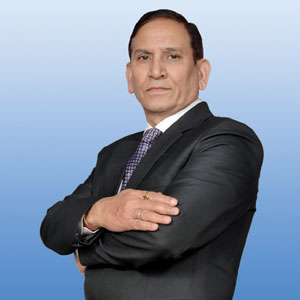
By Dr. Gurdaman Sharma, Vice Chancellor
Engineering education is undergoing one of the most significant transformations in its history. As artificial intelligence, cybersecurity, cloud computing, robotics, and intelligent automation redefine industries, engineering institutions are expected to move beyond conventional classroom instruction and cultivate graduates capable of solving complex, interdisciplinary challenges.
This shift is particularly important in emerging education hubs such as Gangtok, where institutions have an opportunity to bridge regional aspirations with global technological advancements. Among the institutions contributing to this transformation is Shri Ramaswamy Memorial University (SRM University) Sikkim.
Established in 2013 under the vision of the SRM Group to expand quality higher education into India's North-East, the university has steadily evolved into a multidisciplinary academic ecosystem that combines industry-oriented education with research, innovation, and experiential learning.
Today, with nearly 37 academic programmes and a growing emphasis on next-generation technologies, SRM University Sikkim is positioning itself as a centre for developing future-ready engineers who are equipped not only with technical expertise but also with the adaptability required for an increasingly intelligent and digital economy.
Building Engineers for the Age of Intelligent Systems
Recognising the accelerating demand for AI professionals, SRM University Sikkim has introduced specialised B.Tech programmes in Artificial Intelligence & Machine Learning and Artificial Intelligence & Data Science.
Rather than treating AI as an isolated discipline, the university integrates strong computer science fundamentals with machine learning, intelligent computing, software engineering, and data-driven decision-making.
"The curriculum is designed to prepare students for the emerging era of Agentic AI, where intelligent systems are expected to learn, reason, adapt, and make autonomous decisions.
Alongside technical proficiency, students are encouraged to engage in research, innovation, and real-world application development, enabling them to build scalable intelligent systems for diverse industries”, speaks Dr. Gurdaman Sharma, Vice Chancellor.
The university also places considerable emphasis on responsible AI. As concerns surrounding algorithmic bias, AI ethics, and autonomous decision-making continue to grow globally, students are encouraged to understand the broader societal implications of intelligent technologies while developing technically sound solutions.
A defining characteristic of SRM University Sikkim's academic philosophy is its commitment to experiential learning
Bridging Technology with Industry Practice
A defining characteristic of SRM University Sikkim's academic philosophy is its commitment to experiential learning. Curriculum development is driven by continuous feedback from industry experts, alumni, employers, academic specialists, parents, and students, ensuring that programmes evolve alongside rapidly changing industry expectations.
This philosophy extends beyond curriculum design. Students undertake long-term industry-oriented projects beginning from the third semester, allowing them to work on real-world industrial problems over an extended period under faculty mentorship.
The objective is not merely to complete academic assignments but to develop critical thinking, innovation, and solution-oriented capabilities that employers increasingly seek.
“Complementing these initiatives is an extensive ecosystem of workshops, seminars, expert lectures, and technology-focused training programmes covering artificial intelligence, cybersecurity, cloud computing, DevOps, IoT, robotics, embedded systems, and software development.
These interactions expose students to emerging technologies while enabling them to understand practical industry challenges and contemporary technology trends”, adds Dr. Gurdaman Sharma.
Creating Industry-Ready Professionals
As digital infrastructure becomes increasingly sophisticated, the university has embedded future-focused competencies across its engineering programmes.
Students are introduced to cloud engineering and DevOps principles, enabling them to understand the convergence of software development and modern IT infrastructure through collaborative development practices and cloud-based deployment environments.
In cybersecurity, the focus extends beyond theoretical concepts to practical capabilities such as ethical hacking, malware analysis, digital forensics, cloud security, network protection, incident response, and AI-enabled threat detection.
Similarly, the Data Science & AI curriculum places significant emphasis on data quality, statistical foundations, machine learning, and analytical reasoning, helping students appreciate that intelligent systems are only as reliable as the data on which they are built.
The university also integrates exposure to robotics, automation, embedded systems, control technologies, and smart manufacturing concepts within its engineering education, ensuring students develop interdisciplinary perspectives required for Industry 4.0 and future industrial ecosystems.
A Student-Centric Vision for the Future
Beyond technology, SRM University Sikkim has consciously built an academic culture centred on student development. Every faculty mentor guides a small group of students throughout their academic journey, providing continuous academic support, career guidance, and personal mentoring.
The institution also encourages research from the early stages of undergraduate education, enabling students to undertake long-term projects, contribute to publications, and graduate with honours through research under the National Education Policy framework.
Industry immersion forms another cornerstone of the university's model. Students undertake year-long internships that provide meaningful workplace exposure while significantly improving employability through practical learning and pre-placement opportunities.
Looking ahead, SRM University Sikkim is pursuing an ambitious roadmap that includes expanding interdisciplinary education, strengthening research capabilities, integrating AI-enabled digital learning platforms, developing smart classrooms and virtual laboratories, establishing centres of academic excellence, and creating a new 40-acre campus to support its long-term growth.
Backed by experienced faculty, global academic exposure, and a curriculum aligned with emerging technologies, the university continues to strengthen its position as one of Gangtok's forward-looking engineering institutions, preparing graduates to contribute confidently to an increasingly technology-driven world.