Presidency University: Shaping Healthcare Professionals for an Evolving Clinical Landscape
By Presidency University


India's healthcare ecosystem is expanding at an unprecedented pace. Driven by increasing investments in healthcare infrastructure, rapid technological advancements, an ageing population, and the growing emphasis on preventive and rehabilitative care, the demand for highly skilled allied health professionals has never been greater.
According to the Ministry of Health & Family Welfare, allied health professionals account for nearly 60 percent of the nation's healthcare workforce, making them indispensable to modern healthcare delivery.
From diagnostics and physiotherapy to rehabilitation, laboratory sciences, and community healthcare, these professionals have become the backbone of patient-centric care.
This evolving landscape has fundamentally reshaped healthcare education. Today's institutions are expected to move beyond conventional classroom instruction by integrating clinical immersion, industry collaboration, research, technology, and holistic student development into the learning experience.
Universities that successfully bridge these dimensions are emerging as the preferred destinations for aspiring healthcare professionals.
Among them, Presidency University has steadily strengthened its position as a multidisciplinary institution committed to academic excellence and industry relevance. As the University celebrates a decade of academic excellence, it has earned recognition through NAAC accreditation, global rankings by Times Higher Education and QS, and national recognition through NIRF ranking bands.
The establishment of its School of Allied Health Sciences represents a strategic extension of this vision: preparing competent healthcare professionals equipped to address the evolving needs of the industry.
Its recognition among the top Allied Health Sciences Colleges in India reflects the University's unwavering commitment to building a future-ready healthcare workforce through quality education, experiential learning, and continuous innovation.
The University's recognition among the country's leading Allied Health Sciences institutions serves as both an affirmation of its academic direction and a catalyst to further
Where Multidisciplinary Learning Meets Clinical Reality
At Presidency University, healthcare education is designed around one fundamental principle - students must graduate not only with academic knowledge but with the confidence to perform in real-world clinical environments from day one.
Being one of the University's youngest schools has become one of its greatest advantages. The School of Allied Health Sciences has been built on contemporary academic frameworks that align with the latest industry requirements while leveraging the University's well-established multidisciplinary ecosystem.
Students learn in an environment where healthcare intersects with technology, management, research, and innovation, enabling them to develop a broader understanding of the healthcare landscape.
The University's recognition among the country's leading Allied Health Sciences institutions serves as both an affirmation of its academic direction and a catalyst to further elevate the School into one of the University's flagship centres of excellence.
Learning Beyond the Classroom, Growing Beyond the Curriculum
What distinguishes Presidency University's Allied Health Sciences programmes is the deliberate integration of academic rigour with extensive clinical and professional exposure.
The curriculum is closely aligned with the National Commission for Allied and Healthcare Professions (NCAHP) framework, ensuring graduates meet national healthcare standards while remaining responsive to evolving industry expectations.
Clinical orientation begins early in the academic journey, allowing students to experience healthcare delivery firsthand through structured training at reputed multi-specialty hospitals, including Manipal Hospital, Yelahanka, as well as specialised physiotherapy centres.
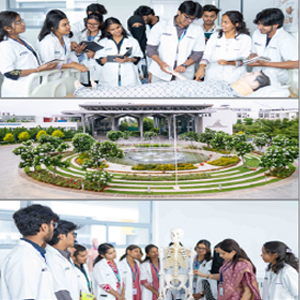
Hands-on learning remains central to the educational philosophy. Students receive practical exposure through cadaveric training, advanced laboratory sessions, and diagnostic techniques that mirror real healthcare environments. Modern laboratories equipped with contemporary diagnostic and therapeutic technologies enable learners to bridge theoretical understanding with clinical competence.
Equally important is the University's strong network of collaborations with hospitals, healthcare organisations, diagnostic laboratories, and research centres. These partnerships create opportunities for internships, clinical training, research engagement, and stronger employment outcomes upon graduation.
“The University's dedicated Career Services Cell further enhances student preparedness through structured soft-skills training, interview coaching, professional development programmes, and industry readiness initiatives, ensuring graduates enter the workforce with both technical expertise and professional confidence”, shares Dr. Vidya Shankar Shetty, Pro Vice Chancellor, Presidency University Bengaluru.
Creating Healthcare Professionals for a Technology-Driven Future
As healthcare rapidly embraces digital transformation, Presidency University has proactively integrated emerging technologies into its academic ecosystem. Students gain exposure to advanced diagnostic equipment, simulation-based learning, and virtual reality laboratories that enrich their understanding of clinical procedures before entering hospital settings. This technology-enabled approach enhances learning outcomes while improving clinical preparedness.
Beyond technical competence, the University actively nurtures a culture of inquiry and lifelong learning. Students regularly participate in research projects, scientific conferences, workshops, seminars, webinars, and interdisciplinary academic engagements.
Frequent interactions with experienced clinicians, healthcare practitioners, and industry experts expose learners to current practices across anatomy, physiology, exercise therapy, respiratory care, cardiovascular sciences, neuroscience, and several other specialised domains.
However, Presidency University's philosophy extends beyond producing technically proficient graduates. Recognising that compassionate healthcare professionals require emotional intelligence alongside clinical expertise, the University dedicates Wednesday afternoons exclusively to holistic student development.
Through sports, performing arts, music, leadership activities, wellness programmes, and student clubs, learners cultivate teamwork, resilience, communication skills, and emotional wellbeing.
Simultaneously, Institution Social Responsibility initiatives encourage students to work alongside NGOs and community organisations, fostering empathy, social responsibility, and a deeper understanding of community healthcare challenges.
Building a Legacy of Impact, One Healthcare Professional at a Time
The University's emphasis on holistic excellence is already reflected in the achievements of its students. Learners from the School of Allied Health Sciences have consistently demonstrated excellence beyond academics by representing Presidency University at prestigious intercollegiate and national sporting events.
Looking ahead, Presidency University envisions the School of Allied Health Sciences emerging as one of the institution's most sought-after schools. The roadmap focuses on strengthening clinical partnerships, expanding research opportunities, embracing emerging healthcare technologies, deepening international collaborations, and continually enriching the student learning experience.