Different Types of Hotel Management Courses in India
Bachelor of Science (BSc) in Hospitality and Hotel Administration
 Another popular undergraduate program is a Bachelor of Science in Hospitality and Hotel Administration. It is a blend of hospitality operations and scientific food production with accommodation and management education.
The three years BSc in Hospitality and Hotel Administration (HHA) course in India is an established course in the hospitality sector through the National Council for Hotel Management and Catering Technology (NCHMCT) along with the participating institutions.
The programme includes the food production, food and beverage service, front office and housekeeping departments of hotels. Students are also exposed to topics in hospitality accounting, hospitality management, nutrition, facility planning, and business communication.
One of the special characteristics of this programme is the emphasis on practical learning. Students attend laboratory, operational and industrial training sessions where they learn the inter-relationship between different departments of the hotel.
The programme is designed to prepare for operational and managerial roles. Graduates will also have the opportunity to continue their education at the graduate level in hospitality administration, tourism, business management and related areas.
Eligibility: Class 12 with English as a subject (usually as per admission criteria).
Duration: Three years.
Career opportunities: Hotel executives, hotel operations managers, food and beverage supervisors, front office executives, guest relations professionals and hospitality administrators with experience in the field.
Also read: 6 Executive Courses offered by IIT Madras
Specialised Culinary Arts and Food Production Courses
 Specialised culinary arts programs provide a concentrated approach to learning for students who are interested in cooking, the operation of a kitchen, food innovation, and the restaurant business.
These courses focus on the skills and knowledge required for the professional chef, including food preparation, kitchen management and international cuisine. Students can be trained in Indian, continental and Asian cuisines and other regional specialties depending on the programme.
The curriculum often includes:
- Culinary fundamentals and cooking techniques
- Food preparation and presentation
- Bakery and pastry production
- Kitchen operations and equipment management
- Food hygiene and safety
- Menu planning and costing
- Nutrition and food science
- Contemporary culinary trends
There are some schools that have culinary arts degrees, or other schools that have food production, bakery and confectionery diplomas and certificate programs.
The concept of culinary training is evolving, surpassing the traditional methods employed in hotel kitchens through innovations such as cloud kitchens, fine dining, and independent food businesses.
Eligibility: This is different from program to program and is normally of the Class 10 and 12.
Qualification: Time span is between six months to four years depending on the qualification.
Career applications: Professional chefs, pastry chefs, bakery chefs, kitchen managers, culinary consultants, people in the food business, and restaurateurs.
Bachelor of Business Administration (BBA) in Hospitality Management
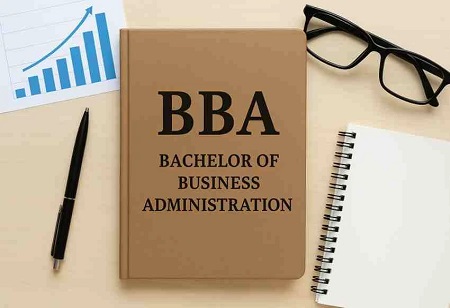 The BBA (Hospitality Management) program is geared toward students who have an interest in the business and managerial side of the hospitality industry. Although a BBA is generally more focused on business administration, strategic planning, marketing, finance and organizational management, it provides broad-based training in the various departments of the hotel industry as compared to a conventional hotel management programme.
Students learn about hospitality marketing, business communication, financial accounting, human resource management, hotel operations, customer relationship management, tourism management and entrepreneurship.
The programme is especially relevant because hotel industry companies increasingly look for employees who are able to combine the knowledge of operations with business decision making. Revenue management, digital marketing, customer experience, business development, and hospitality entrepreneurship are emerging career fields.
It can also have internships, industry projects and specialized courses or units on hotel and resort management, depending on the university.
Eligibility: 12th pass from any recognized board with the subject, as per university admission criteria.
Time of study: Usually three or four years.
Career opportunities: Hospitality business executives, hotel marketing professionals, revenue management associates, business development executives, resort administrators, and hospitality entrepreneurs.
“The modern hospitality industry expects far more than operational excellence. Front desk, housekeeping, culinary, and food and beverage expertise remain essential foundations, but today’s employers look for graduates who understand the market, tailor products and services to evolving customer needs, and optimise resources and revenue with discipline.
Hospitality education must therefore build business and leadership capability alongside operational competence. An entrepreneurial mindset helps graduates spot opportunities and create new ventures, while an intrapreneurial mindset lets them innovate and drive change within established organisations. Sound decision-making, problem-solving, and leadership are what separate those who manage tasks from those who shape outcomes.
Equally important is a commitment to sustainability. Regenerative practices and circular-economy thinking are fast becoming the benchmark for responsible hotels, and tomorrow’s professionals must be ready to lead that shift. Those who combine commercial acumen with purpose will build careers that are both rewarding and impactful,” says Manoj Neelamegan, Director, School of Hospitality & Tourism, AIMS Institutes Bangalore.


Current Issue