
How to Detox from News Fatigue (Without Missing Out)
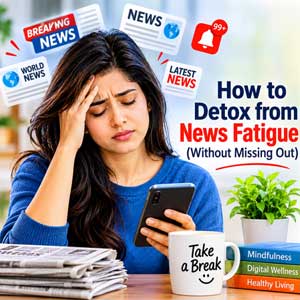 You’re sitting down for your morning cup of coffee, hoping to stay up-to-date with a few current events before you go to work. It’s normal to want to stay informed. But, a half hour later, you find yourself stressed, agitated, or even angry or upset. On top of that, you are not sure whether or not to believe the stories you read.
If this sounds familiar, you’re not alone. News fatigue is a common feeling, and it tends to be at its worst around big events, like the elections or major catastrophes, that take up most major news coverage. The breaking news banners, hot takes, and emotional reporting could leave you feeling less informed than before.
The good news is that you don’t have to choose between staying informed and protecting your sanity. Here’s how to do both.
Causes for News Fatigue
Many news reports are meant to catch the reader’s eye and keep them engaged, not necessarily to keep the reader informed. Headlines may use a sense of urgency or emotionally-charged or click-bait titles to keep readers clicking into the content. Social media algorithms, 24-hour coverage, and more access to news than any readers has ever had before can be more than enough reason to feel like “something is happening right now”.
What results is a mix of stress, cynicism, and burnout. Readers may respond by cutting out the news completely. But, that leaves a new problem: missing out on news that matters.
A detox from news coverage isn’t about cutting out the news completely and ignoring current events. It’s about taking control back over which news reaches you and which news you choose to consume.
Swap the Doom Scroll for an Intentional Feed
What’s the easiest way to start a news coverage cleanse? Nix the social media scrolling and choose a newsletter subscription from a trustworthy source. Tailored coverage through an unbiased newsletter source allows you to keep up with the more important current news, while removing the emotional news coverage that keeps you scrolling.
The problem with social media news coverage is partly in its pace. Social media thrives off of constant scrolling, which releases a dopamine rush in users that keeps them on the platform longer, while only consuming content for seconds at a time. This does not give a reader enough time to consume proper news coverage. So, what ends up being consumed are the titles designed more to entertain the reader than to keep them factually informed.
An unbiased newsletter offers an alternative. While the content is still condensed, it does not offer the endless scroll. Readers can sit down once a day, consume current events in a matter of minutes, and leave informed. The newsletter is designed to remove the bias and deliver readers only the facts of major news stories, which are written as highlights, where readers can decide from there how long or short to read for. The feed is intentional, factual, and allows the reader room to breathe and decide on an opinion for themselves, rather than being told how to feel.
Choose Your Sources Carefully
Some news outlets are more biased than others. Even within major national news outlets, you can find biased news coverage more often than not. Using a news source that uses a media bias fact checker, readers can still consume their favorite news outlets, just without the added spin on the story. Major news outlets especially tend to have the most access to cover the biggest news stories. However, the bias can skew the coverage reported. A media bias fact checker highlights the factual coverage they had more access to than other reporting sources, while removing the bias that clouds the coverage.
How to Make Sure You’re Not Missing Out
A news detox feels ideal for those who are experiencing news fatigue. But, the fear of missing out keeps people scrolling. Here are a few tips to protect yourself from fatigue while staying up to date:
- Keep one, reliable daily newsletter subscription in your inbox.
- Ask a friend or family member to inform you if big news breaks.
- Check in with your chosen reliable news sources only during one window of time per day.
With those three simple habits in place, you can keep up-to-date with what matters without living in the feed.
Current Issue