Karin Burns at Duke Energy Week: Building a Clean Grid Takes More Than Engineers
 Duke Energy Week ran from November 9 to 13, 2026, and its schedule was built around three words: security, sustainability and scale. By Thursday afternoon, when the Energy Innovation Showcase opened and eight innovators lined up to pitch their work, two questions remained. How do the three fit together, and who will actually build what comes next?
Karin Burns, a clean energy executive and Duke undergraduate alum, made that case in her opening remarks at the showcase. For much of a career spent funding, building and running organizations in this field, she says she would have called them three separate jobs: sustainability was the mission, security was someone else's department and scale was what kept her up at night.
Her view now is that they form a single assignment, which is reliable clean power that people can afford, on a planet everyone can live on. The next morning, she took the second question into a Duke Design Climate class with a simple answer: the work needs finance people, policy specialists, communicators, people leaders, and organizers as much as it needs engineers.
A Building Job, Not a Maintenance Job
For nearly two decades, electricity demand in the United States barely moved. That has changed quickly. According to Grid Strategies, the five year forecast of national peak load growth rose from 24 gigawatts in 2022 to 166 gigawatts in 2025, nearly seven times higher in three years.
The generation now in college is inheriting a grid that has to be built out, not simply maintained, and every part of the system feels that pressure at once.
That is where the three words collide. Build clean power too slowly, and older plants and imported fuels linger, raising emissions and leaving communities exposed to price shocks. Make clean power cost more than families can pay, and public support fades or even reverses. None of it holds together without the ability to build at scale. Affordability sits in the middle of all three.
Security Is Wider Than Fuel
Energy security once meant dependable access to oil and gas. Today it covers far more ground. Geopolitical events can shift supply overnight. The clean economy relies on critical minerals that come from a small number of countries. A household that cannot pay its bill is not energy secure, no matter how reliable the wires outside its window.
Reliability itself is tied to hardware that takes years to arrive. Wood Mackenzie's survey of the transformer market found that power transformers averaged 128 weeks from order to delivery, close to two and a half years.
None of these constraints is a law of physics. Each is a problem of attention and talent, and each needs people who have not yet joined the field.
Clean Supply Scales Fast, and the Grid Has to Keep Up
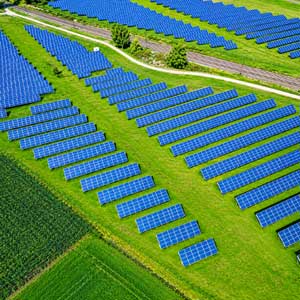
The national picture on clean supply is stronger than many headlines suggest. The U.S. Energy Information Administration reported that developers planned a record 86 gigawatts of new utility scale capacity for 2026, with solar and battery storage together making up 79 percent of it.
California offers a preview of what that looks like in practice. The EIA found that battery capacity on the state's main grid, run by the California Independent System Operator, grew 79 percent between April 2024 and April 2026 to reach 16 gigawatts. Those batteries soak up midday solar and carry the grid through the evening, when demand peaks and the sun is gone. The California Energy Commission notes that fewer than 700 megawatts of battery storage served the state in 2019.
California also shows what remains hard. When solar output outruns what the system can use, move or store, that power is turned away. The lesson is that clean supply can scale remarkably fast, while wires, risk management, storage and rate design have to keep pace. Delivering affordable clean power depends on getting all of those pieces to move together.
Every Function Has a Place in the Transition
On Friday, November 13, she gave a careers talk and then worked with several student teams as a mentor. Design Climate is a two semester Duke program that gives students the resources and mentorship to develop, test and pitch climate focused startups.
The central message was that the energy transition needs more than engineers. It is a business, a public service and a construction project all at once. Almost every clean energy project is a financing problem before it is a technology problem, so it needs finance people. It needs people leaders because organizations cannot scale what they cannot staff, communications experts because projects live or die on public trust, and policy specialists because in energy the rules are often the product. It also needs lawyers, sales teams, community organizers and leaders who can translate among all of them.
Her own path makes the point. It began with a high school environmental club in New Jersey, started after medical waste washed up on local beaches, then moved through investment banking in Hong Kong, climate investing and years of building and leading organizations in the nonprofit, private and public sectors. A career in clean energy, as she told the students, may not follow a straight line. The skills that matter most, reading the numbers, building a team and earning trust, travel with you from one setting to the next.
Where Students Can Start This Semester
Her advice was practical. Find your craft by noticing what people already come to you for, then ask three people who have worked with you what you do better than most. If you want to improve at something, take the smallest real version of it, such as the finance role on a Design Climate team or delivering the pitch yourself. Have one real conversation each week with someone whose job you are curious about. Stay close to the customer, because the people who understand their problems are best positioned to solve them.
For a first job, the guidance was to choose the place where you will learn the most from the best people and to worry less about the title. Startups teach speed and range. Utilities and public power teach how the system really works. Developers teach how things get built, investors teach how to judge risk, government teaches how the rules are made and nonprofits teach how to build a coalition.
The showcase remarks closed on three verbs: protect, flex and build. Design Climate ventures have raised $6.2 million so far, and the challenge to students was to make theirs the next one. Just as important was a simpler request to show up. Read one filing at the North Carolina Utilities Commission or attend one planning board meeting, because the people in the room shape what gets built. Most of this work will never be glamorous, yet every problem raised during Energy Week, from a long wait for a transformer to solar power wasted at noon, is an opening for someone willing to take it on, with or without an engineering degree.
Current Issue