
Life vs General Insurance: Key Differences Explained Clearly
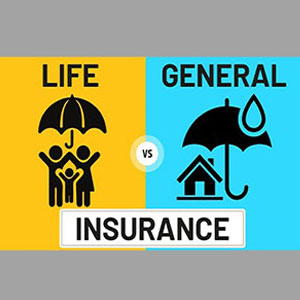 Go to any financial planning conversation in India, and insurance comes up within the first few minutes. Buy insurance. Get covered. Protect yourself.
What rarely gets explained clearly is that insurance is not one thing. It is a category. And the two main branches within that category serve completely different purposes, work on different timelines, and address different kinds of financial risk.
Most people in India own at least one type without fully understanding what the other one does. That gap creates real holes in financial planning that only become visible when a claim situation arises, and the policyholder realises their coverage did not extend as far as they assumed.
Define Insurance: What It Actually Means
Before getting into the difference between life insurance and general insurance, it is important to understand insurance at its most basic level.
Insurance is a contract between a person and an insurer. The person pays a regular premium. The insurer promises to pay a defined amount if a specific event occurs. The event could be death, illness, an accident, a fire, a flood, or a theft. The category of event determines which type of insurance is relevant.
The word specific matters. Insurance does not cover everything. It covers what the policy document defines. Reading that definition carefully before buying matters more than most people realise.
In India, all insurance products fall under two broad regulatory categories. Life insurance is regulated by IRDAI under the life insurance framework. And general insurance, also regulated by IRDAI, but under a separate non-life framework. The products, the premium structures, the claim processes, and the financial purpose of each are fundamentally different.
What Life Insurance Is Built Around
Life insurance is built around one central event. Death.
If the insured person dies during the policy period, the insurer pays a defined sum to the nominee. That is the core promise. Everything else in the life insurance category, endowments, money-back plans, ULIPs, whole life plans, is a variation on or addition to that core.
Life insurance policies run for long periods. Term plans typically run for 20 to 40 years. Endowment and savings-linked plans run for similar durations. The premium is paid regularly over that period. The cover remains active throughout.
Because of its long-term structure, life insurance intersects with financial planning in ways general insurance does not. Several life insurance products build a savings corpus alongside the life cover. Contributions qualify for tax deductions under Section 80C under the old tax regime. Maturity proceeds under many plans are tax-free under Section 10(10D), subject to conditions under the Income Tax Act 2025.
The primary purpose of life insurance is not investment return. It is replacing the financial loss a household faces when its earning member is no longer there. That is a very specific problem, and life insurance is built to solve exactly that.
What General Insurance Is Built Around
If you broadly define insurance, general insurance covers health, property, vehicles, travel, and other everyday financial risks.
Health. Vehicles. Property. Travel. Businesses. Liability. Crops. Marine cargo. The category is broad, but the underlying logic is consistent. Something of value exists. An event could damage or destroy it or create a financial liability around it. General insurance covers the financial cost of that event.
A few types that most Indian households encounter directly:
-
Health insurance: Covers hospitalisation, medical treatment, and related expenses. The most commonly held general insurance product in India is after motor insurance.
-
Motor insurance: Third-party motor insurance is legally mandatory in India for all vehicles on the road. Comprehensive cover additionally protects the vehicle itself against damage.
-
Home insurance: Covers the structure and contents of a home against fire, flood, theft, and similar events. Significantly underutilised in India despite the relatively low annual premium.
-
Travel insurance: Covers medical emergencies, trip cancellations, and baggage loss during travel. Typically purchased for specific trips rather than held as a permanent policy.
General insurance policies are typically annual. They are renewed every year. The cover does not accumulate. There is no long-term corpus being built. The premium pays for protection during that specific year, and nothing carries forward.
Key Differences Between Life Insurance and General Insurance
|
Feature |
Life Insurance |
General Insurance |
|
What it covers |
Risk of death |
Risk to health, assets, property, and liability |
|
Policy duration |
Long-term, typically 10 to 40 years |
Short-term, typically annual |
|
Premium structure |
Paid across the full policy term |
Paid annually, renewed each year |
|
Maturity benefit |
Available in savings-linked plans |
Not applicable |
|
Savings component |
Present in endowment, ULIP, and money-back plans |
Not present |
|
Tax on premium |
80C deduction under the old regime |
80D deduction for health insurance only |
|
Claim trigger |
Death or survival to maturity |
Specific loss or damage event |
|
Regulated under |
IRDAI life insurance framework |
IRDAI general insurance framework |
Why Owning Both Matters
A common mistake in Indian households is treating these two categories as alternatives. Buying health insurance and thinking life cover is handled. Or buying a life policy and assuming medical costs are covered.
They are not substitutes. They address different risks entirely.
A family with a good health insurance plan but no life insurance is protected against hospital bills, but not against the financial impact of losing the primary earner. A family with strong life insurance but no health cover may find a major illness draining savings because hospitalisation costs are not covered.
Both categories are necessary for a complete financial protection plan. Life insurance handles the long-term consequences of death. General insurance handles the short-term financial damage from health events, accidents, property loss, and similar situations that happen during a lifetime.
The difference between life insurance and general insurance is not about which one is more important. It is about understanding that they protect against different things and that a gap in either one leaves the household exposed to a risk that the other cannot address.
Current Issue