
What Evidence Matters Most in a Car Accident Claim?
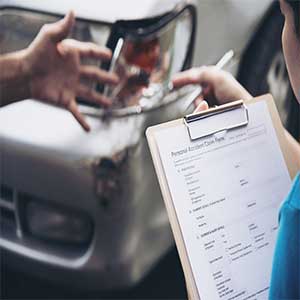 A car accident claim is rarely decided by one dramatic piece of proof. More often, the outcome depends on a collection of records, photographs, statements, and expert findings that together explain what happened, who was responsible, and how seriously someone was injured.
For lawyers, investigators, and insurance professionals, the challenge is not simply gathering evidence.
It is determining which evidence is reliable, how different pieces fit together, and whether they can withstand scrutiny if the claim becomes disputed.
Some evidence can strengthen a case considerably. Missing or inconsistent evidence can do the opposite.
Photographs and Video From the Scene
Visual evidence is often among the most useful information collected after a collision.
Photographs can document vehicle positions, impact points, road conditions, traffic signs, skid marks, debris, weather, and visible injuries. These details may later help establish how the crash happened.
Video can be even more revealing. Depending on the location, footage may come from the following:
- Dash cameras
- Traffic cameras
- Nearby businesses
- Residential security systems
- Rideshare or commercial vehicle cameras
- Mobile phones
The timing of evidence collection matters. Vehicles are moved, debris is cleared, and surveillance footage may be deleted or overwritten. Evidence that exists immediately after a collision may no longer be available weeks later.
That is why lawyers and investigators often place significant emphasis on preserving visual evidence early.
The Police Report
A police report can provide an important starting point for reconstructing an accident.
It may include information about the drivers, vehicles, witnesses, roadway conditions, citations, and statements made at the scene. Officers may also include diagrams or observations about how the collision occurred.
However, a police report is not necessarily the final word on liability.
An officer may not have witnessed the crash personally, and statements recorded at the scene can later be disputed. Lawyers often compare the report with photographs, witness testimony, vehicle damage, and other evidence before reaching conclusions about fault.
In contested cases, inconsistencies between the police report and other evidence can become especially important.
Witness Statements
Independent witnesses can provide valuable context when drivers disagree about what happened.
A witness might have seen a vehicle run a red light, change lanes abruptly, follow too closely, or enter an intersection improperly. In some cases, witnesses can also describe a driver's behavior immediately before or after the collision.
The usefulness of witness testimony often depends on credibility and consistency.
Questions may include:
- Where was the witness located?
- Did the witness have an unobstructed view?
- How much of the accident did the witness actually see?
- Does the account match physical evidence?
- Has the witness's version changed over time?
Witnesses who have no personal connection to either driver can sometimes carry particular weight because they may be viewed as more neutral.
Medical Records and Treatment Documentation
Evidence of fault is only one part of an accident claim. An injured person must also establish the nature and extent of the harm caused by the crash.
Medical records can document diagnoses, treatment plans, diagnostic imaging, prescriptions, physical therapy, surgery, and other care.
They can also help establish timing.
For example, records showing that a patient sought treatment shortly after a collision may help support the connection between the accident and the injury. Long gaps in treatment, on the other hand, may give an insurer an opportunity to argue that the condition was unrelated or less serious than claimed.
In more complicated injury cases, firms such as Ried Pecina Trial Lawyers may advise clients to speak with a car accident lawyer about how medical records, accident evidence, and insurance documentation work together when building a claim.
Vehicle Damage and Repair Records
The condition of the vehicles can reveal a great deal about an accident.
Damage patterns may help investigators determine the direction of impact, the relative positions of the vehicles, and in some cases the severity of the collision.
Repair estimates and photographs can also document the financial loss associated with the crash.
In more serious cases, the vehicles themselves may need to be preserved before repairs or disposal. Investigators or accident reconstruction professionals may inspect them for structural damage, mechanical issues, electronic data, or other evidence.
Electronic and Digital Evidence
Modern vehicles and mobile devices can create significant amounts of data.
Depending on the circumstances, relevant digital evidence may include:
- Event data recorder information
- GPS records
- Mobile phone records
- Text message activity
- Rideshare application records
- Commercial vehicle telematics
- Electronic logging device data
- Navigation histories
This type of information may help establish speed, braking behavior, location, driver activity, or whether someone was using a phone near the time of the collision.
Access to digital evidence can raise legal and technical issues, however. Some records require formal preservation requests, subpoenas, or other legal procedures before they can be obtained.
Employment and Financial Records
When an injury causes someone to miss work or affects future earning ability, employment records may become important evidence.
Pay statements, tax records, employer letters, schedules, and attendance records can help document lost income.
For people who are self-employed or whose income varies, establishing financial loss may be more complicated. Business records, invoices, contracts, and historical earnings may all become relevant.
Serious injuries can also raise questions about future earning capacity. In those cases, vocational specialists or economists may be asked to evaluate how an injury is likely to affect employment over time.
Expert Testimony
Some accident claims require specialized knowledge that goes beyond what photographs or witness statements can establish.
Experts may include:
- Accident reconstruction specialists
- Physicians
- Engineers
- Economists
- Vocational rehabilitation specialists
- Human factors experts
- Vehicle or mechanical specialists
An accident reconstruction expert, for example, may analyze vehicle damage, roadway evidence, speed calculations, and electronic data to determine how a collision occurred.
Medical experts may address whether an injury was caused by the accident and what future treatment may be necessary.
Expert testimony tends to become more important when the facts are technically complex or strongly disputed.
Social Media Can Also Become Evidence
Not all evidence helps the person making the claim.
Social media posts, photographs, videos, and comments can sometimes be used to challenge allegations about injuries or limitations.
A person who claims to be unable to perform certain activities, for example, may face questions if public posts appear to show otherwise.
Social media content can also be taken out of context, which is one reason lawyers often advise clients to be cautious about discussing an accident or recovery publicly while a claim is pending.
Consistency Can Be as Important as the Evidence Itself
Strong evidence should generally tell a consistent story.
The police report, medical records, photographs, witness statements, and testimony do not need to describe every detail in exactly the same way. But major contradictions can weaken credibility.
Insurers and opposing attorneys often look closely for inconsistencies involving:
- How the accident occurred
- When symptoms began
- The severity of injuries
- Prior medical conditions
- Work limitations
- Statements made to insurers
- Statements made during legal proceedings
Even relatively small discrepancies can become significant when liability or damages are heavily contested.
Preserving Evidence Early Can Matter
One of the most important lessons in accident litigation is that evidence does not remain available forever.
Surveillance footage can disappear. Vehicles can be repaired. Road conditions can change. Witnesses can become difficult to locate. Electronic records may be deleted according to routine retention policies.
Preservation is therefore a major part of early case investigation.
Lawyers may send preservation notices, request records, interview witnesses, obtain photographs, or arrange inspections before evidence disappears.
Evidence Builds the Story of the Claim
A successful accident claim usually depends on more than proving that a collision happened.
The evidence must help answer several questions: Who caused it? How did it happen? What injuries resulted? What financial losses followed? And are those claims supported by reliable documentation?
For legal professionals, that process often resembles assembling a puzzle. Individual pieces may seem insignificant on their own, but together they can establish a clear and persuasive account of the accident.
The strongest claims are generally those in which evidence is collected early, preserved carefully, and supported by consistent records and credible testimony.
Current Issue