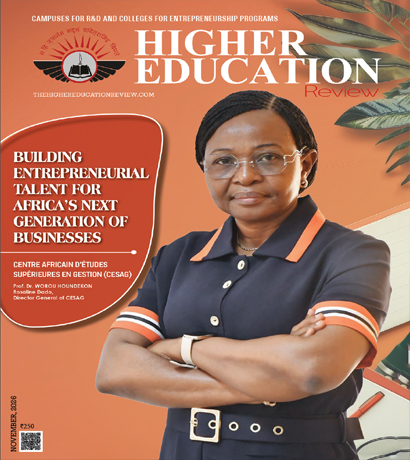
Where Mathematical Rigor Meets Learner Variability
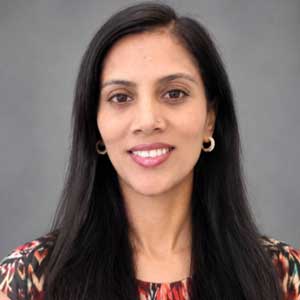 Algebra is often treated as a gatekeeper course: success opens access to advanced study, while failure can narrow a student's options for years. The technical challenge for teachers is not merely to cover equations, functions and representations. It is to make the underlying structures visible to learners who arrive with very different levels of prior knowledge, language proficiency and formal support. For Tulika Samal, who teaches Algebra I in Washington, D.C., after years of leading schools in India, that challenge sits at the center of daily practice.
Her preparation alternates between the two kinds of knowledge the course demands. She studied mathematics, then education, then education again at the master's level, and then returned for a master's degree in mathematics. Deep content knowledge makes connections possible; pedagogical training helps a teacher decide which connection a particular learner can actually use. Algebra quickly exposes a gap in either one.
Across three American schools - BASIS Mesa and Maxine O. Bush Elementary School in Arizona, and now Capitol Hill Montessori at Logan in Washington, D.C. - the standards documents have changed, but the underlying routine has not: unpack the learning target, design a sequence, gather evidence, identify misconceptions and adjust the route without lowering the destination.
In Washington, her planning follows the Illustrative Mathematics curriculum and Common Core standards. Illustrative Mathematics is built around tasks and discussion, which makes facilitation as important as explanation. Samal's use of cooperative learning fits that design. In a productive group, students compare representations, justify a method and locate the exact point where they disagree. The teacher's role becomes diagnostic: listening for whether an error reflects arithmetic, language, representation or a deeper conceptual gap.
Her mathematics word wall addresses one frequent source of invisible difficulty. Algebraic language compresses ideas into specialized terms and symbols. For multilingual learners, unfamiliar vocabulary can obscure mathematical understanding; for other students, casual familiarity can conceal imprecision. Making terms visible provides a common reference, but the wall itself is not the accomplishment. Its value depends on repeated use in speech, writing, worked examples and student explanations. Vocabulary support is not a substitute for reasoning; it is what allows more students to take part in the reasoning without the mathematics itself being simplified.
Data-driven planning creates a second bridge. Samal maintains student mathematics data and tracks the accommodations and services connected to individualized education programs, Section 504 plans and English-language learning. The technical risk is to turn data into labels. The more productive use is hypothesis generation: a pattern in student work suggests which concept or representation needs attention, and the next task tests that interpretation. Data becomes part of an iterative lesson-design cycle rather than a final judgment about a learner.
Mind mapping, the subject of Samal's graduate research in education, offers another lens on representation. Mathematics learning depends on seeing relationships - between forms of an equation, between a graph and a context, or between a procedure and the property that justifies it. A mind map can externalize those connections, though it must be designed carefully to avoid becoming a decoration. Its most defensible use is as a formative artifact that reveals how a learner is organizing ideas, and where the organization breaks down.
Her advanced mathematics club addresses the other side of variability. Inclusive teaching is often discussed only in terms of remediation, but students also need opportunities for extension. A club allows greater depth, nonroutine problems and mathematical identity-building without rushing the core class. Managed well, enrichment and intervention are not competing projects. Both start from the premise that uniform pacing is an inadequate response to genuine differences among learners.
Classroom culture ties these elements together. Students cannot expose partial reasoning if error is treated as embarrassment, and teachers cannot diagnose misconceptions that learners hide. Samal's emphasis on a safe environment, judicious discipline and student voice therefore belongs inside the instructional model, not beside it. In algebra, where notation makes uncertainty visible on the page, culture determines the quality of evidence available to the teacher. A classroom that normalizes revision produces better information for both learner and instructor.

Field experiences extend the same logic beyond the building. When a lesson is connected to a place, an institution or a practical problem, students must decide which quantities matter and how a formal model relates to reality. That is far more demanding than inserting numbers into a rehearsed procedure. Samal's field trips can shift students from performing mathematics to recognizing when mathematical thinking is useful.
Samal brings an unusually broad perspective to this work. Before teaching Algebra I in Washington, she taught mathematics in India and Arizona, served as a school principal, and helped other educators through professional development. Those experiences give her a view of learning that reaches beyond a single classroom: she understands how curriculum, teacher preparation and school culture shape what students can achieve.
Her value as an educator lies in bringing that wider understanding back to the daily decisions of teaching, holding students to rigorous mathematical goals while finding ways for learners with different needs to reach them. In that sense, her career offers a compelling example for teachers seeking to make algebra both demanding and accessible.
“Teaching algebra means helping students see that they are capable of understanding ideas that once seemed out of reach. My responsibility is to keep the mathematics rigorous while finding a path that allows each learner to take part in it.” — Tulika Samal
Samal’s work brings together the perspectives of a mathematics teacher, a former school leader and an educator who has worked across two countries. In her classroom, that experience takes a practical form: grade-level goals remain ambitious, while discussion, targeted support and enrichment give students different ways to engage with them. Her approach offers a valuable example of how rigor and responsiveness can strengthen each other.
The results of these practices have not been established through a published study, so claims about their effect on test scores would go beyond the available evidence. What her career does show is a sustained commitment to making demanding mathematics accessible without diminishing its depth. In a subject that can determine which opportunities remain open to students, Tulika Samal stands out as a teacher whose leadership is expressed in the possibilities she works to create for every learner.
Current Issue