Reckitt's CIDO Reveals the CIO Playbook for Future Leaders
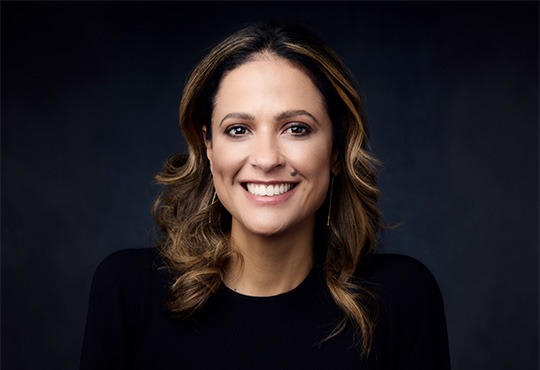 Alaine Charchat, IT Executive Director & Chief Information Digital Officer (CIDO) LATAM at Reckitt in an engaging interaction with Janifha Evangeline, Managing Editor, Higher Education Review, shares the defining moments, leadership lessons, and strategic decisions that shaped her journey to the C-suite. She discusses the evolving role of modern CIOs, the importance of business-driven technology leadership, and the critical skills future leaders need to thrive in an AI-powered, and digitally transformed business landscape.
Take us through your early educational journey and the prior industry experience that you bring to the table.
My journey started very early. I began working at the age of 16, which gave me a strong sense of responsibility, adaptability, and resilience from the beginning of my career. My academic background combines technology, business, and marketing, including a degree in Marketing, an MBA in Business Management, executive education in Finance, Digital Transformation, Digital Platforms, and more recently the MIT Technology Leadership Program.
Professionally, I built my career across several industries, including telecommunications, consumer goods, beverages, coffee and healthcare. I started in technical and operational roles in telecom companies such as Claro, Vivo, and TIM, where I learned the fundamentals of systems, operations, service management, and large-scale technology environments. Later, I had the opportunity to work for global organizations such as Unilever, Diageo, JDE Coffee, Johnson & Johnson, and Reckitt, progressively expanding my responsibilities from technology delivery to business transformation, enterprise strategy, and executive leadership.
This diversity of industries gave me a broad business perspective and reinforced a key belief I still hold today: technology creates value only when it solves real business problems and improves people's lives.
What key experiences in your early career had the most significant impact on your journey to becoming a CIO? Can you share a pivotal moment or decision in your career that you believe set the stage for your rise to the top?
One of the most influential aspects of my early career was working in highly operational environments where technology failures had immediate business consequences. Managing critical incidents, leading 24x7 operations, and supporting large-scale customer-facing systems taught me discipline, accountability, and the importance of execution under pressure.
A pivotal moment came when I moved from purely technical positions into business-facing leadership roles. At Diageo, and later at Unilever, I became deeply involved in connecting technology investments to business outcomes, ROI, customer experience, and organizational strategy. That shift fundamentally changed the way I viewed technology leadership.
I realized that successful CIOs are not measured by the technologies they deploy but by the business value they enable. From that moment onward, I intentionally invested in finance, business strategy, stakeholder management, and leadership development, which ultimately prepared me for CIO-level responsibilities.
What career path and leadership experiences are most critical for becoming a successful CIO in today’s digital-first business environment?
There is no single path to becoming a CIO, but there are certain experiences that are essential.
First, aspiring CIOs need a solid foundation in technology. Understanding architecture, operations, cybersecurity, data, and delivery remain important.
Second, they need broad business exposure. Future CIOs should have experience working in areas such as Sales, Marketing, Supply Chain, Finance, and HR. The ability to understand how the company makes money is just as important as understanding technology.
Third, leadership experience is critical. Building high-performing teams, leading through uncertainty, managing change, and influencing executives are skills that become increasingly important as you grow.
Today's CIO is not simply a technology executive. The role requires balancing innovation, operational excellence, risk management, talent development, and business growth simultaneously.
How can aspiring CIOs transition from technical management roles to strategic business leadership positions?
The transition starts with changing your mindset.
Many technology leaders focus on systems, projects, and platforms. Strategic leaders focus on outcomes, customers, revenue, productivity, growth, and competitive advantage.
I encourage aspiring CIOs to spend time understanding business strategy and financial performance. Participate in commercial discussions, engage with customers, learn how investments are prioritized, and become comfortable speaking the language of business executives.
Another important step is building influence outside IT. The most successful CIOs I know are trusted advisors to the business, not just technology experts. They are recognized for helping solve enterprise challenges, regardless of whether those challenges are technical.
Which technical, financial, and communication skills do future CIOs need to stay relevant in the AI and automation era?
From a technical perspective, CIOs must understand AI, data platforms, cybersecurity, enterprise architecture, cloud technologies, and automation. They don't need to be the deepest technical expert in every domain, but they must understand how these capabilities create business value.
Financially, CIOs need strong business acumen. They should understand investment prioritization, value realization, portfolio management, operating models, ROI, and cost optimization.
Communication is becoming even more important. Future CIOs must be able to explain complex technical concepts in simple business language. They must influence boards, inspire teams, engage external partners, and build trust across the organization.
In the AI era, the leaders who will stand out are those who can connect technology possibilities with business realities.
What are the biggest career mistakes IT professionals make while aiming for a CIO role, and how can they avoid them?
One common mistake is focusing exclusively on technology and neglecting business knowledge.
Another mistake is believing that career progression is only about accumulating technical certifications. Technical expertise creates credibility, but executive leadership requires much broader capabilities.
A third mistake is avoiding difficult assignments. Some of my greatest professional growth came from taking on complex transformations, organizational changes, and challenging business situations.
Finally, many professionals underestimate the importance of people leadership. Future CIOs must learn how to attract talent, develop teams, manage conflict, and create a culture that enables high performance.
How important is cross-functional business exposure in shaping future-ready CIOs across industries?
It is absolutely essential.
Technology touches every business function, so CIOs need to understand the priorities, challenges, and objectives of multiple areas.
Throughout my career, I have worked closely with Supply Chain, Marketing, Sales, Finance, HR, Digital Commerce, Product Development, Analytics, and Operations. This cross-functional exposure allowed me to better connect technology investments to business outcomes.
The more a future CIO understands the entire value chain, the more effective they become in driving transformation and influencing strategic decisions.
What role do cybersecurity, AI governance, and digital transformation projects play in accelerating the journey to CIO leadership?
These areas have become central to modern CIO leadership.
Cybersecurity is no longer just a technology concern; it is a business resilience issue. Boards increasingly expect CIOs to help protect enterprise value and manage risk.
AI governance is equally important. As organizations scale AI adoption, leaders must balance innovation with ethics, compliance, transparency, and responsible use.
Digital transformation projects provide some of the best learning opportunities for future CIOs because they require leaders to integrate technology, process redesign, change management, stakeholder alignment, and value measurement.
Leading successful transformation programs demonstrates the ability to deliver enterprise-wide impact, which is one of the strongest indicators of CIO readiness.
How are the expectations from modern CIOs evolving beyond technology management toward business growth and innovation leadership?
The role has changed dramatically.
Historically, CIOs were expected to ensure stability, reliability, and cost efficiency. Today, those expectations remain, but they are no longer sufficient.
Modern CIOs are increasingly expected to contribute directly to growth, innovation, productivity, customer experience, and competitive differentiation.
At Reckitt, for instance, much of our focus has been on leveraging Data, AI, automation, and digital capabilities to generate measurable business outcomes, increase productivity, and accelerate innovation.
Today's CIO is effectively a business executive who happens to lead technology, not a technology executive who occasionally participates in business discussions.
What advice would you give to aspiring professionals on building a reputation that aligns with their career goals? What skills or experiences do you believe are essential for future leaders in the industry?
Your reputation is built through consistency between what you say, what you do, and how you lead others.
My advice is to focus on three things:
- Deliver results. Consistently create measurable value for the business.
- Invest in people. The best leaders grow other leaders. How you develop talent will become part of your legacy.
- Stay curious. Technology evolves continuously. Lifelong learning is essential.
For future leaders, I believe the most critical capabilities will be adaptability, strategic thinking, business acumen, data-driven decision making, AI literacy, communication, and inclusive leadership.
Most importantly, never forget that technology is ultimately about people. The best transformations happen when we combine innovation with empathy, performance with purpose, and ambition with humanity. That philosophy has guided my career and continues to shape the leader I strive to be every day.
About Alaine Charchat, IT Executive Director and Chief Information Digital Officer (CIDO) for Latin America at Reckitt:
Alaine Charchat is a global technology executive with more than 20 years of experience leading digital transformation, data & AI, enterprise modernization, automation, and business technology strategies across multinational organizations, including Reckitt, Johnson & Johnson, Unilever, Diageo, and JDE Coffee. She currently serves as VP IT&D Emerging Markets, driving technology-led business growth, innovation, and transformation across diverse markets.
Known for combining business acumen with a people-first leadership style, Alaine has been recognized among Brazil’s Top CIOs by Forbes and named one of the country’s most inspiring women in technology.
Current Issue