
Hochschule Bielefeld - University of Applied Sciences and Arts (HSBI): Where Academic Research Creates Industrial Impact
Europe's most influential research-driven universities are no longer measured solely by the number of scientific papers they publish or the size of their laboratories. Their real impact lies in how effectively they convert research into practical solutions, creating technologies that strengthen industries, addressing societal challenges, and preparing graduates to thrive in an increasingly complex world. This shift has elevated institutions that combine academic excellence with close industry engagement, interdisciplinary collaboration, and a strong culture of innovation.
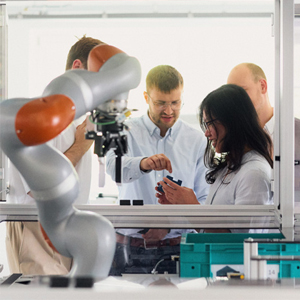
Among these institutions, Hochschule Bielefeld University of Applied Sciences and Arts (HSBI) has established a distinctive position. Located in Germany's economically powerful Ostwestfalen-Lippe (OWL) region, HSBI has built its reputation around a simple but powerful philosophy: research should solve real problems. Rather than separating classrooms from laboratories or academia from industry, the university integrates all three, enabling students, researchers, and businesses to collaborate from the earliest stages of innovation.
Founded in 1971 to address Germany's growing demand for highly qualified professionals, HSBI initially focused on practice-oriented teaching. Over the decades, the institution has evolved into a research-intensive university where teaching, applied research, and knowledge transfer form three important pillars. Today, with around 10,000 students and nearly 1,000 staff members, the university continues to expand its research footprint while remaining firmly connected to industry and society.
Building Research around Practical Impact
What differentiates HSBI is its unwavering commitment to application-oriented research. Every research initiative is designed with implementation in mind, ensuring that scientific discoveries create measurable value for businesses, communities, and public institutions.
This philosophy is reflected in the university's academic model. Students engage with practical research challenges from the beginning of their education, gaining first-hand exposure to industry problems while developing analytical and technical skills.
Equally significant is the professional background of the faculty. Professors are generally expected to bring substantial industry experience alongside academic expertise, ensuring that teaching remains closely aligned with evolving market realities.
Research activities are organised through six specialised institutes covering materials science, technical energy systems, data science, mechatronics, intelligent buildings, and educational and healthcare research. Complementing these institutes are collaborative research networks that encourage interdisciplinary thinking while connecting researchers with industry, public organisations, and regional stakeholders.
This structure has significantly strengthened HSBI's research profile, reflected in the steady growth of externally funded projects and increasing international visibility through scientific publications and expanded Open Access initiatives.
HSBI has expanded its knowledge-transfer strategy through dedicated leadership focused on transfer and societal impact, reinforcing the university's commitment to ensuring that research outcomes extend beyond academic publications
Innovation Powered by Collaboration
Collaboration is embedded into nearly every aspect of research at HSBI. The university maintains partnerships with more than 300 companies and institutions, allowing academic research to respond directly to industrial requirements while creating opportunities for students and researchers to work alongside practitioners.
The university's integrated campus has further accelerated interdisciplinary cooperation by bringing faculties and research teams together within a shared environment. Complex challenges, particularly those spanning engineering, healthcare, sustainability, business, and digital technologies are increasingly addressed through collaborative projects rather than isolated disciplines.
This collaborative culture has also translated into growing success in securing competitive funding. Recent interdisciplinary initiatives explore areas where technology intersects with healthcare, advanced materials, sustainability, and regulatory frameworks, demonstrating that modern innovation often demands expertise beyond a single academic discipline.
To further strengthen societal engagement, HSBI has expanded its knowledge-transfer strategy through dedicated leadership focused on transfer and societal impact, reinforcing the university's commitment to ensuring that research outcomes extend beyond academic publications.
Circular Economy as a Blueprint for Future Research
One of HSBI's most significant initiatives is InCamS@BI - Innovation Campus for Sustainable Solutions, a collaborative project with Bielefeld University funded under Germany's "Innovative University" programme through 2027.
The initiative focuses on one of Europe's most pressing sustainability challenges: integrating plastics into a functioning circular economy. Rather than approaching the issue solely from an engineering perspective, the project combines expertise from plastics technology, engineering, chemistry, physics, business law, business psychology, and innovation management.
This interdisciplinary approach enables researchers to develop practical solutions alongside companies and public stakeholders. Beyond laboratory research, the project actively promotes knowledge exchange through expert panels, makeathons, barcamps, technology assessments, implementation guides, and practical toolkits that help organisations transition towards circular business models.
The project illustrates HSBI's broader research philosophy, bringing together scientific expertise, industrial collaboration, and public engagement to create solutions that are both innovative and implementable.
Preparing for the Next Era of European Higher Education
As artificial intelligence reshapes industries and education alike, HSBI is positioning itself at the forefront of this transformation. AI has become an integral component of research proposals across disciplines, reflecting both technological developments and Europe's evolving regulatory landscape.
The university is also investing in more flexible educational models that allow students to follow personalised learning pathways while supporting cross-university curricula and collaborative academic programmes. Significant funding secured for these initiatives demonstrates confidence in HSBI's long-term strategy of combining digital transformation with academic quality.
Equally important is the university's commitment to responsible science communication. At a time when misinformation presents growing societal challenges, HSBI sees public engagement as an essential extension of research, ensuring that scientific knowledge remains accessible, credible, and relevant.
Looking ahead, the university aims to deepen its international partnerships, strengthen its performance across teaching, research, and knowledge transfer, and continue supporting the globally active industries that define the OWL region. By maintaining its focus on applied innovation, interdisciplinary collaboration, and industry relevance, Hochschule Bielefeld University of Applied Sciences and Arts (HSBI) continues to demonstrate how modern universities can generate impact far beyond the boundaries of the campus.