
Victor Babes University Of Medicine & Pharmacy: Transforming Healthcare Education through Strategic Industry Integration & Global Excellence
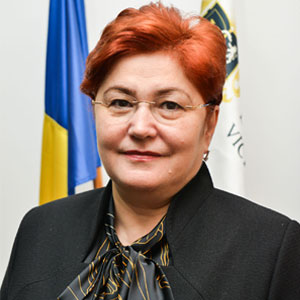
By Prof. Dr Claudia Borza, Vice Rector
The global healthcare industry continues to face unprecedented challenges, requiring institutions of higher education to evolve and adapt their medical training programs to meet growing demands. With an aging population, emerging health threats, and rapid technological advancements in medical sciences, universities worldwide are under pressure to produce competent healthcare professionals who can navigate complex clinical environments from day one.
Victor Babes University of Medicine & Pharmacy traces its remarkable journey to December 30, 1944, when King Michael I signed Decree-Law No. 660, officially creating the Faculty of Medicine within the newly founded Western University.
Opening its doors on July 15, 1945, with 412 first-year and 76 second-year students, the institution has evolved from humble beginnings in the former Notre Dame Secondary School to become a premier medical education center.
The transformative years saw the school evolve into the Institute of Medicine in 1948, with the Faculty of Dentistry joining in 1964 and the Faculty of Pharmacy in 1990. Finally, in 2001, the university adopted its current name, honoring the great Romanian bacteriologist Victor Babe?. Today, the institution serves approximately 10,000 students annually across comprehensive medical education programs offered in English, French, and Romanian languages.
Comprehensive Academic Structure
The university's academic excellence spans four distinct faculties. The Faculty of Medicine offers programs in General Medicine with multilingual options, while the Faculty of Dental Medicine encompasses Dental Medicine, Dental Technique, and nursing in dental care.
The Faculty of Pharmacy provides five-year undergraduate programs worth 300 ECTS credits, with annual tuition of €8,000 for non-EU students, alongside five postgraduate master's programs including Cosmetology and Dermopharmacy, Pharmacovigilance, and Applied Phytotherapy. The Faculty of Nursing offers programs in Registered Nursing, physio-kineto therapy, and Nutrition and Dietetics.
The institution maintains educational excellence through its 1,000 qualified faculty members, implementing rigorous evaluation systems and continuous professional development. Faculty recruitment follows strict standards requiring advanced academic credentials, relevant clinical experience, and proven teaching excellence, with performance monitored through student feedback and peer evaluations.
"Our commitment to academic quality ensures that our six-year medical programs prepare graduates who are immediately equipped for professional practice, combining theoretical mastery with extensive clinical competency to meet the evolving demands of modern healthcare delivery", emphasizes Dr Nilima Kundnani, Senior Lecturer Counsellor, Victor Babes University of Medicine & Pharmacy.
The university's pedagogical approach emphasizes strong industry-academia partnerships, ensuring curriculum alignment with contemporary healthcare and pharmaceutical sector requirements
Industry-Aligned Curriculum & Innovation
Contemporary medical education requires balancing rigorous academic training with practical industry preparation. Victor Babe? University of Medicine & Pharmacy addresses these challenges through curricula developed in consultation with healthcare professionals, pharmaceutical companies, and public health authorities, ensuring alignment with current industry standards and regulatory frameworks.
The university's pedagogical approach emphasizes strong industry-academia partnerships, ensuring curriculum alignment with contemporary healthcare and pharmaceutical sector requirements. Practical training is embedded across all programs through clinical rotations in over 25 affiliated teaching hospitals, placements in community pharmacies, and research laboratories. Industry-led workshops, guest lectures, and collaborative research projects bridge the gap between classroom learning and professional application.
The academic framework emphasizes hands-on clinical experience from the first year, with students engaging directly with patients under supervision while completing mandatory summer internships. This comprehensive approach transitions strategically from three years of pre-clinical education to three years of hospital-based clinical training, ensuring thorough practical exposure.
State-of-the-Art Infrastructure & Future Vision
The university's infrastructure spans 13 buildings equipped with cutting-edge technology and AI-integrated systems. Students train using advanced simulation laboratories, AI-stimulated environments, and sophisticated medical mannequins before progressing to patient interaction. The institution boasts a library with over 182,000 volumes, IT study centers, and modern laboratories supporting both teaching and research in medicinal chemistry, pharmaceutical analysis, and microbiology.
A defining element of the university's future is the ambitious 25 million Euros Ghiroda campus development, set to become Romania's most modern medical education center. This project will integrate teaching and research with sports facilities, creative spaces, and green areas, significantly expanding the university's capacity with new laboratories and collaborative environments.
Comprehensive Student Support Systems
Recognizing unique challenges faced by international students, the university provides robust support infrastructure including three licensed psychologists offering up to ten individual counseling sessions for stress management and mental health concerns. Regular group workshops focus on stress management, time management, and academic adjustment strategies.
Financial accessibility remains a priority through diverse scholarship programs including merit-based awards, social scholarships for disadvantaged backgrounds, and excellence scholarships for exceptional achievements. Through Erasmus+ and international mobility grants, students access study abroad opportunities at partner universities, gaining exposure to different healthcare systems and cultural perspectives.
Research Excellence & Global Partnerships
Victor Babes University of Medicine & Pharmacy maintains research excellence in both fundamental and clinical domains, with achievements, including Romania's first cadaveric kidney transplant, pioneering IVF procedures, and advances in reconstructive surgery. The institution hosts over twenty workshops, conferences, and seminars monthly across all specializations, offered free to enrolled students.
Over the next five years, the university envisions enhanced international visibility through expanded multilingual programs, increased participation in global rankings, and strengthened digital presence. New strategic partnerships will encourage joint degrees, cross-border research projects, and enhanced faculty-student mobility, while the Ghiroda campus will serve as a cutting-edge environment for innovation.
The university is implementing comprehensive digital transformation initiatives, including computer-based examination systems and expanded AI integration across educational processes. Support for young researchers will be strengthened through mentoring programs, seed funding, and pharmaceutical industry partnerships, with focus on interdisciplinary research clusters and accessing competitive international grants such as Horizon Europe.
"These initiatives, supported by multiple international accreditations, position us as a globally competitive institution committed to advancing medical education excellence while maintaining our foundational commitment to producing highly qualified healthcare professionals for both Romanian and international markets", concludes Dr Nilima Kundnani.
Through these comprehensive initiatives, Victor Babes University of Medicine & Pharmacy continues securing its place among Europe's most respected medical universities, combining 80 years of educational legacy with cutting-edge innovation in healthcare education.