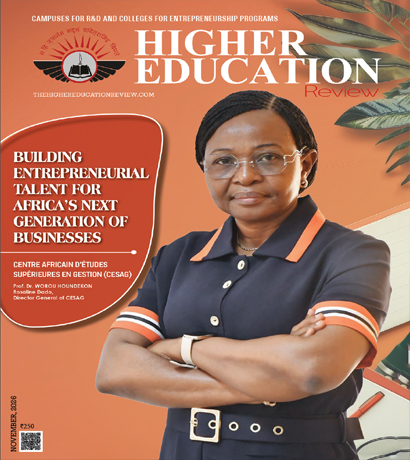
Centre Africain D'etudes Superieures En Gestion (CESAG): Building Entrepreneurial Talent For Africa's Next Generation Of Businesses
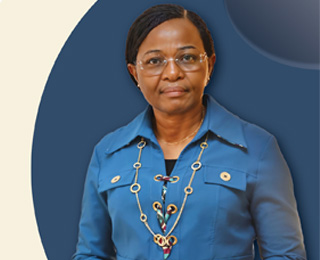
Prof. Dr. Worou Houndekon Rosaline Dado, Director General, CESAG
Colleges for Entrepreneurship Programs are increasingly being called upon to do more than teach students how to develop business plans. As African economies seek to create jobs, strengthen small and medium enterprises, accelerate digital transformation, and encourage innovation, higher education institutions have a critical role in preparing graduates to become entrepreneurs, business leaders, and problem-solvers.
The most effective institutions are therefore building entrepreneurship into their academic structures while connecting students with industry, mentors, investors, and wider business ecosystems.
The Centre Africain d’Études Supérieures en Gestion (CESAG) in Dakar, Senegal, stands out for taking this integrated approach. Established in its original form in 1979 and subsequently transformed into an international public institution in 1985, owned by the eight WAEMU member states, CESAG combines management education with research, professional development, entrepreneurship, and regional cooperation. Its entrepreneurship ecosystem reflects a broader institutional mission: transforming African human capital into a driver of sustainable economic development.
Making Entrepreneurship Part of the Academic Journey
CESAG has embedded entrepreneurship within its academic framework rather than treating it as an extracurricular activity. Since 2022, its Directorate of Research and Innovation has operated as the Directorate of Research, Innovation and Entrepreneurship, giving entrepreneurship a dedicated institutional structure, budget, and performance indicators.
“The institution offers two professional bachelor's degrees centred on venture creation: SME/SMI Management, developed with the TOTAL Group, and Management Sciences with a specialisation in Entrepreneurship and Project Management.
In the latter, the entire third year, representing 60 of 180 ECTS credits, is dedicated to entrepreneurship and project management”, shares Prof. Dr. WOROU HOUNDEKON Rosaline Dado, Director General of CESAG.
The practical orientation is particularly significant. Incubation is an assessed course unit, meaning students can earn academic credit through the process of developing and defending their ventures. In addition, every graduate completes a compulsory professional placement, ensuring that classroom learning is complemented by workplace exposure.
Between 2015 and 2025, 613 students graduated from CESAG’s entrepreneurship-focused programmes across eleven consecutive cohorts, while 3,128 participants completed the YALI Business and Entrepreneurship programme across forty cohorts. This sustained record demonstrates that entrepreneurship is not a newly added component but an established part of the institution's educational offering.
”For CESAG, entrepreneurship is closely connected to Africa's wider economic and social priorities”
From Classroom Learning to Venture Creation
CESAG's approach extends beyond curriculum design by creating opportunities for students to test ideas, develop practical capabilities, and interact with professionals. Its Incubation and Entrepreneurship Centre began its first session in 2025–2026, attracting 283 applications, with women accounting for 53 percent. The initiative targets 150 participants and 150 supported projects and provides access to six tutor-coaches and 28 modules covering areas such as prototyping and start-up capital.
The institution also draws heavily on corporate and institutional partnerships. Its programmes are informed by sectoral Advisory Boards and collaborations with organisations across the public, private, and development sectors. Between 2015 and 2025, CESAG mobilised approximately USD 18 million through international programmes involving organisations such as the World Bank, USAID, DAAD, GIZ, and Côte d'Ivoire's High Authority for Good Governance.
“Our faculty further strengthens this practice-oriented model. Alongside 63 permanent academics, CESAG engages 98 associate lecturers from WAEMU states and other countries, many of whom bring professional experience into the classroom. The result is an educational environment where academic knowledge is consistently connected with organisational and business realities, highlights Prof. Dr. WOROU HOUNDEKON.
Creating an Ecosystem for African Entrepreneurs
For CESAG, entrepreneurship is closely connected to Africa's wider economic and social priorities. Its initiatives address issues including youth employment, SME development, access to finance, digital transformation, and regional economic integration. The African Talents International programme, a strategic regional and international initiative led by CESAG’s Projects Department, is one example. Developed with the WAEMU Network of Trade Promotion Organisations and Business France, the initiative connects graduates with SMEs seeking expertise and internationalisation support. Since 2023, it has registered 2,346 candidates, enrolled 196 partner companies, and deployed 128 volunteers on twelve-month assignments. Following their assignments, 13 percent of the participants secured employment, while 10 percent moved into entrepreneurship or freelance work.
“CESAG also places strong emphasis on inclusion. Women represent 55.7 percent of its student population, while women accounted for 53 percent of applications to the incubation centre. In June 2026, the centre organised a master class for women entrepreneurs focused on access to finance and financial management”, says the Director General of CESAG.
Its entrepreneurial ecosystem is further supported by a substantial alumni network. CESAG has more than 12,000 graduates, organised into six formal country chapters, with more than 70 percent participating in mentoring activities. This network creates opportunities for students and aspiring entrepreneurs to connect with experienced professionals and decision-makers across the region.
Preparing Entrepreneurs for Africa's Future
CESAG's entrepreneurship philosophy is ultimately rooted in regional impact. Its research activities, partnerships, incubation programmes, professional placements, and alumni network work together to create an environment where students can move from learning to experimentation and, eventually, enterprise creation.
“With 27 academic programmes, 12,296 graduates, more than 85 percent graduate employability within twelve months, and a growing entrepreneurship infrastructure, CESAG is positioning itself as more than a management school. Our ambition is to develop entrepreneurial talent capable of responding to Africa's specific economic realities while operating confidently within an increasingly interconnected global economy”, affirms Prof. Dr. WOROU HOUNDEKON Rosaline Dado, Director General of CESAG.
As CESAG strengthens its incubation capacity, expands routes to finance, develops its faculty, and works toward Association to Advance Collegiate Schools of Business (AACSB) accreditation by 2029–2030, its focus remains clear: building an entrepreneurial ecosystem that equips African graduates not only to enter the economy, but to create opportunities within it.
Current Issue