MediCiti Institute of Medical Sciences (MIMS): Where Research, Healthcare, and Medical Education Converge
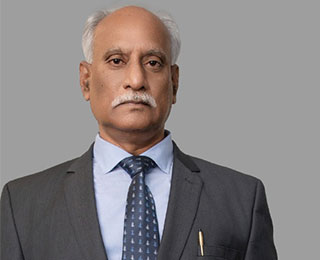
Dr. K. Siva Rama Krishna, President, MediCiti Institute of Medical Sciences (MIMS)
India’s healthcare ambitions are closely intertwined with the quality of its medical education. As the country expands its healthcare infrastructure and moves towards competency-based medical education under the National Medical Commission (NMC), medical colleges are expected to produce graduates who are not only academically proficient but also clinically competent, technologically adept, and socially conscious.
While infrastructure and seat capacity remain important, institutions that can integrate research, patient care, innovation, and community engagement into a unified learning ecosystem are increasingly setting themselves apart.
MediCiti Institute of Medical Sciences (MIMS), Medchal, represents one such institution. Unlike many medical colleges that began as standalone educational establishments, MIMS evolved through a distinctive trajectory that started with scientific research, expanded into tertiary healthcare delivery, and culminated in medical education.
Established under the SHARE Medical Care Foundation, the institute draws upon more than four decades of experience in research and healthcare to deliver an MBBS programme rooted in practical learning, evidence-based medicine, and community service. This evolution has enabled MIMS to create an academic environment where students are exposed to medicine not only through textbooks and laboratories but also through real-world healthcare challenges, making the institution a significant contributor to India’s evolving medical education ecosystem.
“At MediCiti Institute of Medical Sciences, medical education extends beyond imparting knowledge and clinical skills. Our holistic and integrated learning environment nurtures professionalism, empathy, ethical values and a sense of social responsibility, ensuring the all-round development of students into competent, compassionate and responsible healthcare professionals,” said Dr. Devendra Singh Negi, Principal, MIMS.
"For an institution whose history began in medical research, bringing students into that conversation is a natural extension of its original purpose"
A Medical Institution Built on a Mission, Not a Mandate
The origins of MediCiti Institute of Medical Sciences reflect a vision that extends beyond conventional medical education. The foundation was laid by a group of accomplished physicians, many of whom were alumni of Gandhi Medical College, Osmania Medical College, and Kakatiya Medical College, who had established successful careers in the United States. Led by renowned cardiologist Dr. P.S. Reddy, Founder and Emeritus Chairman and Dr. Madhu K. Mohan, the present Chairman, their collective aspiration was to improve healthcare accessibility for underserved rural communities in Telangana.
This vision took shape in 1980 with the establishment of SHARE USA- Science, Health, Allied Research and Education - a not-for-profit initiative dedicated to strengthening healthcare through research and public service. Rather than immediately establishing a medical college, the organisation first focused on research into maternal and child health, communicable and infectious diseases, recognizing the healthcare challenges faced by rural populations. The establishment of a modern tertiary-care hospital in 1993 marked the next phase of its journey, enabling the foundation to provide advanced clinical services while building a strong healthcare ecosystem.
Only after establishing expertise in both research and patient care did the organisation venture into medical education with the launch of MediCiti Institute of Medical Sciences in 2002. Today, the institution has expanded beyond MBBS education to include postgraduate medical programmes, nursing, physiotherapy, medical laboratory technology, and public health, reflecting a comprehensive approach to healthcare education.
Learning Beyond the Classroom
The educational philosophy at MIMS is centred on the belief that competent physicians are developed through continuous interaction with patients, communities, and experienced clinicians. Situated across a 50-acre campus in a serene environment, the institution combines an ideal academic setting with extensive clinical opportunities.
“Our 860-bed teaching hospital serves patients from nearly 50 surrounding villages, creating a diverse clinical environment that allows students to encounter a broad spectrum of medical conditions throughout their academic journey. The institution’s service-oriented approach attracts significant patient volumes, ensuring that clinical exposure becomes an integral part of learning rather than an occasional experience.
Students complement theoretical instruction with bedside teaching, practical demonstrations, and super-specialty exposure, allowing them to develop clinical confidence from the early years of their education”, shares Dr. C. Mallikarjuna Reddy, Director of Academics, MIMS.
The institute’s academic strength is further reinforced by an experienced faculty that has consistently emphasized conceptual clarity and strong foundational learning. This focus has helped generations of alumni establish successful medical careers while reinforcing MIMS’ reputation as an institution where teaching remains a defining strength.
Integrating Research, Technology, and Innovation into Medical Education
While preserving the fundamentals of medical education, MIMS has actively embraced emerging technologies and modern pedagogical practices. The institution has aligned its curriculum with the National Medical Commission’s competency-based framework by incorporating simulation-based education through dedicated skill laboratories equipped with advanced mannequins. These facilities enable students to master clinical procedures in a controlled environment before applying their knowledge in real patient settings.
Artificial Intelligence has also become an important component of the institution’s academic strategy. Students are introduced to AI-enabled learning tools that enhance self-directed learning and improve academic efficiency, while the institute simultaneously explores AI applications in clinical services and research. This reflects a broader institutional objective of preparing future physicians for an increasingly technology-driven healthcare ecosystem.
“Research, however, remains the institution’s defining pillar. Building upon the legacy of SHARE INDIA, faculty members continue to participate in nationally and internationally funded research projects. Students are encouraged to engage in scientific inquiry through dedicated research initiatives that support publication, innovation, and interdisciplinary collaboration, reinforcing an evidence-based approach to medicine from the undergraduate level itself”, says Dr. K. Siva Rama Krishna, President. MIMS.
Research Activities and Collaborations
A dedicated research centre—SHARE INDIA—located within the MIMS campus was established by the founders of MIMS. Faculty members lead projects of national importance and global relevance, funded by premier agencies in India and abroad, including the Indian Council of Medical Research (ICMR), Department of Biotechnology (DBT) and US National Institutes of Health (NIH). Their research encompasses maternal and child health, infectious diseases, non-communicable diseases, digital health interventions and mHealth studies. Collaborations with Johns Hopkins University, the University of Pittsburgh and Northwestern University have resulted in important research, publications, postdoctoral training; and international clinical rotations for nearly 70 MIMS students at the University of Pittsburgh. SHARE INDIA and MIMS also maintain a geocoded database of approximately 50,000 individuals, supporting community health services and high-quality research.
“The vibrant research ecosystem at MIMS provides students and faculty with a thorough grounding in research methodology and empowers them to address healthcare challenges that are particularly relevant to India while also having global implications. The close integration of academic education, research and clinical exposure lays a strong foundation for the effective practice of evidence-based medicine,” said Dr. D. Shailendra, Vice-Principal (Research), MIMS.
MIMS has established collaborations with the Birla Institute of Technology and Science (BITS), Pilani–Hyderabad Campus; the ICMR–National Institute of Nutrition, Hyderabad; Sri Maharshi Institute of Vedic Technology, Guntur; Sanatana Jeevana Trust, Chirala; and the Regenerative Cells Research Centre, Hyderabad. These collaborations reflect MIMS commitment to promoting integrative, interdisciplinary research and education and provide unique learning and research opportunities for its medical students and faculty.
Creating Healthcare Leaders for Tomorrow
MediCiti Institute of Medical Sciences views medical education as a process of developing responsible healthcare professionals rather than simply producing medical graduates. Through structured community medicine programmes, students work closely with adopted villages over several years, gaining first-hand understanding of public health challenges while contributing to preventive healthcare initiatives.
Looking ahead, the institution is preparing for its next phase of growth with plans to attain Deemed-to-be University status and establish a distinctive model centred on integrative medicine. By bringing together modern allopathic education with established systems such as Ayurveda, Homoeopathy, Yoga, Naturopathy, and Siddha, while leveraging emerging technologies including Artificial Intelligence, MIMS aims to create a future-oriented healthcare education ecosystem.
Supported by its recent NABH accreditation and continued pursuit of quality benchmarks, the institute is steadily strengthening its position as an institution where research, healthcare, and education continue to evolve together - preparing physicians equipped to address the changing needs of India’s healthcare landscape.
Current Issue