NIPS Institute of Hotel Management: Shaping Industry-Ready Professionals for a Global Future
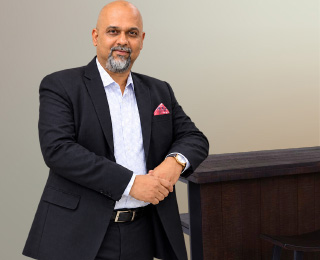
Dr. Vivek Pathak, Founder Director, NIPS Institute of Hotel Management
India’s hospitality and tourism sector is expanding beyond conventional hotel careers, opening opportunities across aviation, cruise tourism, culinary arts, luxury services, events, customer experience, travel and entrepreneurship. This evolution is also changing the role of hospitality education, with students requiring more than academic knowledge to succeed in a competitive, technology-driven and increasingly global industry. Practical exposure, industry engagement and the ability to operate confidently across diverse professional environments are therefore becoming integral to hospitality education.
Amid this, NIPS Institute of Hotel Management has built a distinctive journey over more than three decades. Founded in Kolkata in 1993 by Dr. Vivek Pathak, Founder Director, NIPS has evolved from a single institution into a multi-campus organisation with centres in Kolkata, Ranchi, Bhubaneswar and Shillong. Its journey has been driven by a focus on hospitality education, skill development, employability and creating broader career opportunities for students.
Evolving with a Changing Hospitality Industry
When NIPS began in 1993, hospitality education was largely viewed as preparation for hotel jobs. The industry has changed significantly since then, with hospitality-trained professionals now building careers across hotels, aviation, cruise lines, tourism, culinary businesses, luxury services, customer experience, management and entrepreneurship.
NIPS has evolved alongside these changing opportunities. The institution has expanded beyond Kolkata while strengthening its academic credentials through NAAC accreditation, AICTE-approved programmes, affiliation under the academic framework of MAKAUT and international recognition from Worldchefs - World Association of Chefs’ Societies. Its portfolio now encompasses bachelor’s, master’s, diploma, certification, management and skill-development programmes.
For Dr. Pathak, Founder Director, institutional growth is not measured only through campuses or programmes. A more meaningful achievement is the change in student aspirations. Students from Eastern and North-Eastern India can now envisage building careers not only within India but across global hospitality and service markets.
The expansion into Ranchi, Bhubaneswar and Shillong has also enabled NIPS to bring professional hospitality education closer to students across Jharkhand, Odisha and the North-East while responding to regional opportunities in tourism, aviation, culinary heritage and entrepreneurship.
Turning Education into Professional Capability
NIPS places practical learning at the centre of its educational approach. Students gain hands-on exposure through training kitchens, bakery and food-production laboratories, restaurant service, front-office and housekeeping practicals, workshops, demonstrations, industry visits and internships. This learning environment is designed to familiarise students with professional standards, operational realities and service expectations before they enter the workplace.
”For NIPS, a successful placement is not simply about securing a first job; it is about enabling students to perform well and build sustainable professional careers”
Alongside technical learning, NIPS emphasises the interpersonal and behavioural capabilities essential to hospitality, including teamwork, etiquette, emotional intelligence, leadership, problem-solving and service orientation.
“NIPS regularly gathers inputs from employers, recruiters, senior industry professionals, alumni and faculty to review its programmes and understand changing workplace expectations. This helps the institution respond to growing student interest in culinary careers, aviation, cruise hospitality, tourism, events, entrepreneurship and international opportunities”, says Dr. Vivek Pathak, Founder Director.
Research and innovation are similarly connected with practical application. NIPS has received recognition for 265 varieties of desserts from the India Book of Records and 109 varieties of biryani from the Asia Book of Records, besides its earlier recognition for an 188-omelette record. It was also a national category winner at the AICTE AMRUT Millet Recipe Competition. The institution has further pursued documentation of original culinary work through a copyright application relating to a low-glycaemic ragi-millet culinary creation.
Creating Global Career Pathways
Global exposure forms an important dimension of the NIPS learning ecosystem, reflecting the inherently international nature of hospitality careers. The institution has a documented alumni presence across 37 countries, while students have accessed internships and professional pathways in the USA, Germany, France, Spain, New Zealand, Mauritius, Maldives and the UAE, alongside opportunities with international cruise lines.
NIPS is strengthening these pathways through direct employer engagement, overseas recruiters, international academic opportunities, alumni networks and structured preparation for students exploring careers abroad. A recent visit by a New Zealand hospitality delegation to the Kolkata campus further reflects its efforts to bring students closer to international employers and global industry perspectives.
For NIPS, however, global readiness involves more than geographical mobility. It requires students to understand different cultures, service expectations and workplace environments and to develop the professional maturity required to work with diverse teams and guests. “International exposure should prepare students not merely to work abroad, but to contribute effectively in multicultural professional environments”, shares Dr. Vivek Pathak.
The institution’s alumni network reinforces these global pathways. Chef Priyam Chatterjee became the first Indian chef to receive France’s Ordre du Mérite Agricole. Sukamal Mondal has progressed into senior operations leadership with ONYX Hospitality Group in Bangkok, while Argo Das has built his hospitality career in the United States with DoubleTree. Bharat Dharmwani has established himself as Executive Pastry Chef at Four Seasons Chicago.
Other alumni have taken their hospitality-management expertise into wider service industries. Amitava Guha Thakurta has built a senior leadership career with PVR INOX, while Barun Ganguly has developed an international cruise career and remains involved in mentoring NIPS students. Sumana Pandey has pursued a corporate career with Flyeralarm in Germany. Through its alumni portal, reunions and NIPS Alumni Association, the institution is increasingly connecting this global experience back to current students through mentoring, career discussions and professional insights.
Preparing Students for Technology-Enabled Hospitality
Technology is rapidly transforming hospitality through digital reservations, revenue management, marketing, customer engagement, travel services and food operations. NIPS is therefore developing greater awareness and application of AI and digital tools within its learning environment, enabling students to understand how technology can improve efficiency, decision-making, personalisation and service delivery.
The institution’s positioning, however, is clear: technology is an enabler of hospitality, not a replacement for its human core. AI and digital systems can strengthen learning and operations, but empathy, judgement, creativity, cultural sensitivity and genuine human interaction continue to define memorable hospitality experiences. NIPS therefore seeks to prepare students to use emerging technologies intelligently while preserving the people-centric qualities on which the industry is built.
Faculty development remains integral to this evolution. The institution encourages faculty members to pursue higher academic qualifications, gain industry exposure and remain updated with professional developments. This continuous learning approach helps teaching remain connected with changing industry practices and emerging career opportunities.
The same philosophy shapes NIPS’ approach to career preparation. More than 20,000 students have passed through its education, training and placement ecosystem over its journey, supported by long-standing employer relationships and the professional progression of its alumni.
“For NIPS, a successful placement is not simply about securing a first job; it is about enabling students to perform well and build sustainable professional careers”, shares Dr. Vivek Pathak.
Strengthening Quality, Relevance and Opportunity
As NIPS enters its next phase, its focus is on strengthening quality and relevance rather than pursuing growth merely in terms of size. The institution intends to deepen opportunities across culinary education, tourism, aviation, cruise hospitality and entrepreneurship while further expanding international academic and career pathways. Faculty development, research, industry partnerships, alumni participation and technology-enabled learning will continue to support this direction.
For Dr. Vivek Pathak, Founder Director, recognition from Higher Education Review is encouraging, but it also reinforces the responsibility to remain relevant to students and industry. Since 1993, NIPS has worked to broaden what hospitality education can enable. As the industry evolves, its next chapter will focus on combining academic quality, practical learning, global exposure and technology with the distinctly human capabilities that continue to define hospitality.
Current Issue