Sanjivani University: Shaping a New Era of Research & Discovery
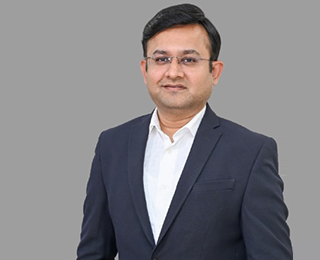
Amit Nitinrao Kolhe, President, Sanjivani University
India’s higher education ecosystem is increasingly moving towards campuses that do more than deliver academic programmes. As the country advances in artificial intelligence, cybersecurity, advanced manufacturing, sustainable technologies, and entrepreneurship, universities are expected to become spaces where research translates into experimentation, innovation, and real-world solutions. This shift is particularly important for institutions seeking to connect academic knowledge with the needs of industry and society.
Sanjivani University is developing its identity around this evolving model, combining its long-standing educational legacy with a growing focus on research, innovation, experiential learning, industry engagement and international collaboration. For Sanjivani, this evolution is less a departure from its past than the fulfilment of it: the mission that once brought quality education to rural Maharashtra is now equipping students from that same soil to contribute to the global frontiers of research and technology.
Building on a Legacy of Educational Transformation
Sanjivani University’s foundation is closely connected to the vision of the Late Hon’ble Shri Shankarraoji G. Kolhe Saheb, who established Sanjivani Rural Education Society in 1983, with the belief that quality technical education could contribute to self-reliance and socio-economic transformation in rural Maharashtra. The educational journey began with Sanjivani K.B.P. Polytechnic in 1982 and subsequently expanded into a broader educational ecosystem.
Saheb’s own life embodied this ambition. A Ford Foundation scholar who trained in the United States and Europe, he chose to return to Kopargaon rather than build his career abroad, bringing the world home so that the children of this region could one day reach out to it. That spirit, of carrying rural talent to global standards, continues to guide the University.
This vision has been carried forward across generations. Shri Nitinrao Shankarrao Kolhe, widely known as Nitindada, serves as Chairman of the Sanjivani Rural Education Society and the Sanjivani Group of Institutes, and has guided the Group’s growth into one of rural Maharashtra’s largest and most respected education networks, spanning engineering, pharmacy, management, sciences, and school education.
”Sanjivani University aims to strengthen research across AI, cybersecurity, IoT, robotics, advanced computing and sustainable technologies, while developing capabilities in prototyping, intellectual property, incubation and commercialization”
His conviction that the classroom must connect with the wider world has shaped many of the Group’s academic-industry initiatives and its early international collaborations, including partnerships with the University of Lethbridge in Canada, the Poznan University of Economics in Poland and Shenkar College of Engineering in Israel.
Sanjivani University, operational since April 2024, represents a new phase in this journey. Under the leadership of Hon’ble Shri Amit Nitinrao Kolhe, President of Sanjivani University and Managing Trustee of the Sanjivani Rural Education Society, the institution seeks to carry its founding philosophy into a future shaped by technology, research, and innovation. Representing the third generation of this legacy, Shri Amit Kolhe has placed research, innovation and global engagement at the heart of the University’s new phase.
He has championed the conviction that a university rooted in rural Maharashtra can hold its own on the world stage, supporting the growth of its Centres of Excellence, its international collaborations and its expanding research culture, so that the opportunities once reserved for metropolitan campuses are now within reach of every student who walks through its gates.
“The University’s approach is centred on creating an environment where students and faculty engage with real-world problems rather than remaining restricted to conventional classroom learning. Research, innovation, entrepreneurship, industry engagement and internationalization are being integrated into the academic experience to encourage students to explore emerging technologies and develop practical solutions”, says Amit Nitinrao Kolhe, President of Sanjivani University.
This direction is already reflected in the University’s growing research output. During the reporting period, Sanjivani University submitted 23 research proposals, published eight patents, registered 155 copyrights and published 19 case studies and books. Its Scopus-indexed publications increased from 21 in 2024-25 to 141 in 2025- 26, representing more than 570 percent growth in one academic year.
A further 74 Scopus-indexed papers had already been recorded up to 13 August 2026. Together, these developments point towards an institution steadily building a stronger research culture. The University has also secured an international joint research grant in partnership with Ural Federal University, Ekaterinburg, Russia, worth three crore rupees, reflecting growing external confidence in its research agenda.
Creating an Ecosystem for Experimentation & Innovation
Complementing the university vision is the leadership of Dr. Manali Amit Kolhe, a dynamic academic leader committed to strengthening research, innovation, academic excellence, and institutional development at Sanjivani University. Her visionary approach and strategic leadership continue to foster a culture of quality, collaboration, entrepreneurship, and impactful higher education.
For research to become meaningful, students need opportunities to experiment, build and test their ideas. Sanjivani University is addressing this through infrastructure designed around hands-on learning. A key example is the Sanjivani University Tinkerers’ Lab, established with the support of the Maker Bhavan Foundation.
The approximately 3,160-square-foot facility functions as a student-managed interdisciplinary makerspace, providing exposure to design thinking, digital fabrication, Physical AI, IoT, robotics, rapid prototyping and product development. It enables students to move from conceptual ideas towards physical prototypes and solutions while encouraging them to build, test, improve and try again.
The University’s research and innovation ecosystem is further supported by five Centres of Excellence and specialised innovation facilities: Tinkerers’ Lab; Hitspectra Centre of Excellence for Intelligent Technology (Taiwan); Fortinet Centre of Excellence for cybersecurity; IBM Centre of Excellence for industry-integrated technology education; and Dr. Sudha & Dr. Satish Khare Innovation & Advanced Manufacturing Laboratory.
Innovation challenges provide another avenue for students to apply their learning. Through the Smart India Hackathon, 815 students and 260 teams registered, with 140 teams shortlisted in Phase 1, 65 qualifying for Round 2 and 45 teams, along with a further seven, selected at the final stage. These initiatives are helping make experimentation and problem-solving accessible to a wider student community.
Strengthening Industry and Global Connections
Sanjivani University views industry collaboration as extending beyond placements. Curriculum inputs, internships, projects, expert sessions, technology training, certification, collaborative research and innovation form part of its broader engagement model.
The University has documented 39 MoUs and partner organisations, including NASSCOM, IBM, Fortinet, HCLTech, TCS, ZOHO Corporation, ICT Academy, NISM, Bajaj Finserv, BITS Pilani, Hetero Drugs, Tata Indian Institute of Skills and LinkedIn Learning. These engagements provide exposure to industry practices, professional skills, technology, certifications and internships.
Sanjivani i-Connect further strengthens industry-academia interaction, including engagement with HCLTech around AI adoption, automation, digital transformation and future workforce requirements. The University’s engagement with the NASSCOM/IT-ITES Sector Skills Council also supports its focus on emerging technology skills.
International collaboration is another important component. Relationships with Mabalacat City College and Northwestern University in the Philippines, and the University of Technology and Applied Sciences, Shinas, Oman, create opportunities for academic exchange, collaborative research and student and faculty engagement. The University has also facilitated international exposure through programmes involving Taiwan, Russia and Japan. More than 150 students have taken up opportunities in Japan over the last three years.
From Ideas to Intellectual Property & Entrepreneurship
Sanjivani University’s innovation pathway seeks to move ideas from research and prototyping towards validation, intellectual property, incubation and, where appropriate, enterprise. The Tinkerers’ Lab and innovation challenges such as the Smart Ko¬pargaon Hackathon provide platforms for students to address practical problems and develop technology-driven solutions.
“Faculty members play an important mentoring role, helping students identify problems, conduct research, develop prototypes and explore opportunities for intellectual-property protection or entrepreneurship”, says Amit Nitinrao Kolhe.
The University’s intellectual-property activity includes eight patents published and 155 copyrights registered during the reporting period. Entrepreneurship initiatives have also engaged 1,165 students through MSME-focused activities. The objective is not to turn every project into a start-up, but to develop creativity, resilience and the confidence to explore how research can create value.
Advancing Research with Social and Sustainable Purpose
Sanjivani University aims to strengthen research across AI, cybersecurity, IoT, robotics, advanced computing and sustainable technologies, while developing capabilities in prototyping, intellectual property, incubation and commercialisation. Its five-to-ten-year roadmap emphasises deeper industry partnerships, stronger international research networks and enhanced research capacity among faculty and students. A proposed 50,000-square-foot Innovation Park, alongside incubation centres, co-working spaces and shared laboratories, is envisaged to help ideas move from research to prototype, enterprise and impact.
Sustainability remains central to this vision, reflecting San¬jivani’s founding philosophy of empowering rural communities through education. Research is being directed towards chal¬lenges across agriculture, healthcare, infrastructure, educa¬tion, industry, communities and environmental management.
With 241 documented contributions across all 17 Sustainable Development Goals, the University is connecting academic activity with broader societal priorities. By integrating education, research, innovation, industry engagement, entrepreneurship and social responsibility, Sanjivani University is positioning research as an integral part of learning and a pathway to tangible impact. It aims to strengthen research across AI, cybersecurity, IoT, robotics, advanced computing and sustainable technologies, while developing capabilities in prototyping, intellectual property, incubation and commercialization.
Current Issue