
Top Banking, FinTech, and Wealth Management Careers
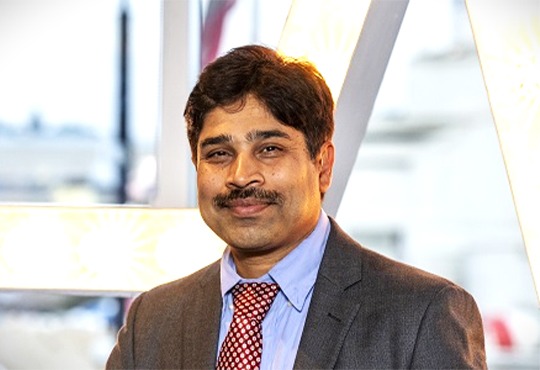 Dr. Tapas Mishra, a Professor of Financial Economics and Head of Banking and Finance at the University of Southampton in an interaction with Higher Education Review shared his views on how FinTech, Digital Banking, and AI are reshaping career opportunities for finance graduates, which careers in banking and finance are expected to grow the fastest over the next decade, why wealth management is emerging as one of the most promising career paths in the financial services industry and more.
Which Careers in Banking and Finance are expected to grow the Fastest over the Next Decade?
A lot of things can happen in a decade; a decade is a long time, considering the fast-paced innovations taking place around our daily lives and the chaos of instability interacting with these innovations at the same time.
Nevertheless, it is now common knowledge that the banking and finance industry has entered one of the most transformative periods in its history, with the biggest growth areas being FinTech, where professionals are developing innovative payment systems, digital lending platforms, robo-advisory services, and financial apps that are changing how consumers and businesses manage and grow money.
Along with this change comes responsibility too – the responsibility of offering easy, interactive, and reliable services. This means that the demand for experts in artificial intelligence (AI), data analytics, cybersecurity, and digital risk management will grow exponentially, much beyond the current rate.
The elevated demand needs a fast-paced supply of experts, with further expansion in demand landscapes in ethical/regulatory compliance. The rate of adoption of new financial technologies and services will be relatively slow in underdeveloped regions for some time, due to the lack of extensive financial literacy, and persistent mistrust of the efficacy and reliability of new technologies.
A complementary yet very distinct sector that will grow faster is the Wealth Management services. Due to the unavoidability of new age automation and learning-enabled technologies, the aging population needs top wealth managers to make decisions for them in terms of retirement planning, tax strategies, estate management, navigation of investments aligning with the investors’ personal taste and preferences.
Sustainable finance is also creating new opportunities. Investors are paying greater attention to environmental, social, and governance (ESG) factors, prompting banks and investment firms to recruit professionals who understand responsible investing and climate-related financial risks.
Looking ahead, the strongest career prospects are likely to belong to graduates who combine financial knowledge with digital literacy, analytical thinking, and adaptability. Rather than replacing finance professionals, technology is changing the skills employers value, by enhancing capabilities beyond traditional skills.
The future workforce will need people who can interpret data, leverage AI responsibly, build trusted client relationships, and navigate an increasingly digital financial ecosystem. In summary, tomorrow's most successful finance professionals will be those who are as comfortable with innovation as they are with balance sheets.
How are FinTech, Digital Banking, and AI reshaping Career Opportunities for Finance Graduates?
Any new technology, including the AI experiences – what we call an S-shaped curve, slow adoption at the beginning, fast-paced in the middle and stabilising and even declining at the top as time goes by. The current climate for AI is at the middle of this S-shaped curve, implying rapid adoption and large-scale implementation. But, even if the rate slows down in a few years, the irreversible impact it has on people’s day-to-day operations of life will continue to dictate the employment market.
I believe that AI is shaping and will continue to reshape career opportunities in streamlined fields at first, and then in every walk of life, soon after. In particular, in the field of finance, there is a huge potential of employment growth, in contradistinction to what we used to believe at the beginning of AI intervention in our lives. It is the persistence of information asymmetry – a product of the availability of too many new technologies offering similar or even better predictive outcomes for our investments, for example - that will create opportunities in unprecedented scale for our finance graduates.
As such, human minds are designed to reject newness and accept it with trepidation. But once this phase of the fear cycle is over, the perennial innovation, growth, and expansion cycles dominate the rest of our lives. For example, FinTech companies have now introduced faster, more accessible, and customer-centric financial services, from digital payments and peer-to-peer lending to online investment platforms and embedded finance.
Traditional banks have responded by accelerating their own digital transformation, creating demand for graduates who understand both financial systems and emerging technologies. AI is playing an equally transformative role. Rather than simply automating routine tasks, AI is helping financial institutions analyse vast datasets, detect fraudulent transactions, personalise financial advice, improve credit assessments, and streamline regulatory compliance. As a result, employers increasingly value graduates who can work alongside AI-powered tools, interpret data, and apply technology to solve business challenges.
This shift is also changing the types of roles available. In addition to traditional positions such as financial analyst or relationship manager, graduates can now pursue careers in digital product management, financial data analytics, AI strategy, digital risk management, customer experience design, cybersecurity, and regulatory technology (RegTech). These interdisciplinary roles blend financial expertise with technical knowledge and are becoming central to the industry's future. My long experience in the industry and academia leads me to believe that despite the rise of machines, human skills – especially human-sensitised risk perceptions and intuitive decision making – remain indispensable.
For today's graduates, the message is clear: the future of finance belongs not only to those who understand money but also to those who can harness technology to create smarter, safer, and more inclusive financial services. Those who embrace lifelong learning and develop both technical and interpersonal skills will be best positioned to thrive in this rapidly evolving landscape.
Why is Wealth Management emerging as one of the most promising career paths in the Financial Services Industry?
As noted earlier, wealth management has evolved far beyond its traditional image of serving only high-net-worth individuals. Today, it is one of the fastest-growing segments of the financial services industry, driven by demographic changes, increasing personal wealth, longer life expectancies, and a growing awareness of the importance of financial planning.
Statistics state that the number of millionaires across countries is increasing in leaps and bounds, where the high-net worth individuals (excluding millionaires) is expanding vigorously. As the individuals are focusing on managing their businesses, they need special advisors to help them grow their wealth, advise on tax, high-return retirement planning, wealth transfer, and so and so forth.
The importance of Wealth management companies could not be more timely and impactful than it is now. Especially, artificial intelligence, advanced analytics, and digital advisory platforms are enabling advisers to provide more tailored investment recommendations, monitor portfolios in real-time, and improve client engagement. Rather than replacing advisers, these technologies allow them to spend less time on administrative tasks and more time helping clients achieve their financial goals.
For students considering careers in finance, wealth management offers an attractive combination of intellectual challenge, career stability, and long-term growth. As populations age and demand for personalised financial advice continues to rise, professionals who can combine financial expertise with digital capabilities and strong interpersonal skills are likely to enjoy rewarding and resilient careers. In an increasingly automated industry, the human element of trusted financial advice remains one of wealth management's greatest strengths.
What Skills will students need to succeed in the future of banking, FinTech, and investment management?
The best advice I can give to students is to develop the ability to learn, commit to lifelong learning, and be resilient. No innovation is permanent; while incremental innovations will continue to employ upskilled professionals; radical innovation would require paradigmatic shifts in our learning milieu. Perhaps the most valuable skill of all is a commitment to lifelong learning. Whatever we do, it is important for us to be one step ahead of others, so that as newness overwhelms others, the most forward-looking ones adapt, sustain and grow.
Worth remembering that the future of banking and finance will be defined not only by technological innovation but also by the ability of professionals to adapt, learn continuously, and work effectively alongside emerging technologies. For students preparing to enter the industry, success will increasingly depend on developing a combination of technical expertise, digital fluency, and human-centred skills.
To begin with, a strong foundation in finance remains essential. To leverage the benefits of technology, students should understand financial markets, accounting, corporate finance, investment principles, risk management, and, importantly, financial regulation. Employers are increasingly seeking graduates who can complement this knowledge with digital capabilities.
Also Read: Skills Needed to Succeed in the Next Decade in the Age of AI
Familiarity with artificial intelligence, data analytics, cloud-based financial systems, cybersecurity, blockchain applications, and basic programming languages such as Python or SQL can provide a significant competitive advantage in today's job market. At the same time, I would advise students to enhance their analytical and problem-solving skills.
As AI automates routine calculations and reporting, finance professionals will be expected to interpret complex data, evaluate risks, identify business opportunities, and make informed strategic decisions. But this has to be combined with an informed blend of human perceptions. As such, whilst technology can generate insights, human judgement remains critical in applying them responsibly.
Remember that not all insights (trends, distributions, or simple statistical interpretation of the data) are meaningful or reliable unless we impose certain behavioural restrictions and manipulation of data. This comes from top training in fundamental theories of finance and econometrics/statistical techniques. Equally so, the ability to explain complex financial concepts clearly and build trusted relationships will continue to distinguish successful professionals.
How are technologies such as AI, Big Data, and Blockchain creating new roles across the Banking and Finance Sector?
Artificial intelligence (AI), big data, and blockchain are no longer emerging technologies - they are becoming integral to the way financial institutions operate. Rather than simply making existing jobs more efficient, these innovations are creating entirely new career opportunities that did not exist a decade ago.
There are some key areas where AI is generating new roles across the finance and banking sectors. Notably, AI is transforming functions such as fraud detection, credit risk assessment, algorithmic trading, customer service, and regulatory compliance. Banks and financial institutions increasingly need professionals who can develop AI models, validate machine learning algorithms, ensure responsible AI governance, and translate complex analytical insights into business decisions.
As AI adoption grows, so does demand for professionals who can balance technological innovation with ethical and regulatory considerations. Although big data environment has fascinated the employment market for data architects, data scientists, and similar roles, the automated technologies are squeezing the market growth for such roles. But with a humanised perception of technology-produced patterns in the data, the market is supposed to remain buoyant.
My bet is on blockchain technology, which is offering new career possibilities. While it is often associated with cryptocurrencies, its broader applications include cross-border payments, digital identity verification, trade finance, smart contracts, and asset tokenisation. Financial institutions are increasingly seeking specialists who understand distributed ledger technology, digital asset infrastructure, blockchain compliance, and cybersecurity.
Will FinTech and Wealth Management create the most sought-after careers in Banking and Finance?
Definitive, yes! FinTech and wealth management are likely to be among the most attractive career areas in banking and finance over the next decade, but their growth reflects a broader transformation taking place across the entire financial services industry. The future will not be defined by one sector alone; it will be shaped by professionals who can combine financial expertise with technology, innovation, and strong client understanding. FinTech is creating opportunities because financial services are becoming increasingly digital. Consumers and businesses now expect faster payments, personalised financial products, seamless online experiences, and greater access to financial solutions. This shift is generating demand for professionals in areas such as digital banking, artificial intelligence, financial data analytics, cybersecurity, product management, blockchain applications, and regulatory technology. Graduates who understand both finance and technology will be particularly valuable as companies seek talent capable of designing and managing the next generation of financial services.
At the same time, wealth management is gaining importance because financial decision-making is becoming more complex. Individuals need guidance on investments, retirement planning, tax strategies, sustainable investing, and long-term wealth creation. Technology will support this sector through automated advice platforms and advanced analytics, but human expertise, trust, and personal relationships will remain essential. I believe the most sought-after careers will likely emerge where these areas overlap. A future wealth manager may use AI-driven insights to provide personalised advice. A FinTech professional may need a deep understanding of financial regulations and customer behaviour. A banking executive may need expertise in both digital transformation and traditional finance.
It is important to remember that eventually, the winners in the future finance job market will not be those who choose technology over finance or finance over technology. They will be those who understand how both can work together to create smarter, more inclusive, and more effective financial services.
From AI to Digital Assets: Which Banking and Finance Careers Will Dominate the Next Decade?
Good question. AI is transforming the way we live and we generate expectations from life as such. Financial institutions are using AI to improve investment analysis, detect fraud, assess credit risk, automate compliance processes, and provide personalised customer experiences. This is creating demand for professionals who can combine financial knowledge with AI capabilities, including financial data scientists, AI strategy specialists, quantitative analysts, and technology-focused risk professionals.
Digital banking will also continue to expand. As customers increasingly rely on mobile platforms and digital financial services, careers in digital product management, cybersecurity, customer experience, cloud technology, and financial innovation are expected to grow significantly. Professionals who understand both customer needs and technological possibilities will be particularly valuable.
Digital assets and blockchain-based financial systems represent another emerging area. While the future development of cryptocurrencies and digital assets will depend on regulation and market evolution, the underlying technologies are already influencing areas such as payments, settlement systems, identity verification, and asset management. This is creating opportunities for specialists in blockchain solutions, digital asset compliance, and financial infrastructure.
My conviction is that the finance careers of the future will not belong to one specific profession. They will belong to individuals who can combine financial expertise, technological understanding, ethical judgement, and adaptability. The next decade will reward professionals who are prepared to learn continuously and embrace change.
From AI-powered banking to digital investments, the future of finance will be shaped by people who can connect innovation with trust. The most successful finance professionals of tomorrow will not simply manage money - they will help design the systems, strategies, and solutions that define the next era of financial services.
About Prof. Tapas Mishra:
Tapas Mishra is a Professor of Financial Economics, the Director of the Centre for Empirical Research in Finance and Banking at the University of Southampton, UK. He previously served as a scientist at the International Institute for Applied Systems Analysis in Austria and as a senior fellow at the Institute for Future Studies, Sweden.
Current Issue