Building Careers in Cancer Therapies
The development of cancer therapies is one of the most dynamic and interdisciplinary areas in modern biomedical science.
Advances in cancer biology, drug discovery, radiobiology and precision medicine are reshaping how cancer is treated - welcome developments given the global burden of disease continues to rise.
As a result, there is sustained demand for highly skilled professionals who can work across research, healthcare systems and the pharmaceutical and biotechnology industries.
The relevance of cancer therapies is particularly clear in rapidly developing healthcare systems such as India’s.
Last year, analysis of national cancer registry data by Indian scientists, published in JAMA Network Open (2024) showed that around 11% of people in India are expected to develop cancer during their lifetime, with more than 1.5 million new cases projected annually.
While cancers such as breast and cervical cancer are increasingly detected earlier through screening, other cancers - particularly oral and lung cancers linked to tobacco use continue to drive high mortality.
For Indian students interested in oncology, this context highlights the value of advanced skills in drug development, radiobiology, clinical research and translational science that can be applied directly to strengthening cancer prevention, diagnosis and treatment in India’s evolving healthcare and life sciences sectors.
For students and early-career scientists, postgraduate programmes such as the MSc Cancer Therapies course at the University of Strathclyde is unique in the UK as it offers the chance to contribute to meaningful improvements in patient outcomes through a range of career pathways. Understanding how the field is changing and what skills are required to succeed within it is essential for those looking to build long-term careers in oncology-related disciplines.
Historically, cancer research and treatment developed along relatively distinct lines, with basic biological research, drug development and clinical application often separated by institutional and disciplinary boundaries. Today, those boundaries are becoming far more permeable.
Modern cancer therapies draw on molecular and cellular biology to understand tumour behaviour, medicinal chemistry and pharmacology to design effective drugs, radiobiology to optimise radiation-based treatments, and engineering approaches to improve drug delivery and imaging. Increasingly, professionals are expected to navigate this complexity, working in multidisciplinary teams that span laboratory science, clinical environments and industrial settings.
This convergence has accelerated the pace of innovation. Targeted therapies and immuno-oncology have transformed treatment options for many cancers, while radiopharmaceuticals and advanced radiotherapy techniques are opening new therapeutic possibilities. As treatments become more personalised, the need for professionals who can integrate biological insight with translational and clinical thinking continues to grow.
Also read: Healthcare AI Real-World Applications and Key Challenges
Personalised cancer therapy sits at the centre of many recent advances. Rather than relying solely on broadly acting treatments, researchers are now developing therapies tailored to specific molecular targets, tumour subtypes or patient characteristics. This shift has significant implications for careers in cancer therapies.
From a drug development perspective, personalised approaches place greater emphasis on early-stage target evaluation and validation. Scientists must demonstrate not only that a target is biologically relevant, but that it can be effectively engaged by a therapeutic agent and translated into meaningful clinical benefit. This requires strong analytical skills, familiarity with experimental models and an understanding of biomarkers and patient stratification.
As candidates move through the drug discovery pipeline - from hit identification and lead optimisation to preclinical testing and clinical trials - professionals are needed at every stage. Roles span laboratory-based research, data analysis, regulatory science and clinical research management. Increasingly, individuals who can communicate across these stages, bridging laboratory findings with clinical decision-making, are particularly valued.
Alongside drug-based therapies, radiobiology and radiopharmaceuticals are experiencing renewed momentum. Improved understanding of how radiation interacts with biological systems is informing more precise and effective treatment strategies, while targeted radiopharmaceuticals are enabling both therapy and diagnostic imaging within a single platform.
Careers in this area often sit at the interface of physics, biology and medicine. Professionals may work on optimising radiation dose delivery, developing novel radionuclides or studying biological responses to radiation at the cellular and molecular level. These roles demand technical competence, quantitative thinking and a strong appreciation of patient safety and clinical context.
Importantly, careers in radiobiology are not confined to hospital environments. Pharmaceutical companies, specialist biotech firms and research institutes are investing heavily in radiopharmaceutical development, creating opportunities beyond traditional clinical pathways.
The breadth of cancer therapies means that graduates can pursue careers across multiple sectors. In pharmaceutical and biotechnology companies, opportunities include drug discovery scientists, translational researchers, clinical trial specialists and medical science liaisons. These roles often combine scientific expertise with project management, regulatory awareness and communication skills.
Within healthcare systems, careers may focus on clinical research, trial coordination or the implementation of new therapies into routine practice. Professionals in these roles play a critical part in ensuring that innovations developed in the laboratory reach patients safely and effectively.
Research environments including universities, research institutes and collaborative centres- continue to offer pathways for those interested in fundamental discovery and translational science. For many, progression into PhD-levellevel study provides the opportunity to develop deeper expertise, independence and leadership within the field.
What unites these pathways is the need for adaptability. As technologies evolve and new treatment modalities emerge, professionals must be prepared to update their skills and engage with continuous learning throughout their careers.
Across all sectors, certain skills are consistently in demand. Analytical thinking and strong research capability remain foundational, enabling professionals to interpret complex datasets and evaluate experimental evidence critically. Equally important is the ability to translate laboratory science into clinical or industrial applications - understanding not just how a therapy works, but how it can be developed, tested and delivered in real-world settings.
Also read: Integrating Climate, Health & Sustainability in Higher Education
Communication skills are increasingly valued, particularly the ability to work effectively within multidisciplinary teams. Whether collaborating with clinicians, regulatory specialists or commercial partners, professionals must be able to articulate scientific concepts clearly and appreciate different perspectives.
Ethical awareness and an understanding of regulatory frameworks are also essential, especially as personalised therapies raise complex questions around data use, patient consent and equitable access to treatment.
While much cancer research has traditionally been concentrated in Europe and North America, the global landscape is changing. Countries such as India are experiencing rapid expansion in oncology research, healthcare infrastructure and biotech innovation.
This growth is creating international career opportunities and increasing the importance of global collaboration. Professionals with experience of different healthcare systems, regulatory environments and patient populations are well positioned to contribute to globally relevant solutions. For students entering the field today, developing a global outlook can be a significant asset.
Cancer therapies will continue to evolve as scientific discovery, technology and clinical practice converge. For those considering careers in this field, the challenge and the opportunity lies in developing a broad, flexible skill set that spans disciplines while remaining grounded in rigorous scientific thinking.
By combining deep biological understanding with translational insight, analytical capability and collaborative skills, the next generation of professionals will play a central role in shaping how cancer is treated worldwide. In doing so, they will not only build rewarding careers, but also contribute to one of the most pressing healthcare challenges of our time.
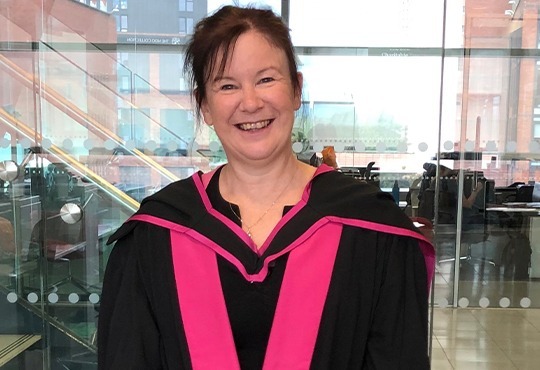
About Dr Marie Boyd, Reader, Strathclyde Institute of Pharmacy and Biomedical Sciences, University of Strathclyde, Glasgow, UK:
Dr Marie Boyd is a Reader in Translational Biology in the Strathclyde Institute of Pharmacy and Biomedical Sciences at the University of Strathclyde. Her research focuses on translational cancer biology, radiopharmaceuticals and radiotherapy, with particular expertise in combination therapies and hard-to-treat cancers, including paediatric oncology.
Current Issue