
L. N. Mishra College of Business Management: Where a Five-Decade Legacy Meets the Demands of a New Economy
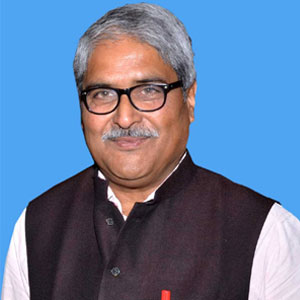
By Dr. K. S. Shekhar, Registrar
Business schools in India are no longer judged solely by the degrees they confer or the placements they facilitate. The conversation has shifted. Institutions are now expected to nurture entrepreneurial thinking, embrace technological disruption, and produce professionals capable of navigating an increasingly fluid business environment. In this transition, the institutions making a lasting impact are those that have managed to combine heritage with relevance.
L. N. Mishra College of Business Management belongs to that category. Established in 1973, when management education was still in its infancy across much of the country, the institution chose to invest in a discipline whose significance India would only fully realize decades later. More than fifty years later, the Muzaffarpur-based institution stands as one of the region's enduring contributors to business and professional education.
Its evolution from a pioneering management institute into an autonomous, industry-oriented campus reflects a broader story of how higher education in India is adapting to the needs of a rapidly changing economy.
A Legacy That Refuses to Stand Still
Longevity in education can either become a comfort zone or a catalyst for reinvention. For L. N. Mishra College of Business Management, it has been the latter. The institution's journey over five decades has been marked not merely by continuity, but by a willingness to evolve.
The granting of autonomous status in 2023 represented a defining moment in that journey. It provided the institution with the flexibility to revisit curricula, introduce contemporary subjects, and align academic frameworks with emerging industry realities. Coupled with AICTE approval, affiliated with B.R.
Ambedkar Bihar University, NAAC B++ accreditation, and sustained ISO certifications, the college has steadily built an ecosystem that prioritizes quality and adaptability over convention. Its academic strength is further supported by a faculty base where a significant majority hold doctoral qualifications and actively contribute to research. The result is an environment where scholarship and application coexist rather than compete.
The institution's journey over five decades has been marked not merely by continuity, but by a willingness to evolve
Designing Education Around Industry, Not Around Tradition
Many institutions speak of industry integration; relatively few institutionalize it. L. N. Mishra College of Business Management has sought to bridge that divide by ensuring that practical exposure is embedded into the learning process rather than treated as an afterthought.
The institution continuously revisits its academic content based on feedback from industry and changing market expectations. Guest lectures, expert interactions, industrial visits, internships, and project-based learning collectively create a learning ecosystem that extends beyond classrooms.
Partnerships with corporate organizations have added another dimension to this approach. Skill development initiatives supported through CSR programmes by companies such as Infosys and Wipro have enabled students to acquire competencies that complement their academic training. Equally important, these engagements provide students with a clearer understanding of how businesses function in real-world settings.
“This responsiveness is evident in our college's decision to establish facilities in emerging domains such as the Internet of Things, despite these areas not traditionally being part of the curriculum. The message is clear: education cannot wait for change; it must anticipate it”, shares Dr. K. S, Shekhar, Registrar.
Creating Job Seekers, But Also Job Creators
Perhaps the most interesting aspect of the institution's philosophy lies in its expanding focus on entrepreneurship. Across India, there is growing recognition that business schools must cultivate creators of enterprises and not merely contributors to existing organizations.
L. N. Mishra College of Business Management has invested considerably in this direction through its Startup Cell and entrepreneurship initiatives. The outcome has been tangible. Four startups associated with the institution secured funding support of ?10 lakh each from the Bihar Government, underlining the growing maturity of its innovation ecosystem.
At the same time, the institution has maintained strong industry relationships that continue to translate into placement opportunities with companies including TCS, Infosys, Wipro. Through aptitude training, career counselling, internships, and continuous industry engagement, the college has developed a framework that addresses employability and enterprise with equal seriousness.
Beyond Degrees, Towards Leadership
For institutions with a fifty-year legacy, the challenge is not preserving relevance but defining the future. L. N. Mishra College of Business Management appears to view its role through a wider lens - one that extends beyond classrooms and careers.
Spread across a green campus and supported by a vibrant ecosystem of extracurricular, environmental, and social initiatives, the institution places considerable emphasis on holistic development. Student participation in programmes such as Yuva Sangam, national sporting events, and leadership activities reflects an effort to nurture confidence, character, and civic consciousness alongside professional competence.
With a student strength exceeding 1500 and alumni occupying leadership roles across sectors, the institution's aspirations now extend beyond regional prominence. Its vision is to emerge as a nationally recognized centre of excellence that contributes meaningfully to the socio-economic advancement of Bihar and the country.
In an era where management education is being redefined by technology, entrepreneurship, and constant disruption, L. N. Mishra College of Business Management offers a reminder that institutions do not remain relevant because of their age. They remain relevant because they continue to evolve.