M S Ramaiah University of Applied Sciences (Faculty of Management and Commerce): Bringing an Industry-First Approach to Commerce Education
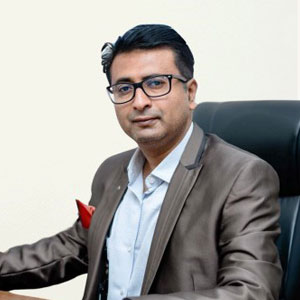
By Dr. K M Sharath Kumar, Professor & Dean
Commerce education in India is rapidly evolving as industries increasingly seek professionals who combine financial knowledge with digital skills, analytical thinking, and real-world business exposure. Traditional classroom learning is no longer enough in a market shaped by fintech, analytics, and global business practices.
In response, leading commerce institutions are reimagining their academic models through experiential learning, industry integration, professional certifications, and technology-driven curricula. The focus today is on developing industry-ready graduates who can adapt to dynamic business environments and contribute effectively from the start of their careers.
Amid this evolving landscape, M S Ramaiah University of Applied Sciences has carved out a distinct identity through its application-oriented academic model. Established in 2014 as a State Private University, the institution has steadily strengthened its position by aligning commerce education with industry expectations, global standards, and emerging technologies.
Guided by its core philosophy of Applied Sciences, the University has built a learning ecosystem where theoretical understanding is consistently reinforced through practical exposure, certifications, leadership development, and industry engagement.
Moving Beyond Conventional Commerce Education
At a time when many institutions continue to follow conventional teaching structures, the Faculty of Management and Commerce at the University has focused on building a more immersive and industry-connected learning environment. The institution’s B.Com (Hons.) programme was introduced with a clear objective - to create graduates who are prepared not only for examinations, but also for the demands of the modern corporate world.
A defining aspect of the programme is its integration with ACCA, one of the world’s most recognized accounting and finance qualifications. By embedding ACCA into the academic framework, the University enables students to simultaneously pursue globally relevant professional credentials alongside their degree programme.
This provide students a significant advantage in sectors such as consulting, finance, auditing, and global business services, where international certifications are increasingly valued.
The University has also adopted a focused intake strategy to maintain quality-driven education and stronger faculty-student engagement. Rather than scaling through numbers, the emphasis has remained on delivering personalized academic support, mentoring, and practical learning opportunities.
To ensure curriculum relevance, the institution has established collaborative academic review mechanisms involving industry professionals and academicians from other reputed institutions
“Beyond formal curriculum delivery, students are encouraged to pursue additional certifications through platforms such as SWAYAM/NPTEL MooCs Courses, and CIMA registrations. This layered learning approach ensures that students continuously build competencies aligned with industry expectations and evolving market trends”, adds Dr. K.M. Sharath Kumar, Professor & Dean.
Integrating Technology into Commerce Learning
Recognizing that commerce and business functions are increasingly being shaped by artificial intelligence, analytics, automation, and digital finance, the institution has introduced learning modules that expose students to emerging business technologies. The curriculum incorporates topics related to AI, fintech, digital transformation, analytics, and Python applications relevant to commerce students. Importantly, the University is not treating technology as an optional add-on, but as a core component of future-ready business education.
To ensure curriculum relevance, the institution has established collaborative academic review mechanisms involving industry professionals and academicians from other reputed institutions. Emerging topics are first discussed through expert roundtables before being incorporated into the syllabus. This approach allows the University to respond dynamically to changes in industry practices and technological advancements.
Practical exposure remains central to this learning model as a part of experiential learning. Students regularly participate in internships, live assignments, funded projects, seminars, and industry interactions that help translate classroom concepts into business understanding. The University’s ICSSR-funded symposium on GST awareness is one such example, where students engaged directly with senior taxation officials and policy experts, gaining exposure to contemporary regulatory and financial discussions.
Creating Industry-Ready Professionals and Future Leaders
While professional readiness remains a key focus area, the University’s broader educational philosophy extends beyond employability. The institution places equal emphasis on leadership development, entrepreneurship, communication skills, and social responsibility.
Through its dedicated Centre for LEADS - Leadership Empowerment and Attitude Development for Sustainability - students are encouraged to develop entrepreneurial thinking, leadership capabilities, and a long-term perspective on business and society. The University regularly hosts conferences, startup-focused discussions, innovation programmes, and collaborative academic initiatives involving national and international institutions.
What stands out is the institution’s balanced approach toward entrepreneurship education. Students are exposed not only to startup success stories, but also to entrepreneurial failures and business challenges. This practical perspective helps aspiring students develop resilience, critical thinking, and realistic business understanding among aspiring entrepreneurs.
At the same time, students are actively involved in social outreach activities, village adoption programmes, service initiatives that build empathy and societal awareness. The institution believes that future commerce leaders must combine professional competence with ethical responsibility and human-centered leadership.
Building a Globally Aligned Academic Future
The University’s emphasis on industry alignment and global exposure is increasingly reflected in student outcomes. Graduates have secured placements with organizations such as Deloitte and Ernst & Young, while others have progressed toward higher education opportunities at internationally reputed institutions including University College London, UK and more.
Looking ahead, the University is focused on strengthening its international academic presence through accreditations, global collaborations, and deeper engagement with South Asian and international educational ecosystems. It is also actively expanding its network of Professors of Practice and industry experts to further enhance experiential learning within commerce education.
As commerce education in India continues to evolve, M S Ramaiah University of Applied Sciences is positioning itself as an institution that understands where business education is headed - and is preparing students not just to participate in that future, but to lead it.