Reading Scanned Notes and Past Papers With Gemini Omni Flash
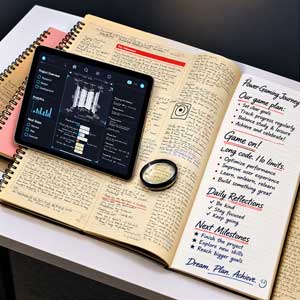 Every Indian student has the same folder somewhere on their phone. Photographed textbook pages at odd angles, a senior's handwritten notes forwarded through three WhatsApp groups, and ten years of previous year papers scanned so badly that half of them are unreadable.
That folder is genuinely valuable and almost nobody uses it properly, because finding anything in it means scrolling through two hundred images hoping to recognise the right one.
Gemini Omni Flash reads images and text together, which Higgsfield offers in a browser, and that makes a badly scanned page searchable in a way it was not before. It solves that problem and nothing else, which is worth being clear about before anybody starts.
Why Is This Material So Hard to Search?
Because they are pictures, not documents.
- Photographed pages have no text layer at all
- Photocopied notes degrade with every generation
- Question paper scans are frequently skewed or dark
- A Gemini Omni Flash read handles images rather than extracted text
A PDF made from photographs is a stack of pictures as far as any search function is concerned, which is exactly why that folder stays unsearchable.
What Must Never Be Submitted?
Anything you did not write.
- Never submit generated text as your own work
- Never use it during an examination
- Never share generated answers with classmates
- Never let a Gemini Omni Flash output become an assignment
Academic integrity policies at Indian universities cover this directly, and consequences range from a zero on the paper through to disciplinary proceedings. Policies also differ between universities and sometimes between departments, so read the one that applies to you.
Use it to find and read material faster. Write everything yourself.
Does Summarising Actually Help You Learn?
Less than it feels like it does.
- Re-reading notes is the least effective study method known
- Active recall outperforms it substantially
- Testing yourself beats reviewing material
- A Gemini Omni Flash summary is a finding aid, not a study method
The pleasant fluency you feel reading familiar material is not the same thing as producing it in an exam hall. Close the book and write what you remember. That gap is where the studying happens.
What Is the Genuinely Useful Case?
Mapping past papers to topics.
- Load ten years of previous year papers
- Identify which topics appear repeatedly
- Note which carry the most marks
- A Gemini Omni Flash pass across the set does this quickly
Patterns across a decade tell you what examiners actually consider important, which is frequently not what the syllabus emphasis suggests. Discovering that three topics carry forty percent of the marks is worth knowing in October rather than in March.
How Should Notes Be Photographed?
Properly once, rather than badly three times.
- Flat on a table, not held in one hand
- Even light, avoiding your own shadow
- One page per image, squared up
- Better input makes any Gemini Omni Flash read more reliable
The shadow problem is the commonest and the easiest to fix. Sitting with your back to a window puts your own shadow across the page.
What About Textbook Copyright?
A genuine issue students rarely think about.
- Scanning a full textbook is an infringement
- Circulating complete scans compounds it
- No Gemini Omni Flash use changes the copyright position
Indian copyright law has provisions for educational use, and a complete scan shared across a batch comfortably exceeds them. The practical answer is cheaper than most students assume, and guidance on finding affordable books for independent study covers routes people never check.
Previous year papers are different. Those are generally published by the examining body and freely circulated.
What Would One Study Session Involve?
Locate quickly, then work slowly.
- Decide the topic before opening anything
- Locate the pages across your material
- Read them yourself, properly
- Close everything and write what you remember
- Attempt past paper questions on that topic
Higgsfield keeps the reading work in one place as part of an AI creative suite, which suits a student working from a phone and a laptop. Then repeat the same topic three days later, because the spacing is what makes it stick.
FAQ's
Can it read handwritten notes?
Sometimes. Clear printing works reasonably; cursive, shorthand and personal abbreviations get interpreted rather than read.
Does summarising help with learning?
Not much. Re-reading feels productive while active recall and self-testing produce the results.
What is the single most useful application?
Mapping ten years of past papers to syllabus topics, which shows what examiners actually ask.
Is scanning a textbook acceptable?
A full textbook scan is an infringement, and circulating it compounds the problem. Library and low-cost editions exist.
Can Gemini Omni Flash output be submitted?
Never. Use it to find and read material, and write every word yourself.
Conclusion
The folder of badly photographed notes on every student's phone is a genuine asset that nobody can search, and that is the one problem this actually solves.
Gemini Omni Flash makes the material findable and Higgsfield keeps it in one place, and none of that is the same thing as studying.
Map the past papers, locate the pages, read them yourself, then close everything and write what you remember.
Current Issue