
Dentistry Career Paths to Consider after BDS
 For aspiring students, the decision to study dentistry is shaped by a single, familiar image: a clinical setting and a dentist performing routine procedures. This image is not inaccurate; general clinical practice remains, and will continue to remain, the backbone of the profession. It is, however, an incomplete one. Dentistry encompasses a wide range of career options which are intellectually demanding and socially significant career paths, many of which are rarely explored.
Dental careers extend into research laboratories, courtrooms and more. This article sets out to widen that lens discussing the career trajectories of students who discovered that dentistry had far more to offer.
The Diagnostic Detective: Oral Pathology
Unlike a general dentist, an oral pathologist rarely attends patients. The work is more observation oriented like examining tissue samples, biopsies and radiographs under a microscope, hunting for early signs of disease in the mouth and jaw long before a patient notices anything is wrong. A white patch under an oral pathologist's eye, turns out to be the earliest marker of oral cancer. A persistent ulcer that refuses to heal could be symptomatic of an autoimmune condition.
It is diagnostic medicine, essentially, conducted through the mouth rather than through blood tests or imaging. Oral pathologists collaborate with oncologists and physicians, and their findings frequently become the first clue to a disease affecting the body. Diabetes, certain autoimmune disorders, even nutritional deficiencies, all leaves traces in oral tissue before they show up anywhere else. This is perfect for students who found the microbiology and pathology labs fascinating.
Dentistry for Justice: Forensic Odontology
Of all the paths dentistry can lead to, forensic odontology is a surprising choice. Teeth are among the most durable structures in the human body; they can survive fire, decomposition and trauma that destroy almost every other tissue, which is why dental records are one of the most reliable ways of identifying persons in situations like large-scale disasters and mass casualty events where no other means of identification remain.
Forensic odontologists also assist police investigations by analysing bite marks left at crime scenes; estimate the age and other details of unidentified individuals. It sits at an unusual crossroads of dentistry, law and criminology not the combination most students have in mind when they enter a dental college.
Also Read: How Ireland's Healthcare Hiring is creating Careers for Indians
A Dentist Historian: Dental Anthropology
This field is not something most students hear about, but a dental degree can in fact lead into archaeology. The field is called dental anthropology. Bone breaks down, soft tissue decomposes within a few years, but enamel present on teeth is tough enough to survive thousands of years buried. For anyone excavating a burial site, the tooth is one of the most valuable insights into the past.
A single ancient tooth can tell a trained eye a surprising amount such as age at death, sex, likely ancestry, all of that can be worked out from dental structure alone. Growth defects in the enamel often point to a childhood bout of illness or a period of famine the individual lived through. Isotopes trapped in the enamel while it was forming can hint at diet, and occasionally even at where a person grew up before they died somewhere else entirely.
Even the shape of the tooth roots and crowns varies enough between populations to help researchers trace old migration routes. A dentist working in this space ends up doing as much anatomy and chemistry as history and it tends to suit students who were just as drawn to their history textbooks.
The Dental Scientist: Biomaterials and Dental Research
Most people never think about where a filling material comes from. Somebody had to design it first, usually over several years, in a lab. Newer fillings that release minerals which can repair early decay, implant surfaces that bond faster with bone, scaffolds meant to allow body into regrowing its own tissue rather than relying on an artificial replacement; all of it starts here, with a dentist working alongside chemists and materials engineers rather than patients. For students who are a wiz at chemistry too.
Restorative Dentist: Oral and Maxillofacial Surgery
Most people who have heard of oral and maxillofacial surgery think of it as wisdom tooth extraction, which barely scratches the surface of this specialisation. These surgeons are the ones called in after a serious facial injury from a road accident, the ones who correct a child's cleft lip and palate, who remove tumours from the jaw and then rebuild what was lost, and who reposition an entire jaw through orthognathic surgery when necessary.
Getting there takes years of surgical training beyond the standard dental degree, and the work overlaps closely with what an ENT specialist or a plastic surgeon might do. It tends to attract students who want the precision of surgery specifically, and who are comfortable with cases where success is measured not just in oral health but in whether someone's face looks and functions the way it did before an accident.
The Digital Dentist: Innovative Dentistry
Dental research asks what a filling or an implant should be made of. This is a different question entirely: how the actual visit to the dentist is changing because of the improving technology of dental tools. Surgical guides for implants are increasingly 3D-printed from a CT scan beforehand, letting a surgeon place an implant at an angle and depth planned to the millimetre rather than judged by eye.
There is still more happening behind the scenes. None of it removes the dentist from the equation someone still must interpret the scan, confirm the AI's flag, and check the printed guide fits. A student who liked tinkering with software or 3D printers as much as they liked their anatomy classes would fit in here.
Also Read: Higher Education in Dentistry
Aesthetic Dentist: Dabbling in Art and Science
Aesthetic dentistry sits at the crossroads between medicine and aesthetics. Dentists specialising in this field are trained to think about facial proportion, smile symmetry and the subtle interplay of tooth shape, gum contour and lip line that determines a beautiful smile.
The discipline demands an unusual combination of skills: technical precision alongside an artistic eye for proportion and detail. It also carries real clinical weight reconstructive work following trauma or congenital conditions often falls to aesthetic dentists as much as it does to maxillofacial surgeons, since restoring appearance and restoring function are, in many such cases, the same task. For students who enjoyed design or the visual arts as much as they enjoyed biology, this is a corner of dentistry where both instincts are put to use.
Opportunities Galore
To be clear, none of this is an argument against clinical practice. Most patients will only ever need a good general dentist, and that will remain true for as long as people have teeth. The point is that dentistry gets described as far narrower than the profession is.
A student who has never heard that dentistry has room for someone interested in history, or design, or software, might simply cross the profession off their list altogether. Fixing that is not about persuading more students into research careers specifically; it is about giving them an accurate picture before they choose, so that the choice is an informed one.
Seen clearly, dentistry is not one job with several minor variations. It has room for the pathologist, the historian, the engineer, the artist and the surgeon, and the sooner students are shown that, the more of them are likely to find the corner of the profession that suits them.
About the Author:
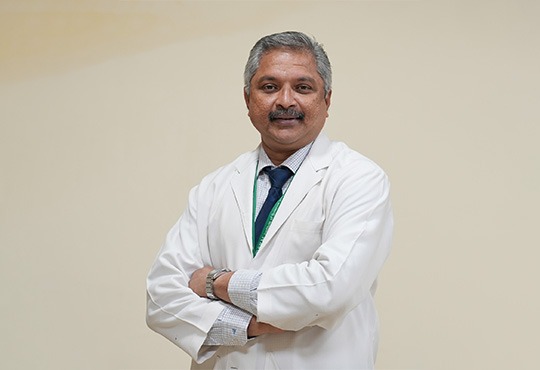
Dr. Vivek N, MDS, is the Dean and Head at the SRM Dental College and Hospital. With 29 years of teaching experience, he specialises in trauma, temporomandibular joint disorders and orthognathic surgery, with a particular interest in distraction osteogenesis. He has authored 92 publications. He received the Best Teacher award from The Tamil Nadu Dr. MGR Medical University in 2012, and the Distinguished Alumni award from Annamalai University in 2022.
Current Issue
.jpg)