Top Skills that will Shape tomorrow's Engineering Careers
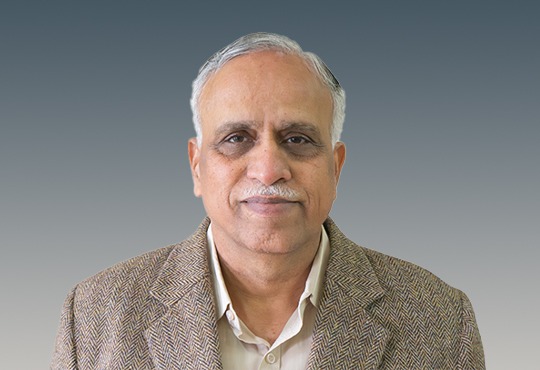
Prof. Prakash Gopalan, President, NIIT University in an interaction with Janifha Evangeline. X, Editor, Higher Education Review shared his views on how emerging technologies such as AI, machine learning, data science, cloud computing, blockchain, robotics, and electric mobility are expanding career opportunities for engineering graduates, why are Indian engineering graduates increasingly securing roles at multinational companies and global startups, and how more students can prepare themselves for these opportunities and more.
Fields such as AI, ML, data science, cloud computing, blockchain, robotics, and electric mobility are now core to how industries design, build, and operate – what does this open up for engineering graduates in terms of career possibilities?
The interesting point is that these are no separate tracks anymore, they have become a part of how almost every industry day to day function, whether that's manufacturing, healthcare, logistics, or finance. So, for an engineering graduate, the old idea of "my field decides my industry" does not really hold up the way it used to.
A mechanical engineer could end up working on EV platforms, a civil engineer might be running AI-based simulations for infrastructure projects, and someone from computer science could just as easily land in cybersecurity as in climate-tech analytics.
The students who do well are the ones who pair their core subject knowledge with comfort around these newer tools that combination is what's opening doors across sectors, not just within the field they originally trained in.
The future job market rewards programming, analytical thinking, problem-solving, and communication skills alongside domain knowledge – how is ‘university education’ evolving to build well-rounded professionals?
There's a clear move away from theory-only teaching toward something more applied and hands-on. Programming and analytical thinking are getting built into courses across disciplines now, so even a design or biotech student is expected to be comfortable working with data, not just engineering students.
Communication is also being treated differently. Instead of being an afterthought, it's getting built in through projects, presentations, and actual industry interaction, where students have to explain their work to people outside their field.
The thinking behind this shift is fairly simple, employers consistently say they want people who can think clearly, work well in teams, and communicate their technical work in a way that makes sense to non-technical colleagues. Universities are trying to build that from year one, not keep it for the end.
Indian engineering graduates are increasingly landing roles at multinational companies and global startups – what is driving this shift, and how can more students position themselves for global opportunities?
A big part of this comes down to two things happening at once. On one hand, Indian engineering education has genuinely improved in terms of rigour and quality. On the other, global companies have been setting up large R&D centres and product teams in India, so students are getting exposure to international work standards without having to leave the country. Add to that the shift toward remote and hybrid work, have removed geographical boundaries.
For students wanting to position themselves for these opportunities, my advice would be to focus on strong fundamentals first, then actively seek out internships or projects that expose them to global tools and ways of working. Certifications help to some extent, but what really makes a difference is having actual project experience where you have had to deliver in a fast-paced, global-standard environment.
Also read: Why India’s Startup Ecosystem Needs Stronger Managerial Depth
As interdisciplinary roles grow, how does early exposure to cross-domain learning give students a meaningful edge when they enter the workforce?
The real benefit of early cross-domain exposure is that it trains students to notice connections they'd otherwise miss. If an engineering student has even a basic grounding in data analytics, or a science student has some exposure to design thinking, they start seeing how their core subject links up with other areas; and that habit sticks with them.
In a workplace, this shows up as employees who can move between technical and business conversations more easily, pick up new tools faster, and contribute to projects that matter even in other departments. It's not about being an expert in five things. It's more about being curious enough, and comfortable enough, to step outside your immediate comfort zone and do multifarious tasks.
The pressure on students to pick the "right" branch early, in a world where interdisciplinary roles are growing, is that model of specialisation still relevant?
Specialisation isn't going away, and honestly it should not. Going deep into a subject is what builds the rigour and problem-solving habits that interdisciplinary work later depends on. What's changed is how rigid that early choice feels. Earlier, selecting a stream at seventeen or eighteen felt like it locked you into one path for the rest of your career.
That's just not true anymore. Someone who studies mechanical engineering can move into robotics or sustainability-focused roles later, and a computer science graduate can shift into healthcare tech or fintech, as long as their foundational thinking is solid.
So the branch becomes more of a starting point than a final destination. If anything, the pressure students feel to get that one decision "perfectly right" matters a lot less than the pressure to keep learning and adapting after that decision is made.
What NIIT University's placement consistency reveals about the skills gap most institutions are still not addressing?
If there is one thing our placement record tells me, it is that the real gap most institutions face is not a knowledge gap; it's an application gap. What stands out to me isn't any single number, but the consistency behind it, we have maintained 100% placements year after year.
For instance, at our University, students go through our Industry Practice programme, which puts them into simulated company environments/hands on projects well before they graduate. So by the time they appear for interviews, they have already worked on actual problems, not just textbook cases.
A lot of institutions still treat placements as something to focus on in the final year, almost as a separate exercise from the rest of the degree. But employability isn't something you can build in six months; it comes from how the curriculum is designed, how often faculty works with the industry, and whether students get repeated, early exposure to solving problems that don't have a clear textbook answer. That’s really the difference.
About Prof Prakash Gopalan, President, NIIT University
Prof Gopalan’s career spans over 30 years. He has held various faculty and administrative positions at IIT Bombay. He was the Director of Thapar Institute of Engineering & Technology, Patiala from January 2014 to January 2023 and thereafter as Advisor.
He has held the position of Visiting Professor and Distinguished Visiting Scholar at Purdue University & North Western University respectively. A Doctorate from Purdue University, US, Prof Gopalan obtained his BSc and MS from Nagpur University. He also obtained an MTech from IIT Kanpur.
Current Issue