How to Lead across Cultures to build Inclusive Global Teams
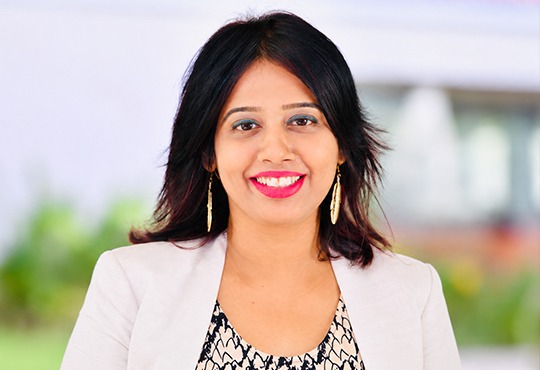 Priyanka Mohanty, Vice President - HR & Global Head Talent Management & DEI, Startek in an interaction with Higher Education Review shared her views on how leaders can build and lead inclusive, high-performing global teams across diverse workplace cultures. She discussed the challenges of managing multicultural teams, the importance of cultural intelligence in global leadership, and the strategies leaders can adopt to strengthen trust, communication, collaboration, and employee engagement across borders and more.
How can leaders build trust across different workplace cultures?
Building trust across different workplace cultures begins with recognizing that trust is not built in exactly the same way everywhere. Through my experience in talent management and Diversity, Equity and Inclusion (DEI) across countries and supporting the integration of global entities, I have seen that some cultures place greater emphasis on competence and consistent delivery, while others value personal relationships and familiarity.
However, certain principles remain universal. Consistency, transparency and respect form the foundation of trust, regardless of geography. Employees need to see alignment between what leaders say and what they do. At the same time, global leaders need the cultural intelligence to adapt how they communicate and build relationships.
During acquisitions and large-scale transformation, I have found that uncertainty can quickly affect employee confidence. So it is important to focus on addressing concerns early, creating transparent communication channels and helping employees understand what was changing and what remained constant.
Leaders should invest time in understanding local contexts, communication preferences and workplace norms rather than relying on assumptions. They must also create environments where employees feel comfortable expressing their views. Leaders may not always have all the answers, but honest communication about what is known, what is evolving and what remains uncertain helps build credibility. Ultimately, when employees experience authenticity, fairness and genuine respect, trust becomes a powerful common language that connects people across cultures creating stronger and more collaborative global teams.
What are the biggest challenges of managing multicultural global teams?
One of the biggest challenges of managing multicultural global teams is understanding that diversity does not automatically result in inclusion. My experience has reinforced that bringing diverse people together is only the starting point. Leaders must consciously create an environment where everyone has an opportunity to contribute and influence outcomes.
Communication is often a significant challenge. Some cultures value direct communication, while others may communicate more indirectly or prefer greater reflection before expressing disagreement. Employees may also have different levels of comfort challenging senior leaders. Without awareness, these differences can easily result in misunderstandings.
Another important challenge is balancing global consistency with local relevance. During rapid global expansion and multiple acquisitions, we need common values, policies and governance while recognizing that implementation could not always be identical across every geography.
Time zones and geographical distance can also create inequalities in participation and visibility. Leaders must consciously ensure that some regions are not consistently disadvantaged because meetings or decisions are centred around one location.
For me, the answer lies in cultural intelligence and deliberate inclusion. Leaders must remain curious, challenge assumptions and establish clear ways of working. When managed effectively, the complexity created by diversity can become an organization's greatest strength, generating broader perspectives, stronger innovation and better business decisions.
Also Read: Top Workforce Trends HR Leaders Must Know
How can organizations prevent cultural differences from creating workplace conflicts?
Cultural differences do not inherently create workplace conflicts. In my experience, conflicts are more likely to emerge when differences are misunderstood, ignored or judged through the lens of one dominant culture. This became particularly relevant while supporting cultural integration where employees bring different histories, working styles and expectations into a common organization.
The first step is awareness. Employees and leaders need to recognize that communication styles, attitudes towards hierarchy and approaches to decision-making can vary significantly. However, awareness alone is not enough. Organizations also need clear values and behavioural expectations. Respect, dignity and inclusion should be non-negotiable across all geographies.
Open communication is equally critical. Many conflicts escalate because employees avoid difficult conversations or allow misunderstandings to continue. Leaders should create psychologically safe environments where concerns can be raised early and addressed constructively.
Managers play a particularly important role because they are often the first point of contact when tensions arise. Ultimately, preventing cultural conflict requires moving beyond tolerance towards genuine understanding. When organizations encourage respectful dialogue and cultural intelligence, differences become opportunities for stronger collaboration.
What leadership strategies help global teams collaborate more effectively?
Effective collaboration across global teams requires much more than technology and regular meetings. In my experience with global talent initiatives and large-scale transformation, collaboration begins with creating a shared purpose. Employees across geographies need to understand how their individual contributions connect to larger organizational and business goals.
Clarity is equally important. Leaders should establish clear roles, responsibilities and decision-making processes to reduce confusion and duplication. During any global hybrid workforce transformation, which impacted the workforce, one should learn the importance of creating clear communication norms.
Inclusion must remain central. Inviting everyone to a meeting does not automatically make the meeting inclusive. Leaders need to consciously consider whose voices are being heard and whether particular individuals or geographies are consistently disadvantaged. I also believe relationship-building is essential. Technology can connect people, but trust creates meaningful collaboration. Creating opportunities for informal interaction and cross-cultural learning strengthens these relationships.
Ultimately, the objective is not to make every global team work identically. It is to create alignment around purpose and outcomes while allowing different perspectives, working styles and strengths to contribute to collective success.
How can leaders create an inclusive culture without losing organizational identity?
Creating an inclusive culture does not require an organization to dilute its identity. In fact, through my work in DEI and cultural integration, I have learned that a strong organizational identity and inclusion should reinforce one another. The key is distinguishing between core values and the different ways those values may be expressed across cultures.
An organization's fundamental principles, such as integrity, respect, accountability and customer focus, should remain consistent across geographies. However, employees may demonstrate those values differently depending on their cultural context. Consistent principles should be established while allowing local customization where necessary.
Inclusion cannot be approached through a single global lens; interventions need to reflect local realities and employee needs. Listening is essential. Organizational culture should not simply be designed at the top and imposed uniformly across locations. Employees should have opportunities to share how values are experienced locally and contribute to shaping the culture.
I believe belonging does not require everyone to behave identically. A strong culture should provide a shared foundation rather than a rigid template. Ultimately, the most successful organizations create unity around purpose and values while giving people the freedom to contribute in ways that remain authentic to their identities and experiences.
Why is Cultural Intelligence becoming essential for global Business Leaders?
As organizations become increasingly global and interconnected, cultural intelligence has become an essential leadership capability. My own experience has demonstrated that technical expertise alone is no longer sufficient for leaders managing globally diverse employees, customers and stakeholders.
Cultural intelligence is the ability to understand, adapt to and work effectively with people whose experiences and perspectives may differ from our own. It begins with self-awareness. Leaders must recognize that their own communication and leadership styles are shaped by their personal and cultural experiences and may not always have the intended impact on others.
Importantly, cultural intelligence does not mean memorizing cultural rules or stereotyping people. In my view, it is about curiosity, listening, asking thoughtful questions and remaining willing to adapt one's approach. This capability also has a direct business impact.
A workforce representing diverse backgrounds can bring broader perspectives, stronger market insights and different approaches to problem-solving. However, diversity creates real value only when leaders know how to bring these perspectives together effectively.
For me, the leaders of the future will be distinguished not simply by their ability to provide answers, but by their willingness to listen and learn. In a global workplace, connecting effectively across cultures is no longer merely a soft skill; it is a strategic leadership capability.
How can technology improve collaboration across geographically diverse teams?
Technology has fundamentally transformed how geographically diverse teams collaborate. My experience in hybrid workforce transformation, reinforced that technology can enable global connection, but its effectiveness depends on how thoughtfully organizations design the employee experience around it. Digital platforms can create greater access to information, knowledge and global conversations. They can also make participation more inclusive by offering different ways for employees to contribute.
Technology is particularly valuable in addressing time-zone challenges. Shared digital workspaces, clear documentation and structured communication can make collaboration more efficient and equitable. However, more technology does not automatically mean better collaboration. Leaders therefore need clear norms around which tools to use and when synchronous interaction is genuinely necessary.
Emerging technologies, including Artificial Intelligence, can further support knowledge-sharing and reduce administrative work. However, human connection remains irreplaceable. Ultimately, technology can remove geographical barriers, but leadership determines whether those digital connections develop into trust, belonging and genuine collaboration.
What role does inclusive leadership play in employee engagement and retention?
Inclusive leadership plays a significant role in employee engagement and employee retention because people are more likely to remain committed to organizations where they feel respected, valued and able to contribute. This belief has strongly influenced my work across global talent management and DEI, where inclusion is viewed as a business imperative rather than a separate HR initiative.
An inclusive leader creates an environment where employees feel comfortable sharing ideas, concerns and different perspectives. This does not mean every suggestion will be accepted, but employees should feel confident that their views are genuinely heard and considered fairly.
Fairness is equally important. Employees need transparency in opportunities, recognition and career development. This becomes particularly important in diverse organizations. Inclusive leaders consciously create opportunities for different voices to be heard. During periods of change, inclusion becomes even more critical. Transparent communication, empathy and two-way dialogue can help maintain trust and confidence during uncertainty.
I believe inclusion must be embedded throughout the employee lifecycle, from recruitment and onboarding to development, recognition and career progression. Ultimately, employees remain where they believe they belong, can grow and have a meaningful future. Inclusive leadership creates that confidence by fostering fairness, belonging, opportunity and genuine trust.
Also Read: What Makes Great Leaders: Insights from Neuroscience
How can Leaders adapt their Communication Styles across Different Cultures?
Effective global leadership requires recognizing that communication styles are not universal. Through my experience working across multiple countries and integrating diverse teams, I have learned that what one person considers clear and direct communication may be interpreted very differently by someone from another cultural background.
The first step is self-awareness. Leaders need to understand their natural communication style and consider how it affects others. Adapting communication does not mean compromising authenticity or changing one's values. It means ensuring that the intended message is understood. A leader who prefers direct feedback, for example, may need to consider a more relationship-oriented approach with certain teams.
Listening is equally important. Leaders should avoid assuming that silence means agreement or that everyone feels comfortable contributing in the same manner. Some employees may prefer time to reflect, while others may be more comfortable providing feedback in writing or during individual conversations.
In my experience, particularly during global transformation and acquisitions, transparent two-way communication is essential. Employees need opportunities not only to receive information but also to ask questions and express concerns.
Clarity also matters because business jargon and terminology can be interpreted differently across geographies. Leaders should communicate simply and check for shared understanding. Ultimately, the most effective global communicators combine consistency with adaptability to create understanding, connection, trust and stronger collaboration.
What can global leaders do to turn cultural diversity into a competitive advantage?
Cultural diversity has enormous potential to become a competitive advantage, but diversity alone does not automatically create better business outcomes. Through my experience, I have seen that the real value comes from an organization's ability to harness different perspectives and transform them into stronger decisions and solutions.
Global leaders must move beyond viewing diversity solely as a representation metric. The more important question is whether diverse employees genuinely have a voice and influence. Are different perspectives actively sought? Do employees feel comfortable challenging established thinking?
The approach to diversity should focus on recognizing different dimensions of inclusion while remaining sensitive to local realities. This is important because diverse teams can bring different customer insights, customer experiences and approaches to problem-solving, helping organizations better understand global markets.
Differences can sometimes create friction, particularly when people have different communication or decision-making styles. However, I do not believe friction is necessarily negative. When supported by psychological safety and mutual respect, healthy debate can lead to better thinking and stronger outcomes.
Cross-cultural learning should also be deliberate. Knowledge should flow across markets rather than remaining concentrated in one geography. Innovative practices developed in one location may provide valuable insights elsewhere. Ultimately, cultural diversity becomes a competitive advantage when leaders transform differences into insight while ensuring that no single culture dominates decision-making. The goal is not to make everyone think alike, but to create sufficient trust and alignment for people to think differently while pursuing shared business objectives.
About Priyanka Mohanty, Vice President - HR & Global Head Talent Management & DEI, Startek :
Priyanka Mohanty is Vice President - HR and Global Head of Talent Management & DEI at a leading global CX company. A Chemical Engineering graduate who transitioned into HR, she brings nearly two decades of experience leading global initiatives spanning HR strategy and policy architecture, diversity, equity and inclusion, employee engagement, employer branding, employee value proposition, leadership development and cultural integration.
Current Issue