Ricardo Palma University: Educating for Life, Leadership, and Global Impact
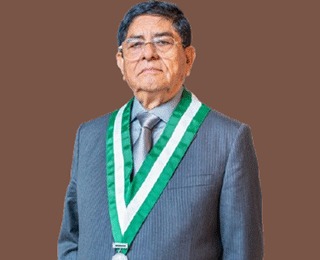
Dr Segundo Felix Romero Revilla, Rector, Ricardo Palma University
In recent years, South America has witnessed a notable expansion in university coverage, an increase in student enrollment, and broader access to higher education - largely driven by the growth of the private sector. Alongside this expansion, governments and regulatory bodies have introduced more rigorous licensing, accreditation, and supervision frameworks.
These measures highlight that educational quality is no longer just an added value, but a core necessity and a key factor in institutional competitiveness. At the same time, disparities in digital infrastructure, connectivity, and access to educational technologies continue to differentiate universities across the region.
Within this evolving landscape, Ricardo Palma University (Universidad Ricardo Palma – URP) stands out as a significant private, non-profit institution within Peru’s academic ecosystem. Founded in 1969 by government decree, the university emerged during a period of rapid expansion in Peruvian higher education and inherited an existing student body and academic programs, while simultaneously developing new disciplines.
Over the decades, it has expanded its academic footprint to include faculties such as Human Medicine, Economics and Business Sciences, Humanities and Modern Languages, Law and Political Science, and Veterinary Medicine. With most of its degree programs internationally accredited and its engineering programs doubly accredited by ICACIT and ABET (USA) and licensed by SUNEDU - Ricardo Palma University exemplifies the region’s growing commitment to quality, global standards, and educational excellence.
Education with Global Academic Standards
Ricardo Palma University (URP) offers a broad and well-structured academic portfolio that balances disciplinary depth with a strong humanistic foundation. As of December 2025, its undergraduate programs span key faculties including Architecture and Urban Planning, Biological Sciences, Economics and Business Sciences, Law and Political Science, Humanities and Modern Languages, Engineering, Human Medicine, and Psychology. T
hese faculties offer programs ranging from Architecture, Biology, Veterinary Medicine, and Human Medicine to globally oriented disciplines such as Global Business Administration, Global Marketing, Tourism and Gastronomy, Translation and Interpretation, and five core engineering branches - Civil, Electronic, Industrial, Computer, and Mechatronic Engineering.
At the postgraduate level, URP has 18 authorized master’s programs, 17 of which are currently active and under academic review, covering fields such as Business Administration, Data Science, Architecture and Sustainability, Public Health, Psychology, Education, Engineering, Environmental Management, and Translation. The university also offers two doctoral programs in Global Business Administration and in Political Science and International Relations.
Over time, URP has developed a distinct academic identity rooted in humanism, emphasizing the formation of good citizens alongside competent professionals. Licensed by SUNEDU, the university meets and exceeds Peru’s Basic Quality Conditions, ensuring robust infrastructure, technology, and faculty.
Most undergraduate programs hold international accreditation, while its engineering programs carry dual ICACIT and ABET (USA) accreditation. A common foundational curriculum and mandatory ethics training further reinforce URP’s commitment to values-based, globally competitive education.
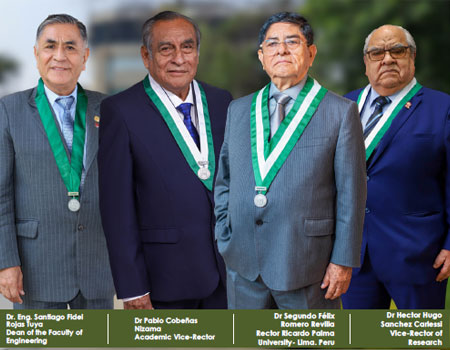 Shaping Careers through Student-Centered Approach
The University distinguishes itself through a holistic educational model that integrates science, technology, humanism, and ethics - an approach highly valued by international students seeking more than purely technical training. A key strength of URP is its ability to balance strong academic quality with affordability, offering competitive tuition fees and a lower cost of living in Lima compared to many regional and global capitals.
Academic excellence at URP is reinforced by a faculty body deeply engaged in continuous professional development, applied research, and active collaboration with productive and social sectors.
Most degree programs are internationally accredited, with faculty profile, performance, and real-world professional experience forming a central part of evaluation, hiring, and ratification processes. Research priorities emphasize practical applications that address real challenges within Peru.
"Academic excellence at URP is reinforced by a faculty body deeply engaged in continuous professional development, applied research, and active collaboration with productive and social sectors"
URP also fosters a dynamic, participatory learning environment. Students benefit from project-based coursework, problem-solving workshops, mandatory training in oral and written argumentation, and structured academic counseling in science subjects. Opportunities for student leadership are embedded within governance, allowing high-performing students to serve as class representatives and participate in university decision-making.
Comprehensive student support systems further enhance the learning experience. These include a Central Tutoring Unit with faculty-level support, psychological counselling in high-enrollment faculties, and dedicated academic guidance from Professional School directors. Together, these structures ensure that URP students are supported academically, personally, and professionally as they prepare for successful global careers.
Digital Transformation and Career-Focused Learning
Universidad Ricardo Palma is strengthening its global outlook and academic relevance through international collaboration, digital innovation, and strong employability initiatives. The university maintains formal agreements with several international institutions, enabling two-way student mobility.
Students have opportunities to undertake short-term internships or complete a full academic semester abroad, enhancing their global exposure and academic experience.
To promote international awareness, the institute regularly invites embassy representatives to deliver sessions on culture, innovation, entrepreneurship, science, and technology. In 2025, the university hosted the Ambassador of India and embassy officials to coordinate academic and cultural engagements. Additionally, all students complete a course on Globalization and Integration to build global perspectives.
URP also conducts training programs and workshops on emerging areas such as artificial intelligence during academic breaks. Faculty members are encouraged to integrate these themes into teaching and research, particularly in digital transformation and the digital society.
The university is implementing the Management System for Educational Organizations (ISO 21001), involving faculty in mission-critical processes and developing AI-enabled databases and assessment practices.
On the career front, a dedicated graduate tracking and employability office works closely with industry partners. Final-semester students mentor juniors, while annual technology fairs connect students with employers. Graduate outcomes and employability remain key priorities, especially for meeting international accreditation standards.
Strengthening Employability and Industry Readiness
URP places strong emphasis on graduate employability and industry integration through a structured and proactive approach. The university operates a dedicated graduate tracking and employability office, with faculty representatives maintaining close connections with partner companies to facilitate career opportunities and monitor alumni outcomes.
Graduate tracking is a key criterion assessed by international accreditation agencies, which also require the university to maintain high employability rates.
To support academic transition and student engagement, final-semester students serve as mentors to guide newcomers within their faculties. URP also organizes annual technology and industry fairs, bringing together corporate representatives from diverse sectors aligned with each faculty’s specialization.
Recognizing the importance of professional exposure, the university requires students to attend a minimum number of academic and professional events for graduation. When in-person participation is not feasible, virtual conferences are offered through the continuing education unit to ensure flexibility.
In their final semester, students participate in multidisciplinary Integration Workshops, where they apply their academic learning to real-world challenges and compete in project presentations, preparing them for dynamic work environments. Additionally, URP supports student branches affiliated with international professional organizations, enabling participation in national and global conferences and enhancing professional networks and global exposure.
Recognition Today, Vision for the Future
Looking ahead, URP’s Strategic Plan 2026–2030 outlines a roadmap for sustained growth and high academic standards. A key initiative includes the implementation of the Management System for Educational Organizations (SGOE) based on ISO 21001. Between 2026 and 2027, all undergraduate and postgraduate programs are expected to obtain ISO 21001 certification, ensuring efficient processes and continuous quality improvement.
URP also plans to modernize its technological infrastructure by introducing advanced equipment across all academic programs. To enhance global exposure and academic mobility, the university will launch dual-degree programs in 2026 in collaboration with internationally accredited partner institutions.
Further strengthening its social and environmental commitment, URP aims to join the Latin American URSULA network and other international university net¬works focused on social responsibility and environmental care.
During the current five-year period, the university will also introduce updated curricula to offer a complete and integrated undergraduate and graduate academic cycle, preparing students for evolving global challenges.
These measures highlight that educational quality is no longer just an added value, but a core necessity and a key factor in institutional competitiveness. At the same time, disparities in digital infrastructure, connectivity, and access to educational technologies continue to differentiate universities across the region.
Within this evolving landscape, Ricardo Palma University (Universidad Ricardo Palma – URP) stands out as a significant private, non-profit institution within Peru’s academic ecosystem. Founded in 1969 by government decree, the university emerged during a period of rapid expansion in Peruvian higher education and inherited an existing student body and academic programs, while simultaneously developing new disciplines.
Over the decades, it has expanded its academic footprint to include faculties such as Human Medicine, Economics and Business Sciences, Humanities and Modern Languages, Law and Political Science, and Veterinary Medicine. With most of its degree programs internationally accredited and its engineering programs doubly accredited by ICACIT and ABET (USA) and licensed by SUNEDU - Ricardo Palma University exemplifies the region’s growing commitment to quality, global standards, and educational excellence.
Education with Global Academic Standards
Ricardo Palma University (URP) offers a broad and well-structured academic portfolio that balances disciplinary depth with a strong humanistic foundation. As of December 2025, its undergraduate programs span key faculties including Architecture and Urban Planning, Biological Sciences, Economics and Business Sciences, Law and Political Science, Humanities and Modern Languages, Engineering, Human Medicine, and Psychology. T
hese faculties offer programs ranging from Architecture, Biology, Veterinary Medicine, and Human Medicine to globally oriented disciplines such as Global Business Administration, Global Marketing, Tourism and Gastronomy, Translation and Interpretation, and five core engineering branches - Civil, Electronic, Industrial, Computer, and Mechatronic Engineering.
At the postgraduate level, URP has 18 authorized master’s programs, 17 of which are currently active and under academic review, covering fields such as Business Administration, Data Science, Architecture and Sustainability, Public Health, Psychology, Education, Engineering, Environmental Management, and Translation. The university also offers two doctoral programs in Global Business Administration and in Political Science and International Relations.
Over time, URP has developed a distinct academic identity rooted in humanism, emphasizing the formation of good citizens alongside competent professionals. Licensed by SUNEDU, the university meets and exceeds Peru’s Basic Quality Conditions, ensuring robust infrastructure, technology, and faculty.
Most undergraduate programs hold international accreditation, while its engineering programs carry dual ICACIT and ABET (USA) accreditation. A common foundational curriculum and mandatory ethics training further reinforce URP’s commitment to values-based, globally competitive education.
Shaping Careers through Student-Centered Approach The University distinguishes itself through a holistic educational model that integrates science, technology, humanism, and ethics - an approach highly valued by international students seeking more than purely technical training. A key strength of URP is its ability to balance strong academic quality with affordability, offering competitive tuition fees and a lower cost of living in Lima compared to many regional and global capitals.
Academic excellence at URP is reinforced by a faculty body deeply engaged in continuous professional development, applied research, and active collaboration with productive and social sectors.
Most degree programs are internationally accredited, with faculty profile, performance, and real-world professional experience forming a central part of evaluation, hiring, and ratification processes. Research priorities emphasize practical applications that address real challenges within Peru.
"Academic excellence at URP is reinforced by a faculty body deeply engaged in continuous professional development, applied research, and active collaboration with productive and social sectors"
URP also fosters a dynamic, participatory learning environment. Students benefit from project-based coursework, problem-solving workshops, mandatory training in oral and written argumentation, and structured academic counseling in science subjects. Opportunities for student leadership are embedded within governance, allowing high-performing students to serve as class representatives and participate in university decision-making.
Comprehensive student support systems further enhance the learning experience. These include a Central Tutoring Unit with faculty-level support, psychological counselling in high-enrollment faculties, and dedicated academic guidance from Professional School directors. Together, these structures ensure that URP students are supported academically, personally, and professionally as they prepare for successful global careers.
Digital Transformation and Career-Focused Learning
Universidad Ricardo Palma is strengthening its global outlook and academic relevance through international collaboration, digital innovation, and strong employability initiatives. The university maintains formal agreements with several international institutions, enabling two-way student mobility.
Students have opportunities to undertake short-term internships or complete a full academic semester abroad, enhancing their global exposure and academic experience.
To promote international awareness, the institute regularly invites embassy representatives to deliver sessions on culture, innovation, entrepreneurship, science, and technology. In 2025, the university hosted the Ambassador of India and embassy officials to coordinate academic and cultural engagements. Additionally, all students complete a course on Globalization and Integration to build global perspectives.
URP also conducts training programs and workshops on emerging areas such as artificial intelligence during academic breaks. Faculty members are encouraged to integrate these themes into teaching and research, particularly in digital transformation and the digital society.
The university is implementing the Management System for Educational Organizations (ISO 21001), involving faculty in mission-critical processes and developing AI-enabled databases and assessment practices.
On the career front, a dedicated graduate tracking and employability office works closely with industry partners. Final-semester students mentor juniors, while annual technology fairs connect students with employers. Graduate outcomes and employability remain key priorities, especially for meeting international accreditation standards.
Strengthening Employability and Industry Readiness
URP places strong emphasis on graduate employability and industry integration through a structured and proactive approach. The university operates a dedicated graduate tracking and employability office, with faculty representatives maintaining close connections with partner companies to facilitate career opportunities and monitor alumni outcomes.
Graduate tracking is a key criterion assessed by international accreditation agencies, which also require the university to maintain high employability rates.
To support academic transition and student engagement, final-semester students serve as mentors to guide newcomers within their faculties. URP also organizes annual technology and industry fairs, bringing together corporate representatives from diverse sectors aligned with each faculty’s specialization.
Recognizing the importance of professional exposure, the university requires students to attend a minimum number of academic and professional events for graduation. When in-person participation is not feasible, virtual conferences are offered through the continuing education unit to ensure flexibility.
In their final semester, students participate in multidisciplinary Integration Workshops, where they apply their academic learning to real-world challenges and compete in project presentations, preparing them for dynamic work environments. Additionally, URP supports student branches affiliated with international professional organizations, enabling participation in national and global conferences and enhancing professional networks and global exposure.
Recognition Today, Vision for the Future
Looking ahead, URP’s Strategic Plan 2026–2030 outlines a roadmap for sustained growth and high academic standards. A key initiative includes the implementation of the Management System for Educational Organizations (SGOE) based on ISO 21001. Between 2026 and 2027, all undergraduate and postgraduate programs are expected to obtain ISO 21001 certification, ensuring efficient processes and continuous quality improvement.
URP also plans to modernize its technological infrastructure by introducing advanced equipment across all academic programs. To enhance global exposure and academic mobility, the university will launch dual-degree programs in 2026 in collaboration with internationally accredited partner institutions.
Further strengthening its social and environmental commitment, URP aims to join the Latin American URSULA network and other international university net¬works focused on social responsibility and environmental care.
During the current five-year period, the university will also introduce updated curricula to offer a complete and integrated undergraduate and graduate academic cycle, preparing students for evolving global challenges.
Current Issue
.jpg)