Cover Story
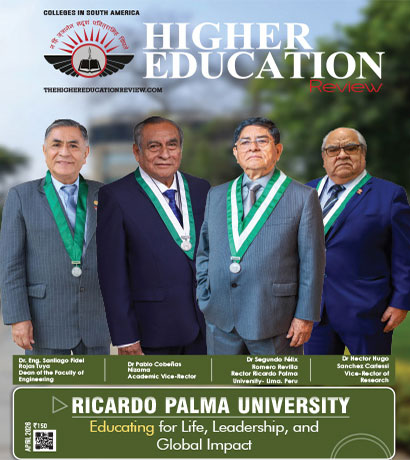

In recent years, South America has witnessed a notable expansion in university coverage, an increase in student enrollment, and broader access to higher education - largely driven by the growth of the private sector. Alongside this expansion, governments and regulatory bodies have introduced more rigorous licensing, accreditation, and supervision frameworks. These measures highlight that educational quality is no longer just an added value, but a core necessity and a key factor in institutional competitiveness. At the same time, disparities in digital infrastructure, connectivity, and access to educational technologies continue to differentiate universities across the region. Within this evolving landscape, Ricardo Palma University (Universidad Ricardo Palma – URP) stands out as a significant private, non-profit institution within Peru’s academic ecosystem. Founded in 1969 by government decree, the university emerged during a period of rapid expansion in Peruvian higher...
Content
-
Shaping Minds, Driving Change: The Rise of South American Colleges
Mary Janifha Evangeline. X
-
Empowering Women through Ethical Entrepreneurship
Trevor Kuna, Chief Marketing Officer, QNET
-
Why Project-Based Learning is the Future of Engineering Education
Prof Vikas Upadhyaya, Associate Professor, Electronics and Communications Engineering, NIIT University
-
How Generative AI is Reinventing Blockchain Development
Dr Aditya Bakshi, Assistant Professor - School of Technology, Management and Engineering (STME), NMIMS, Chandigarh
-
How Universities can build a Future-Ready Workforce
Professor Koen Lamberts, President and Vice-Chancellor, University of Sheffield
-
Adaptive Leadership: What Drives Organizational Success?
Samuel Kim, Professor at the Army War College, President of the Center for Asia Leadership, and Managing Director at Asia Strategy & Policy
-
How Indian Students Are Tapping Into Global Luxury Careers
Pinky Bazaz, Principal Lecturer, Department of Fashion, Nottingham Trent University