
Adaptive Leadership: What Drives Organizational Success?
 Adaptive leadership explains why some organizations repeatedly renew themselves, while others quietly deteriorate despite having talent, resources, and market opportunity. The difference rarely lies in intelligence, strategic frameworks, or access to information. Instead, it lies in how leaders respond when reality becomes uncomfortable. Organizations don't suddenly collapse; they move gradually through stages of growth, mediocrity, and decline. Growth occurs when leaders encourage learning and adaptation. Mediocrity emerges when performance remains acceptable but improvement stalls. Decline begins when the organization protects past success instead of preparing for future relevance. Adaptive capacity - the willingness and ability of people within the organization to change their assumptions, behaviors, and priorities when conditions shift - determines which path prevails, not technical competence.
Most organizations misunderstand the nature of the problems they face, approaching complex change as if it were merely operational. Adaptive leadership distinguishes between technical problems and adaptive challenges. Technical problems can be solved with expertise, procedures, or authority - installing a system, restructuring departments, or adjusting targets. Adaptive challenges, however, require people themselves to change, demanding new mindsets, altered habits, and sometimes the abandonment of values that once defined success. Leaders often attempt to apply technical solutions to adaptive problems because they feel controllable and measurable, but doing so only delays deterioration. When a company faces digital disruption, cultural stagnation, or innovation paralysis, the issue isn't a lack of knowledge but a reluctance to rethink its identity. Organizations decline not because they cannot see change, but because they cannot see themselves clearly enough to respond.
In this context, leadership isn't synonymous with authority. Authority maintains stability, ensures order, and protects expectations. Leadership, by contrast, disturbs equilibrium to enable progress, asking people to confront reality rather than avoid it. A leader practicing adaptive leadership doesn't simply provide answers but frames the right questions, helping the organization interpret what is happening and why old approaches no longer work. This often involves disappointing stakeholders because adaptation requires trade-offs; an organization cannot simultaneously preserve all its traditions and embrace transformation. Leaders who attempt to satisfy every expectation typically create symbolic change - new slogans, structures, or initiatives - without altering behavior. The organization appears active while remaining unchanged, and over time, this gap between activity and learning produces stagnation.
One of the most dangerous forces working against adaptation is past success. Experience provides confidence but also creates blindness. The mental models that once produced growth become filters that reinterpret emerging signals as temporary anomalies. Instead of asking whether assumptions are wrong, organizations search for evidence that confirms them. This is why dominant firms often fall faster than smaller competitors: challengers are still learning, while incumbents are defending. Adaptive leadership, therefore, requires intellectual humility. Leaders must accept that the competencies that built the organization may obstruct its future. The question shifts from "How do we execute better?" to "What must we unlearn?" Without this shift, even sophisticated strategies fail because they are executed within outdated thinking.
Effective adaptive leadership integrates three dimensions often described as heart, head, and hands. The heart provides purpose, goodwill, and commitment to improvement, ensuring that change is grounded in values rather than fear. The head provides diagnosis - the analytical capacity to distinguish symptoms from root causes and to identify whether a challenge is technical or adaptive. The hands provide execution - the discipline to take action and move the organization forward despite uncertainty. Many organizations overemphasize one dimension. Some act constantly without reflection, generating activity but little progress. Others analyze endlessly, producing reports without decisions. Still others inspire through vision but fail to translate inspiration into operational change. Thriving organizations balance all three, caring, thinking, and acting in alignment.
Resistance to change is inevitable because adaptive challenges involve loss. People may lose status, competence, familiarity, or even identity. Employees who excelled in a previous system may feel threatened by a new one. Managers who gained authority through hierarchy may resist empowerment initiatives. Departments may defend boundaries that once protected efficiency but now inhibit collaboration. Adaptive leadership does not attempt to eliminate resistance but to manage it productively. Leaders regulate the level of tension, ensuring it motivates learning without overwhelming the organization. Too little tension produces complacency; too much creates paralysis. The art of leadership lies in maintaining constructive discomfort - enough pressure to encourage change while preserving trust and cohesion.
Also Read: Visionary Leadership Skills for Management Professionals
Diagnosis becomes the central discipline of adaptive leadership. Organizations often rush into action because action feels reassuring. Yet acting before understanding typically reinforces existing patterns. Leaders must ask difficult questions: What behaviors are sustaining our current results? Which values conflict with our strategy? What conversations are being avoided? Who benefits from maintaining the status quo? Such inquiry reveals that performance problems are rarely isolated failures but expressions of deeper cultural dynamics. When leaders treat symptoms - declining engagement, slow innovation, or poor collaboration - without addressing underlying beliefs, improvement efforts fade quickly. Accurate diagnosis enables meaningful intervention.
Adaptive leadership also replaces heroic leadership with collective intelligence. Complex challenges cannot be solved by a single expert because knowledge is distributed across the organization. Frontline employees often understand operational realities better than senior executives. Cross-functional collaboration exposes assumptions hidden within silos. Therefore, leaders create environments where people can safely contribute diverse perspectives. This does not reduce leadership authority; it enhances organizational ownership of solutions. When people participate in identifying problems, they become committed to solving them. Organizations that centralize decision-making often move quickly but learn slowly. Organizations that mobilize diverse participation learn faster and adapt more sustainably.
Humility becomes a strategic capability rather than merely a personality trait. Leaders must continuously test their own thinking, invite dissent, and remain open to revising their perspectives. In stable environments, confidence drives efficiency; in volatile environments, curiosity drives survival. Adaptive organizations treat learning as ongoing rather than episodic. They experiment, reflect, and adjust. Failure becomes information rather than a source of embarrassment. Over time, this builds resilience - not the ability to avoid disruption but the ability to navigate it repeatedly. Competitive advantage increasingly lies not in possessing superior plans but in developing superior learning systems.
Ultimately, thriving organizations redefine success. Traditional metrics measure outcomes: revenue growth, market share, productivity. Adaptive organizations also measure capability: how quickly they detect change, how openly they discuss difficult realities, and how effectively they modify behavior. Instead of celebrating solutions, they cultivate the capacity to solve future problems. This distinction explains why some companies recover from disruption repeatedly while others decline after a single shock. The former build adaptive muscle; the latter depend on stable conditions.
Adaptive leadership, therefore, determines whether organizations thrive or decline because it governs how they relate to change itself. Thriving organizations accept uncertainty as permanent and organize around learning. Declining organizations attempt to preserve certainty and organize around control. The former confront uncomfortable truths early; the latter postpone them until options narrow. Over time, these small behavioral differences compound into dramatically different outcomes.
In a rapidly shifting global environment, no strategy remains permanently valid. Technologies evolve, markets integrate, and social expectations continuously shift. The real task of leadership is not predicting the future perfectly but preparing the organization to evolve with it. Leaders who protect existing identity at all costs create temporary stability followed by sudden collapse. Leaders who help people adapt create temporary discomfort followed by sustained relevance.
The question facing every organization is therefore simple but profound: Will we prioritize comfort or learning? Adaptive leadership chooses learning. It acknowledges that survival depends not on avoiding disruption but on becoming capable of living within it. Organizations thrive when leaders cultivate honesty, shared responsibility, and disciplined experimentation. They decline when leaders protect certainty, silence dissent, and confuse motion with progress. Over the long term, adaptation is not merely a management technique - it is the defining capability that separates enduring institutions from forgotten ones.
About the Author:
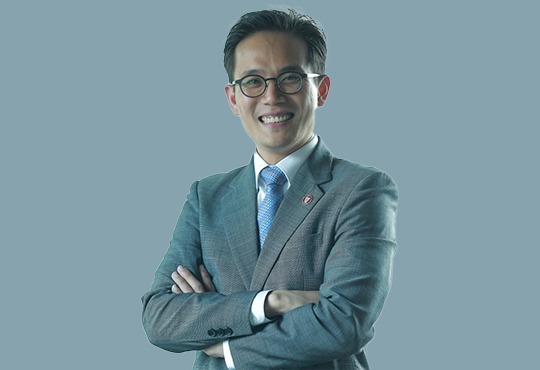
Dr. Samuel H. Kim is President of the Center for Asia Leadership, an organization focused on helping Asian governments and businesses achieve growth and sustainability through effective policies and strategies. He also co-leads the annual Asian Leadership Conference, which attracts over 300 global leaders from 110 countries. He holds a doctorate from NYU, an MPA from Harvard, and has been a Fellow at both Harvard and Northwestern Universities. As the editor of 14 books, his most recent publication is "The Art of Adaptive Leadership: Why Do Organizations Decay or Get Stuck?"
Current Issue