IIM Udaipur Launches Digital BBA, Opens Global Opportunities
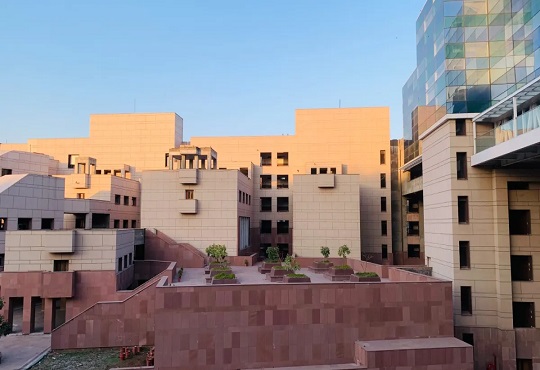
Synopsis: IIM Udaipur launches its digital bilingual BBA programme, with Union Minister Piyush Goyal urging students to seize global opportunities through technology-enabled, flexible management education.
The Indian Institute of Management Udaipur, (IIM) has officially rolled out its Digital Bachelor of Business Administration programme, which kind of feels like a big move toward making top tier management education easier to reach via technology-enabled learning. It was inaugurated virtually by Union Minister of Commerce and Industry Piyush Goyal, and he pointed out how digital learning can actually transform the way students get readied for worldwide careers.
At the launch event the minister went on to say, that students should take up emerging global chances, by leaning into innovation and those digital skills and also keeping a habit of lifelong learning. He mentioned that education shaped by technology can somehow narrow the distance between regions, and even cross language barriers, so students from smaller towns or more rural belts can reach top tier management education without having to move, into major metropolitan cities. The bilingual approach being used, it is delivered in both Hindi and English, and it should widen participation while making quality education feel more inclusive for everyone.
The four year Digital BBA programme is sort of designed as a flexible, online first undergraduate degree, mixing academic rigour with accessibility and that kind of realistic feel. Students can basically join classes remotely while still showing up for offline examinations, so academic integrity stays maintained, in a way. The curriculum has this milestone based approach, it lets learners bag recognised credentials at different points during the journey, and then keep moving forward, until they reach the full degree.
Also read: IIT Madras, IIT Kanpur Launch Bachelor of Cybersecurity
During his address, Goyal sort of proposed a few measures to further, strengthen the programme, in a way. He recommended bringing back regular in-person interactions through hybrid learning, and also putting extra weight on communication plus leadership abilities, not just the usual curriculum. He went on to say that industry exposure should happen via visits to manufacturing facilities, and also business centres. On top of that, he suggested expanding the partnerships with Indian and international institutions, specifically for research collaboration and credit transfer. Altogether, these ideas are meant to craft a more whole learning experience, where academic understanding is blended with real world exposure, more or less.
The Digital BBA sort of aligns with the goals of the National Education Policy NEP 2020; it pushes flexible learning pathways, multilingual education, and also encourages a lot more technology use in higher education. And because the programme provides teaching in two languages, plus lets students study from just about any location, it tries to open up management education for more people. At the same time, it still keeps the academic standards you’d expect from IIM Udaipur, so the whole thing doesn’t feel diluted or anything.
The initiative also sort of reflects the rising role of digital platforms in dealing with the increasing need for skilled management specialists. Students will have chances to build competencies in business management, entrepreneurial thinking, digital transformation, and leadership, while learning in a technology enabled setting meant to satisfy the changing expectations from the industry. It’s a bit more ad hoc than it sounds, because the whole thing leans on platforms to make that happen, too.
Through the launch of its Digital BBA programme, IIM Udaipur is expanding reach to world-class management education, and somehow reinforcing its commitment to innovation inclusivity and future-ready learning. This initiative is set to enable students from all sorts of backgrounds with the right knowledge plus practical capabilities to do well in a world that is more and more connected, globally speaking, and economy.
Current Issue