AI can write Code, but Soft Skills still Matter Most
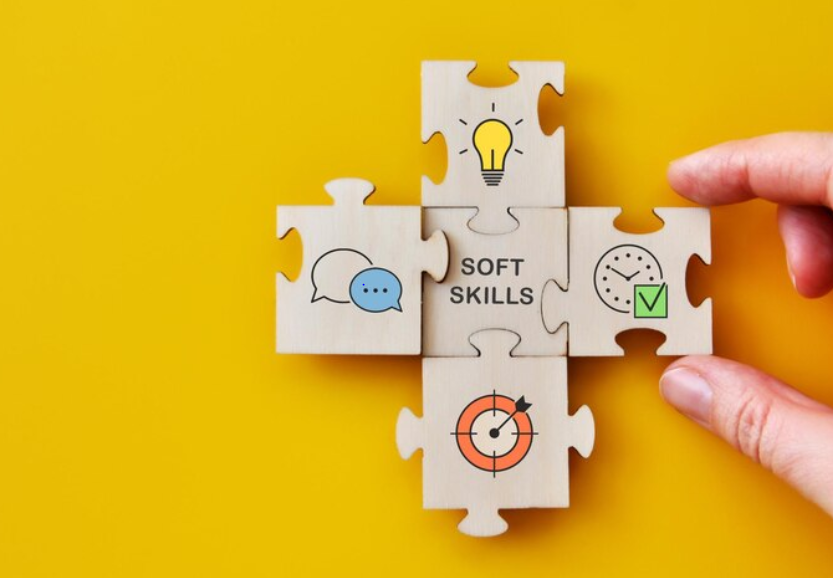 Artificial intelligence is significantly reshaping the world of work at an almost rapid pace. It’s not just “writing code” anymore or running through data analysis, it’s also generating content, and automating customer interactions, so tools that used to require years of technical know-how now get handled fast.
With AI-powered platforms like ChatGPT, Microsoft Copilot, and Google Gemini, these more sophisticated capabilities are becoming reachable for millions of people, and in turn they change how organizations actually operate.
In the process, a fundamental question is developing in a variety of sectors and education institutes: With AI handling a great deal of technical jobs, what abilities will set human workers apart?
Soft skills are increasingly emerging as the answer.
The key traits that are defining successful professionals are communication, creativity, emotional intelligence, adaptability, leadership and critical thinking. These are capabilities that are only a part of the human being, and they are proving to be hard to automate, and are becoming the new competitive edge in the AI-era.
Although the technical expertise is crucial, organizations are finding that the future isn't for those who are competing with AI; it's for the ones who know how to work with it.
AI is Democratizing Technical Skills
For a long time, technical expertise was thought to be the most important job differentiator. Professionals who could program, analyze, design or use specialized software had a great advantage in their jobs. Today, AI is changing that equation.
Coding assistants can develop software. In seconds, AI tools can present, report, analyze spreadsheets and summarize complex documents. What used to take a lot of training to do is now easier and quicker. But, this does not imply that technical skills are losing their relevance. Rather, they are becoming easier to acquire than ever.
With technology making it easier to get in, employers are putting more emphasis on problem solving skills that can't be automated. The emphasis is changing from knowing to thinking, working and leading.
"In quality engineering, a newcomer’s ultimate test isn’t technical; it’s explaining a code failure. This demands more than data. It requires the clarity, empathy, and confidence to bridge the gap between problems and solutions. These aren't just traits; they are deliberate professional skills. While graduates today possess strong technical foundations, the true differentiator is the ability to communicate constructively and nurture professional relationships. As AI assumes the heavy lifting of execution, our "human edge" resides in judgment, communication, and emotional intelligence.Remember: your words shape your world. The language you choose dictates the level of trust and momentum within a team. When you frame feedback as a shared mission rather than a critique, you unlock innovation. Technical skills may open the door, but it is your integrity that defines your trajectory. Excellence is not just what you know. It is how you influence, connect, and uplift others", says Venka Reddy, Chief People Officer, QualiZeal.
Why Communication is becoming the Ultimate Career Skill
In a world that’s becoming more and more automated, communication has turned into one of those really valuable skills professionals can lean on, and honestly it is hard to replace. AI can process information and generate insights at remarkable speed, but it cannot truly build trust, understand the depth of human emotions, or create the meaningful relationships that drive genuine human connection.
Effective communication is not just moving data from one place to another. It involves empathy, right context, persuasion, and the skill to connect with a lot of different audiences, even when they are completely unlike you.
Companies therefore need people who can lay out ideas clearly, work well across teams, handle disagreements with tact, and keep others motivated during seasons of fast transition. And yes, this shows up everywhere, whether you are in engineering, healthcare, finance, or education. Strong communication abilities are becoming just as important for leadership, and for long-term career growth.
Emotional Intelligence is the Human Advantage
As workplaces become increasingly digital, emotional intelligence is emerging as a strategic imperative. It is no longer viewed as merely a "nice-to-have" skill, but as a critical capability for driving collaboration, leadership, and organizational success. People who have strong emotional intelligence tend to know how to steer relationships, handle workplace shifting dynamics, and back up colleagues in a way that feels real. They show empathy, self-awareness, and interpersonal sensitivity, basically things that AI systems, at least not genuinely, can’t really claim.
This human edge is highly important in fields such as healthcare, customer experience, education, and human resources, where trust and meaningful human connections remain central to their functioning.
Organizations are gradually recognizing that emotionally intelligent employees help build stronger workplace cultures, enable smoother collaboration, and often contribute to higher customer satisfaction. In many situations, these qualities are becoming just as important, and sometimes even more valuable than technical competence.
“Over the years, I have come to believe that great doctors are not defined only by what they know, but by how they make people feel. Medical knowledge can save lives, but empathy, communication, and trust are what help patients feel safe and supported during some of the most difficult moments of their lives. Through Doctor-Patient Relationship, Medical Ethics, and Behavioural Science, students learn the human side of healthcare from day one. They also study in a diverse international environment with peers from over 40 nations, which helps them develop cultural awareness and emotional intelligence. As healthcare continues to evolve, these soft skills will remain essential for every doctor who wants to make a meaningful impact,” says S.P. Saju Bhaskar, Founder & President, Texila American University.
Why Critical Thinking is more important than Ever
 In the wake of an influx of information generated by artificial intelligence (AI), a new problem arises; how to identify truth, morality, and relevance. While AI is very efficient in pattern recognition and giving advice, there is no replacement for human reasoning. Just like in any other profession, the professional has to assess the evidence, weigh the risks involved, understand the situation, and make the decision.
“The last era of societal advance was fuelled by technical expertise powering innovation, but as we step into an era led by AI - digital fluency without key skills like critical thinking, adaptability, borderless collaboration, communication, storytelling and empathy will reduce the impact of new generation leaders. Higher Education should focus on developing the talent of tomorrow which can collaborate across disciplines, interpret outcomes, and make ethical decisions. AI can draft a legal note, detect disease patterns, or write code - but it cannot replace a doctor calming an anxious patient, a teacher inspiring curiosity, or a manager resolving conflict in a diverse team,” says Anand D Srivastava, VP, Global Delivery, DXC.
Adaptability Is the New Job Security
Technology is changing more rapidly than before. Programming languages change. Software platforms evolve. Industries are changing: Automation and digitalization are transforming the entire industry landscape.
In this type of setting, flexibility has emerged as one of the most valuable assets a worker can possess. Employers are looking for those who adapt, are open to learning and can withstand the unknown. It is more important to be able to learn new skills and adjust to changing requirements than to become an expert on one technology.
The new decade is about learning and developing rather than knowing and doing. The ones who are left with questions and who are flexible will be best equipped to succeed.
Leadership Cannot Be Automated
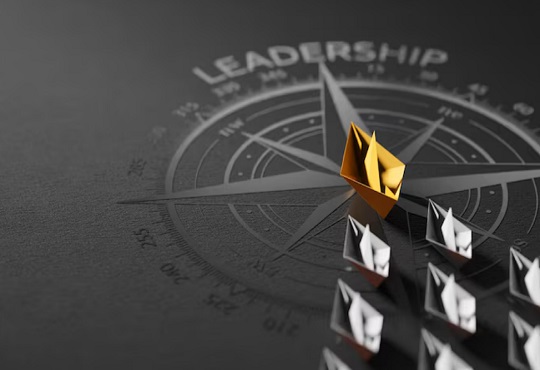 As organizations start folding AI into their everyday operations, leadership is getting more and more important, especially at the top. AI can surface insights, even offer suggestions, but it can’t really inspire folks, build trust in the room, or craft that clear, compelling picture of what comes next.
Leaders have to steer the whole organization through the change process, doing the careful back and forth between innovation and real human needs, plus handle the ethical bumps that show up with AI adoption. They also have to make sure the tech boosts productivity without dragging down culture, undermining trust, or hurting employee wellbeing.
Vision, compassion, integrity, and the ability to rally people around common aims, those still feel like human stuff not software, you know. And honestly these strengths will keep shaping what effective leadership looks like in the AI age.
“Recruitment panels no longer evaluate candidates solely on academic credentials. Today, organizations assess candidates based on their problem-solving ability, adaptability, and capacity to work effectively across diverse teams. Soft skills such as collaboration, communication, and emotional intelligence serve as a significant advantage for students when they enter the workforce. Candidates who demonstrate strong interpersonal skills consistently outperform peers with strong technical skills but weak soft skills. Higher education institutions that prioritize these attributes in their graduates are fostering professionals who are genuinely workforce-ready from day one. The responsibility, therefore, does not rest with employers alone. Academia must build structured opportunities for students to practise leadership, manage conflict, and communicate with clarity, because these are the capabilities that define long-term career success", says Sachin Alug, CEO, NLB Services.
Why Universities Must Rethink Education
 The growing importance of soft skills has, like, really profound implications for higher education in general. For decades, universities mainly focused on technical knowledge and academic achievement, but in the last years employers are more often seeking graduates who can communicate effectively , collaborate with diverse teams, think critically, and also adapt to changing environments, pretty much daily.
So educational institutions need to go a bit beyond the usual teaching style and put heavier weight on experiential learning, project based assignments, group work, presentations, internships, and even these leadership opportunities that might sound “extra” at first but matter later. Preparing students for the AI era isn’t only about one side, it needs a careful balance between technical competence and human capabilities.
Universities that manage to cultivate both, in a steady way, will end up with graduates who are better positioned for the future workforce.
”In an increasingly technologized world, soft skills are not a complement to technical expertise but a core component of professional and personal value. Skills such as communication, interpersonal relationship building, creativity, organizational ability, responsibility, and the capacity to manage one’s own well-being shape how knowledge is applied, not just how it is acquired. Their impact spans the entire lifecycle of an individual, from education to professional practice and everyday life. Cultivating these skills is at least as important as developing hard skills. While educators and academic programs play a critical role, the primary responsibility ultimately lies with the individual,” says Juan M. Carrillo de Gea, Associate Professor, Faculty of Computer Science of the University of Murcia, Spain.
The Future Belongs to Human Skills!
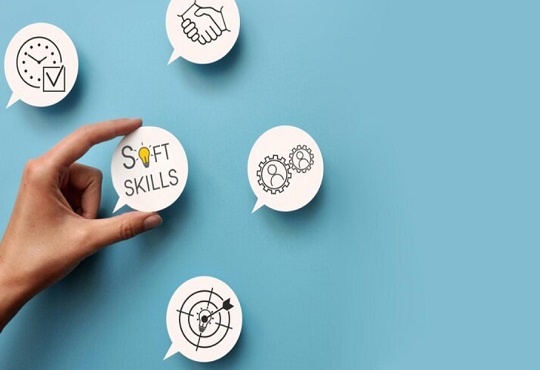 Artificial intelligence is redefining how work gets done, while it also simultaneously brings greater attention to the creativity, empathy, and critical thinking that make people uniquely valuable.
Technical skill sets will adapt and develop with technological improvements, and the everyday functions will become automated through smart technology. But skills like communication ability, creativity, emotional intelligence, analytical skills, adaptability, and leadership will be essential traits that technology cannot easily emulate. These attributes no longer constitute just "soft skills" but instead have become identified as "power skills" in their ability to drive an individual's ability to adapt, collaborate, and create value in today's workplace.
In the years to come, professionals who excel in the workforce will be those who are not trying to compete with the machines but instead know how to combine their own human strengths with the use of technology. In an era of constant technological progress, human creativity, empathy, decision-making abilities, and adaptability may be one's most valuable competitive advantage.
Current Issue
.jpg)