Education Loan Repayment Strategies to Reduce Interest
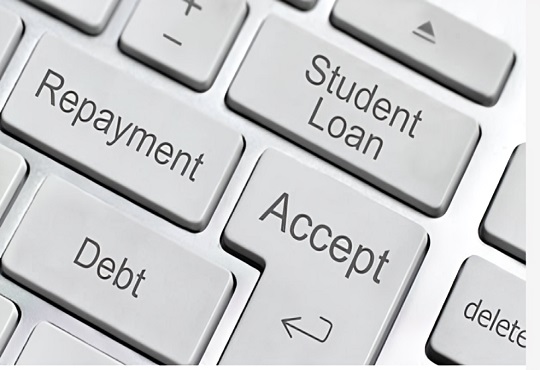
While taking an education loan may help you access higher education, it will also become a part of your financial responsibilities after your course and the moratorium period is over. For many, the difficulty is not just the monthly payments, but the management of repayment, ensuring that monthly repayments are kept to a minimum, and that the overall interest cost is minimized and not a burden on achieving other financial goals.
When borrowers are mindful of interest accrual, prepayment definition, and the optimal timing for prepayment, a clever repayment plan can help them pay off their loan faster. There are various methods by which the borrower can effectively manage his/her education loan, such as selecting the right repayment period, leveraging bonuses and salary increments, etc.
Understand how your Education Loan Repayment Works
Borrowers should be aware of the basic structure of their loans before selecting a repayment strategy. Normally, the monthly installment, referred to as the Equated Monthly Installment (EMI), is comprised of both principal and interest. In the initial repayment period, a greater amount of EMI might be allocated to interest payment and the principal might increase with time.
The total amount that a borrower pays is dependent on the interest rate, the outstanding principal, the length of the term of the loan, and the type of loan. A longer loan term will lower the EMI but it also will likely result in a higher interest amount over the life of the loan.
Hence, it is important that borrowers not consider it by itself whether the EMI is within their monthly budget or not. They should also take into account the amount of the repayment.
Start Repayment Planning before the EMI Begins
 The best repayment technique is to begin the repayment process before you have your first EMI payment due. Course period and moratorium will allow students to know their outstanding loan amount, the interest rate applicable, the repayment period and the expected EMI.
If the borrower has an income source while the moratorium is in effect, then they may consider paying the loan voluntarily, depending on the terms and conditions of the loan agreement. However, just a few payments can make a world of difference and can help cut down the outstanding balance depending on how the lender applies your payment.
Students should also not look upon the moratorium period as a time when they can quietly put the loan out of their minds. If it's a loan, the interest may still be charged during this time. To estimate the eventual burden of repayment, an understanding of this accumulation is crucial.
Also read: Education Loans in India - The Complete Student Guide
“Many students nowadays develop keen interest in higher education abroad as it offers exposure to different academic systems, cultures, technologies and international career opportunities. However, the cost of tuition, accommodation, travel and living expenses may be prohibitive for students from middle-income families to study abroad. Education loans are helping to fill this financial gap.
As Nelson Mandela famously said, “Education is the most powerful weapon which you can use to change the world.” So, education loans should not be seen only as financial aid but also as an investment in the future of the student. They offer students the opportunity to consider quality institutions and specialized programs that they may otherwise find financially difficult. Studying abroad also helps students to develop skills outside of the classroom. They can be significant contributors to their career development through exposure to international markets, independent living, cross-cultural understanding and professional networking.
Benjamin Franklin said, “An investment in knowledge pays the best interest.” Education loans can help make this investment possible at a time when families may not have the wherewithal to fund the entire education upfront. However, borrowing should always be a well-thought-out decision. Students and families should know the loan amount, the interest rate, the period of repayment, and the likely career options prior to signing up for a loan.
In the long run, education loans can be instrumental in globalizing and democratizing education. If well-designed, they can help students surmount financial barriers, seek their dreams, and build a more solid foundation for their future careers,” says Dr. Awantika Rajauria, Assistant Professor, Department of Economics, NMIMS Deemed to be University Bengaluru

Current Issue