World Youth Skills Day: How to Build Skills for a Changing World
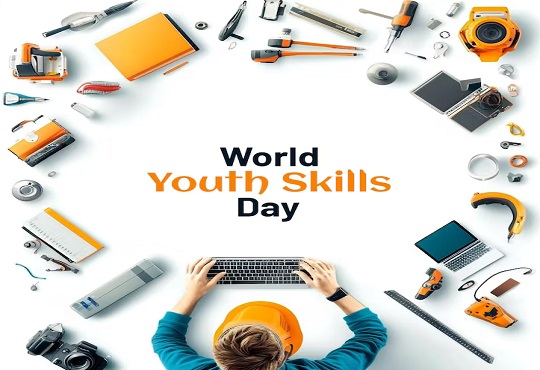 As automation, artificial intelligence, and digital transformation reshape industries, developing future-ready skills has become more important than ever. Celebrated every year on World Youth Skills Day, the 2026 theme, "Skills for a Shared Future," highlights the critical role of equipping young people with technical, digital, entrepreneurial, and soft skills needed to build inclusive and sustainable economies.
In a rapidly changing global job market, success depends not only on academic qualifications but also on adaptability, innovation, and lifelong learning. This World Youth Skills Day, discover why empowering youth with the right skills is essential to creating a resilient workforce and a prosperous shared future for all. Here is what Industry leaders had to say about World Youth Skills Day and its importance.
Sachin Alug, CEO, NLB Services
 India's Global Capability Centres are creating a new definition of employability. While academic qualifications continue to matter, hiring decisions are increasingly being driven by demonstrable skills, practical problem-solving ability, certifications, and hands-on project experience.
As GCCs evolve from delivery centres into global innovation hubs, they require talent that can contribute from day one across AI, data engineering, cybersecurity, cloud, and digital product development.
For young professionals, continuous learning is becoming a career necessity rather than a competitive advantage. On World Youth Skills Day, the focus should not simply be on creating more graduates but on creating graduates who are industry-ready.
Pratap Mane, President & India Head, Colt Data Centre Services
 The AI era is fundamentally redefining the relationship between infrastructure, energy, and talent. While investment in digital infrastructure will continue to accelerate, the true differentiator will be the availability of highly skilled professionals who can build, manage, and evolve increasingly complex digital ecosystems.
From engineering and critical operations to energy optimization and sustainability, the capabilities required to power the future of AI infrastructure are becoming increasingly specialized and strategically important.
India's demographic advantage presents a unique opportunity to develop a globally competitive talent base that can support the country's digital ambitions and contribute to the global digital infrastructure ecosystem.
Realizing this opportunity will require collaboration between industry, academia, and policymakers to ensure skills development evolves alongside technological progress. On World Youth Skills Day, the conversation should move beyond preparing talent for the jobs of today and focus on building the capabilities that will define the industries of tomorrow. Investing in future-ready talent is ultimately an investment in India's long-term digital resilience, innovation, and global competitiveness.
Santosh Kulkarni, Senior Director, Learning and Development, Vertiv
 India's ambitions in AI and digital infrastructure are only as strong as the talent pipeline that supports them.
As data centres become more complex and power-intensive, the demand for engineers who understand AI workloads, critical power and cooling systems is only going to accelerate.
We see this as a shared responsibility, which is why we strive to work closely with institutions like the IITs to curate programs that help close the gap between what industry needs and what academia teaches. Building this talent base across India even including Tier2 and Tier3 cities is how we support future-ready critical digital infrastructure in India.
Sunil Sharma, Managing Director & VP – Sales (India & SAARC), Sophos
 India's cybersecurity talent gap is real, and it's widening faster than most training pipelines can keep pace with and that gap is exactly what 'Skills for a shared future' should be pushing us to close.
Certifications and classroom theory only get someone so far, but what actually prepares young talent is time spent on real tools, real attack scenarios, real incident response, before they're thrown into a live SOC.
For instance, our Authorized Training Centre in India - gives students and early-career professionals hands-on exposure rather than just credentials on paper. At the end of the day, cybersecurity is a people problem before it's a technology one, and the industry doesn't get to complain about a talent shortage if it isn't willing to invest in building that talent itself.
Anjali Sharma, VP- HR and Director – Global Head of L&D, Fulcrum Digital
 Skills for a shared future is exactly the right lens for where L&D needs to go. We have moved past the idea that learning happens once, early in a career, and then you're set for the next twenty years - that model is already broken.
What works now is pairing the digital fluency young talent brings in with the judgment and context that experienced mentors bring, and building real structures around that exchange, not just onboarding decks.
If businesses want a genuinely shared future, they have to treat youth skilling as core infrastructure, not a CSR line item.”
Sandesh Naik, Chief Financial Officer, AB Energia Solutions
 India's renewable energy ambitions are ultimately translated into reality on project sites, where engineering expertise, technical precision and execution capabilities determine the pace of progress.
As the sector scales, the demand for skilled professionals is expanding beyond conventional engineering to areas such as project management, digital construction, quality assurance, and advanced renewable technologies.
This year's World Youth Skills Day theme, 'Skills for a Shared Future,' is a reminder that investing in technical talent is not just about creating employment - it is about strengthening India's capacity to build the clean energy infrastructure of the future.
Current Issue
.jpg)