How India’s B.Tech & MBA Graduates Can Lead in the AI Era
 The question surfaced at the end of a graduate seminar. “Will artificial intelligence take away our jobs?” a student asked, “or should we be learning to build it?”
The room fell silent. Not out of fear, but recognition.
In 2026, India is not experiencing a routine hiring cycle. It is undergoing structural redesign. Artificial intelligence, digital public infrastructure, cloud ecosystems, advanced analytics, and algorithmic capital flows have converged to reshape how value is created and captured. For final-year B.Tech and MBA graduates, this moment is not merely about employability. It is about strategic positioning in an economy recalibrating its foundations.
The issue is not whether opportunity exists. It does. The question is who will command it - and how?
From Coding to Cognitive Architecture - The Indian engineer is being redefined!
Scale once determined advantage - coding volume, delivery speed, and operational throughput. Today, cognition determines advantage. The market rewards those who design intelligent systems, not those who execute within them.
 Artificial Intelligence Engineering now anchors enterprise strategy. Roles such as AI Engineer, Machine Learning Engineer, Deep Learning Specialist, Computer Vision Engineer, NLP Engineer, and Generative AI Architect are no longer niche titles. They sit at the core of transformation mandates. These professionals design fraud detection engines, predictive healthcare models, autonomous logistics systems, algorithmic trading platforms, and personalization architectures that drive measurable revenue.
Validated capability matters. Certifications such as Google Professional Machine Learning Engineer, Microsoft Azure AI Engineer Associate, and AWS Certified Machine Learning – Specialty signal applied competence at global standards. The TensorFlow Developer Certificate distinguishes those who deploy models in production from those who understand them only conceptually.
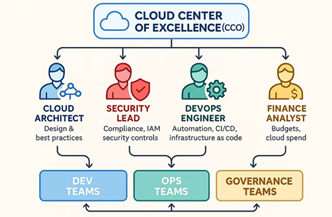 Cloud architecture represents another command center of influence. Enterprises depend on Cloud Solutions Architects, DevOps Engineers, Site Reliability Engineers, Platform Engineers, and Infrastructure Architects to design scalable ecosystems. Credentials such as AWS Solutions Architect, Microsoft Azure Solutions Architect Expert, and Google Cloud Professional Cloud Architect reinforce architectural authority. Certifications like Certified Kubernetes Administrator and Docker Certified Associate validate fluency in containerized environments that power modern digital enterprises.
Cybersecurity has moved to the boardroom. As India digitizes finance, healthcare, logistics, and governance, vulnerability becomes economic risk. Roles such as Cybersecurity Analyst, Security Architect, Ethical Hacker, Information Security Manager, and Chief Information Security Officer now protect institutional trust. Designations including Certified Ethical Hacker, CISSP, CISM, and CompTIA Security+ represent structured mastery in safeguarding digital capital.
Data Science remains foundational. Yet differentiation lies in interpretation. Data Scientists, Data Engineers, Analytics Consultants, Business Intelligence Architects, and AI Research Scientists increasingly shape strategic decisions. Engineers who combine academic rigor with recognized analytics certifications move beyond code into executive conversations. The engineers of 2026 are not merely programmers but are systems architects of intelligence.
Management in the Age of Algorithms
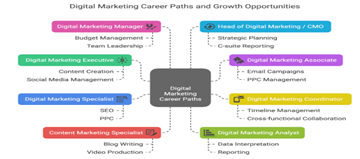 Management education is undergoing equal transformation. Marketing has shifted from intuition to instrumentation. AI-driven segmentation, predictive analytics, automated media buying, and performance dashboards now shape growth strategy. Roles such as Digital Marketing Strategist, Growth Marketing Manager, Performance Marketing Lead, Marketing Analytics Manager, and Chief Marketing Technologist reflect this shift. These professionals architect measurable demand engines. Certifications in Google Ads, Google Analytics, Meta Digital Marketing, HubSpot Content Marketing, and the Certified Digital Marketing Professional signal accountability in data-led ecosystems.
Product management has emerged as a strategic nexus in technology enterprises. Titles such as Product Manager, Technical Product Manager, Growth Product Manager, AI Product Lead, and Chief Product Officer now command executive visibility. These leaders translate engineering capability into scalable business value. Agile credentials such as Certified Scrum Product Owner, PMI-ACP, and SAFe Agilist reinforce disciplined innovation within high-velocity cycles.
In finance, digital acceleration has redefined traditional pathways. Roles including Investment Analyst, Equity Research Associate, Portfolio Manager, Risk Analyst, FinTech Strategy Consultant, and Chief Financial Officer require fluency in quantitative models and digital platforms. The Chartered Financial Analyst charter remains a benchmark in capital stewardship. The Financial Risk Manager aligns with AI-powered risk analytics. NISM certifications strengthen regulatory grounding within India’s capital markets, while CPA pathways enhance global credibility.
Operations and supply chains have transitioned into predictive leadership domains. Designations such as Operations Manager, Supply Chain Strategist, Logistics Optimization Lead, Infrastructure Program Director, and Chief Operating Officer depend on data-driven decision systems. Credentials including PMP, Six Sigma Green and Black Belt, APICS CPIM, and Certified Supply Chain Professional formalize structured competence in digitally integrated environments.
Across management disciplines, professional designations are not resume embellishments. They signal readiness for strategic accountability and compress the distance between theory and execution. The MBA graduate of 2026 is not merely a functional specialist. He or she is a translator of intelligence into growth and institutional direction.
The Convergence Mandate
Specialization alone is insufficient. The engineer who understands financial modeling shapes fintech differently. The MBA graduate who interprets machine learning outputs influences AI strategy more effectively. The marketer who understands systems integration builds scalable automation frameworks. The operations leader who applies predictive analytics converts efficiency into advantage. India’s fastest-growing sectors such as FinTech, digital banking, HealthTech, smart infrastructure, pharmaceutical systems, e-commerce analytics - recruit for synthesis rather than silos.
Hybrid work amplifies this shift. Performance is benchmarked globally. Collaboration transcends geography. Execution standards mirror multinational expectations. Globally recognized certifications provide a shared professional language in a borderless marketplace. Interdisciplinary fluency is structural.
The Leadership Variable
Technological acceleration does not eliminate human relevance. It magnifies differentiation. Automation absorbs repetition. Algorithms deliver precision. Judgment, ethical clarity, contextual awareness, and systems thinking remain distinctly human advantages. Credentials validate skill. Perspective creates leverage.
Graduates who rise will synthesize disciplines, anticipate structural shifts, and operate with disciplined adaptability. They will treat certifications as frameworks, not finish lines. They will understand that technology evolves rapidly, but strategic thinking compounds. Leadership in the intelligent economy demands architectural awareness, the ability to recognize how technology, capital, policy, and society intersect.
Designing the Decade
India’s economic architecture is being rewritten in real time. Artificial intelligence, advanced analytics, digital finance, and cloud infrastructure are structural realities. For the B. tech graduate, the mandate is clear: build and secure intelligent systems. For the MBA graduate: translate intelligence into strategy, capital, and growth.
But technical fluency alone will not define the next decade. The divide will not be between those who understand AI and those who do not. It will be between those who adapt to systems and those who design them. Certifications validate competence; interdisciplinary fluency sustains relevance while strategic intent creates influence. When asked whether AI will take away jobs, the more accurate answer is simpler: it will expose the depth of preparation. The future of work will not reward passive qualification. It will reward architectural thinking. In the intelligent economy, careers are not found rather engineered. While, influence will not be claimed, it would be constructed.
About the Author:
Dr. Rini is a Visiting Assistant Professor (IT & Marketing) at Panjab University and Head – Technology Solutions, BuildTrack (Smart Automation). She is a distinguished academician and business strategist with a PhD in Marketing Management from the University Business School (UBS), Panjab University (PU). A Gold Medallist in her MBA with a specialization in IT & Telecom from Panjab University, she brings strong academic grounding and analytical rigor. Dr. Rini has extensive industry experience. She has worked with leading telecom organizations such as Vodafone, Reliance Communications, and TATA Teleservices.
Current Issue