How Students can Gain Industry Experience before their First Job
 India’s graduate talent story is at a turning point. While more students are earning degrees than ever before, employers continue to ask the same question: Are graduates truly job-ready?
The latest India Skills Report notes that employability in India has improved to 56.35% in 2026, up from 54.81% the previous year, a positive shift toward a skills-first economy. Yet this also means that nearly 4 in 10 graduates still enter the job market without adequate workplace readiness. This gap is where industry experience before the first job becomes the defining differentiator.
Today, recruiters no longer hire solely for academic excellence. They are hiring for problem-solving ability, workplace communication, project ownership, digital fluency, and adaptability, skills best built through real-world exposure.
The conversation is no longer about whether students have degrees but whether they have evidence of application. Employers increasingly assess candidates on their ability to work with real datasets, solve live business problems, communicate across teams, and adapt to digital workflows. In fact, recent hiring trends show that Indian employers across technology, BFSI, and digital roles are steadily moving toward skills-first hiring, prioritizing portfolios, projects, certifications, and practical assessments over academic pedigree alone.
For students, this changes the way learning must be designed. Industry experience should not begin with the first job offer; it must be embedded into the learning journey itself. The strongest learning ecosystems today are those built in close collaboration with employers, where curriculum evolves alongside market demand, case studies mirror real business situations, and assessments test execution rather than memorization. This alignment between education and recruiters' expectations helps students graduate with confidence rather than uncertainty.
When institutions work closely with hiring partners, the classroom begins to reflect the realities of the workplace. Students gain exposure to the tools, workflows, and decision-making environments they are likely to encounter in roles across finance, analytics, technology, and business functions. Whether it is solving credit risk models, building AI dashboards or analyzing operational data, the value lies in learning through industry context rather than theoretical abstraction.
Also Read: Building Resilience with Young Students in the World of Tech & Job Disruptions
This model is increasingly becoming essential in India’s skilling landscape. The India Skills Report, based on over 1 lakh candidates and insights from 1,000 employers, shows that job readiness is now directly linked to practical skill application, AI fluency, and exposure to emerging business environments.
Another defining factor is the role of industry partnerships. Students benefit the most when institutions move beyond traditional academic structures and create sustained engagement with corporates, domain leaders, and practitioners. Guest lectures alone are no longer enough. What creates real readiness is access to live projects, mentorship from working professionals, internships, simulation-led modules, and capstone assignments shaped by actual business use cases.
This is particularly relevant as India strengthens its position as a global talent hub. The country now contributes 16% of the world’s AI talent pool, with the number expected to reach 1.25 million professionals by 2027. To participate meaningfully in this opportunity, students need more than conceptual knowledge; they need familiarity with the pace, ambiguity, and accountability of real-world work.
A student who has already worked on market-entry simulations, valuation models, product dashboards, or AI-led automation tasks enters the workforce with a different level of confidence. The first job becomes an extension of applied learning rather than a sudden shift from theory to practice. This is the future of career-focused education: industry exposure not as an add-on, but as the foundation of learning design.
As hiring continues to move toward skills validation and proof of work, students who gain industry experience before graduation will hold a decisive advantage. More importantly, institutions that build deep industry linkages, continuously update curriculum to reflect recruiter needs, and prioritize experiential learning will be the ones shaping truly job-ready talent for India’s next growth decade. Because in today’s economy, students do not simply need education that informs, they need education that performs.
About the Author:
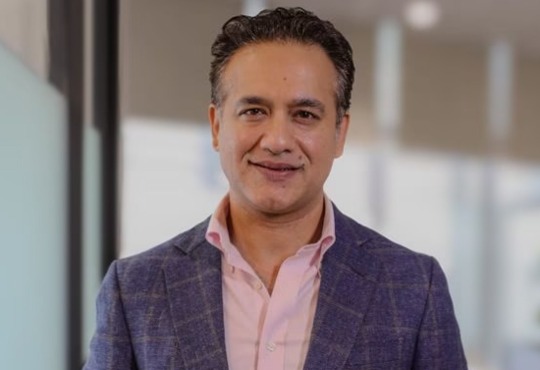
Nikhil Barshikar is the Founder and CEO of Imarticus Learning, one of India’s leading professional education firms focused on bridging the gap between academia and industry through job-ready programs in finance, analytics, technology, and management. Nikhil holds an Executive MBA from Columbia Business School and London Business School, two of the world’s most prestigious management institutions.
Current Issue