Flipped, Blended, Disrupted: The Future of Management Education
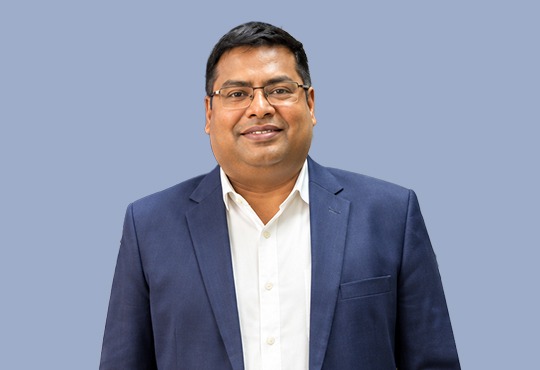 Dr. Praveen Kumar S, Professor & Dean, Faculty of Management, SRM Institute of Science & Technology, Ramapuram, Chennai in an interaction with Higher Education Review shared his insights on whether an MBA will continue to lead to high-paying career opportunities over the next decade, which management careers are likely to remain resilient amid the rise of artificial intelligence, which management specializations could command the highest salaries by 2030, and how business schools are redesigning their curricula to align with evolving industry demands and more.
Will an MBA still guarantee a high-paying job in the next decade?
An MBA more than guaranteeing a high-paying job offers a strong signal and a network that improves the odds. That distinction matters more than ever. Over the next decade the guarantee narrative will continue to weaken, not because the MBA is losing value, but because employers are learning to look past the credential to the capability behind it. A degree from a strong institution still opens doors, yet what keeps a graduate in the room is demonstrable judgment, the ability to work with ambiguity, and increasingly the fluency to collaborate with intelligent systems.
We are also seeing outcomes disperse. The gap between the strongest programs and the average one is widening, and within any single cohort the gap between students who treat the MBA as a two-year credential ritual and those who treat it as a laboratory for real problem-solving is widening too. High pay will continue to flow to people who can synthesise across functions, frame the right questions, and take ownership of outcomes, because those are precisely the abilities that resist automation.
So the honest answer is that the MBA will remain a powerful accelerator of a high-paying career for those who use it to build durable capability, and an expensive disappointment for those who expect the paper alone to do the work.
Which management careers are most likely to survive the rise of artificial intelligence?
The management careers most likely to thrive are those built on judgment under ambiguity rather than the processing of information. Artificial intelligence is remarkably good at pattern recognition, drafting, and analysis, but it does not carry accountability, hold a difficult conversation, or earn the trust of a boardroom. Roles that are relationship-dense and context-heavy will therefore endure and even appreciate in value.
General management and strategy sit at the top of that list, because they demand the integration of incomplete information into a decision someone must own. Leadership roles in sales, people functions, and entrepreneurship survive for similar reasons: they turn on persuasion, empathy, and the reading of human motivation. Areas such as sustainability, risk, and mergers and acquisitions will grow because they combine technical depth with high-stakes stakeholder negotiation.
It is important to be clear that few roles disappear entirely; most are reshaped. Analytical positions will be heavily augmented, and headcount in routine analysis will compress, but the analysts who move up the abstraction ladder, from producing analysis to framing problems and interpreting what the numbers mean for the business, will remain indispensable. The safest career strategy is not to hide from AI but to position oneself where human accountability, ethical reasoning, and the orchestration of people and machines form the core of the work.
Also Read: Why MBA Graduates need Multidisciplinary Thinking Skills
Which management specializations will offer the highest salaries by 2030?
By 2030 the highest salaries in management will cluster around the intersection of business judgment, technical fluency, and scarce human skill. Business analytics and decision science will command a premium because organisations are drowning in data and short of people who can turn it into decisions. Product management will continue to be richly rewarded, as it sits precisely where customer insight, technology, and commercial strategy meet.
Finance retains its traditional strength, but the premium is migrating towards fintech, quantitative risk, and roles that blend financial acumen with data capability. Strategy and consulting will stay lucrative for those who can pair structured thinking with domain depth. Newer high-value fields are emerging in sustainability and ESG finance, healthcare management, and supply chain, the last having earned a durable premium after years of visible global disruption.
I would offer one important qualification. Specialisation pays, but over a full career the richest rewards accrue to the T-shaped professional who has genuine depth in one area and enough breadth to lead across several. A narrow specialist can be outpaced when the specialism shifts; a specialist who can also see the whole business is far harder to replace. Students should choose a spike they are genuinely drawn to, and then deliberately build the breadth around it that turns a good salary into a durable career.
Will micro-credentials eventually replace traditional MBA programs?
Micro-credentials will reshape management education profoundly, but I do not believe they will replace the traditional MBA. The two do different things. A micro-credential is excellent at delivering a specific, current skill quickly and affordably, which is exactly what a fast-moving labour market often needs. What it does not easily provide is integration, the slow work of learning to connect finance, strategy, operations, and human behaviour into general management judgment.
The MBA also offers things a stack of certificates cannot: a period of immersion and maturation, a peer network formed under pressure and the socialisation into leadership that comes from working through real problems alongside others. These are not incidental extras; for many people they are the point.
The likely future is one of unbundling followed by rebundling. Education is being broken into modular, stackable components, and the smarter institutions are folding micro-credentials into their degree structures rather than resisting them, so that a learner might accumulate credentials over time with the degree serving as the integrative capstone. Programs that ignore this shift will find themselves outflanked by more flexible providers; those that embrace it will offer the best of both, current skills and lasting judgment. The real question is less whether micro-credentials win, and more which institutions are willing to redesign themselves around a modular, lifelong model of learning.
Why are recruiters increasingly hiring candidates with interdisciplinary skills?
Recruiters are hiring for interdisciplinary skill because the problems businesses now face rarely respect disciplinary boundaries. A pricing decision is simultaneously a question of finance, data, customer psychology, and strategy; a product launch is at once a technical, marketing, and operations problem. The value in modern organisations sits at these intersections, and the people who can operate across them are disproportionately useful.
Someone who combines two or more fields, a marketer genuinely comfortable with data, a finance professional who understands product, a technologist who grasps customer needs, acts as a translator between functions that would otherwise talk past one another. That translation reduces coordination cost accelerates decisions, and surfaces connections that narrow specialists miss. As work becomes more cross-functional, and as AI absorbs many single-discipline tasks, this ability to see the whole and bridge the parts becomes even more prized.
This is the practical logic behind the T-shaped professional: deep enough in one area to be credible, broad enough to collaborate everywhere. Recruiters have learned that such people integrate faster into teams and grow into leadership more naturally, because leadership is itself an interdisciplinary act. For students, the message is to resist the temptation to specialise so early and so narrowly that they lose the ability to speak the languages of adjacent fields.
How are business schools redesigning their curricula to meet industry demands?
Business schools are moving, at varying speeds, from the delivery of content to the building of capability, and that shift is what the language of flipped, blended, and disrupted really describes. When knowledge is freely available and increasingly summarised by AI, the value of a classroom is no longer in transmitting information. It lies in what students do with that information, and so contact time is being redirected towards application, discussion, and practice.
In curricular terms this shows up in several ways. Flipped and blended formats move first exposure to concepts outside the classroom and reserve precious face-to-face time for problem-solving. Experiential and project-based learning, often built around live industry problems, is replacing purely lecture-based teaching. Ethics, sustainability, and data literacy are being woven through the curriculum rather than confined to standalone electives, and AI is beginning to be integrated into how nearly every subject is taught and assessed.
Assessment itself is changing, with portfolios and demonstrated projects gaining ground on time-bound examinations that mainly test recall. Programs are also becoming more modular and more closely co-created with industry, so that what students learn stays aligned with what employers need. The institutions making genuine progress are those treating this as a redesign of the learning model itself, not as the addition of a few digital tools to an otherwise unchanged classroom.
Also Read: Visionary Leadership Skills for Management Professionals
Can virtual classrooms and AI-powered learning produce better business leaders?
Virtual classrooms and AI-powered learning can certainly produce better-prepared learners, but preparation and leadership is not the same thing. AI is a genuine advance in how we acquire knowledge: it can personalise instruction to each learner's pace, offer immediate feedback, and make high-quality content available far beyond the walls of any single campus. Virtual delivery extends access to people who could never attend in person. These are real gains and we should embrace them.
Leadership, however, is forged in human interaction. Learning to manage conflict, to give and receive hard feedback, to hold a room, to build trust across a team, these capacities develop through presence and friction with other people, not through a screen alone. An AI tutor can teach the framework for a difficult negotiation; it cannot replicate the discomfort and growth of actually conducting one with peers who push back.
The strongest model, therefore, is deliberately blended. Technology should carry much of the knowledge acquisition, freeing scarce human time for the interpersonal crucible where leadership is actually formed. Used this way, AI and virtual learning make our leaders better, because they let institutions spend their most valuable resource, human attention, where it matters most. The danger lies only in over-reliance, in imagining that efficiency in delivering content can substitute for the slow, social work of developing character and judgment.
What will the next generation of managers need to succeed in an AI-driven world?
The next generation of managers will succeed by doubling down on precisely the capabilities that machines cannot supply. As AI absorbs analysis, drafting, and routine coordination, the human premium shifts to judgment, empathy, ethical reasoning, and the ability to make sense of ambiguity and communicate it clearly. The manager of the coming decade is less an information processor and more an orchestrator of people and machines, and a maker of meaning for the teams they lead.
Alongside these enduring human skills, a new fluency is essential: knowing what to delegate to intelligent systems and what to keep firmly in human hands, and being able to lead teams in which people and AI work side by side. This is not deep technical expertise, but it is an informed literacy about what the technology can and cannot be trusted to do, and about the ethical questions its use raises.
Underpinning all of this is adaptability and a genuine commitment to lifelong learning, because the tools and even the job titles will keep changing. Finally, and easily underestimated, is character. In a world where information is abundant and easily manufactured, trust becomes the scarcest resource, and the managers who earn it, through integrity, consistency, and care for the people they lead, will be the ones others choose to follow.
About Dr. Praveen Kumar, Professor and Dean of the Faculty of Management at SRM Institute of Science and Technology (SRMIST), Ramapuram, Chennai:
Dr. Praveen Kumar is a management educator with over two decades of experience, he has authored six books and 55+ research publications, guided 11 doctoral scholars, and delivered 75+ invited talks across India and abroad, including visiting engagements in the USA, UK, Russia, Malaysia, Iran, and Argentina.
Current Issue
.jpg)