South Korea's K-CORE Program Opens Career Pathways for Indians
South Korea’s K-CORE programme offers Indian students two-year technical courses, Korean-language training and potential employment pathways, with participating colleges exploring recruitment for 2027.
South Korea’s K-CORE programme is emerging as a new study-to-employment pathway for Indian students seeking technical education and career opportunities in the country. Introduced in 2026 to address skilled workforce shortages in regional industries, the initiative combines two-year technical degree programmes, Korean-language training and potential employment opportunities with Korean companies.
The K-CORE (K-College to Regional Employment) initiative operates through 16 designated junior colleges in South Korea. It focuses on developing industry-ready professionals for sectors such as manufacturing, engineering, textiles and renewable energy. The programme aims to develop up to 800 skilled international professionals annually, supporting regional businesses facing shortages of qualified workers.
Also read: UPPSC Opens 25 Vacancies for Sports Officer and Other Posts
Students with the required academic qualifications and Korean-language proficiency could be considered for admission as early as March 2027, while September 2027 is the principal recruitment target. According to programme representatives, students from countries including Vietnam, Mongolia, Uzbekistan and Nepal are already entering or exploring the pathway.
One of the programme’s notable features is the potential exemption from the usual financial-capacity documentation requirement for eligible D-2 student visa applicants who have achieved Level 3 proficiency in the Test of Proficiency in Korean (TOPIK). The exemption does not remove tuition fees or living expenses.
Students may also be permitted to work part-time for up to 35 hours a week, subject to applicable immigration rules and individual eligibility. After completing their technical education, graduates who secure employment related to their qualifications and meet the prescribed salary and language requirements may qualify for the E-7-M employment visa. The reported salary threshold is at least 26 million Korean won annually, alongside requirements such as TOPIK Level 5 or Level 4 of the Korea Immigration and Integration Programme. Admission, employment and visa approval are not guaranteed.
The programme covers disciplines aligned with South Korea’s industrial requirements. Yeungjin University offers training in smart computer-aided design and manufacturing, including mechanical design, mould production, CNC machining and 3D printing. Seojeong University’s Global Textile and Fashion Business Department focuses on textile manufacturing, dyeing, finishing and textile management.
Dong-Eui Institute of Technology offers programmes in mechanical engineering and manufacturing technology, while Mokpo Science University focuses on renewable energy and electrical engineering. Course availability and admission conditions vary by institution and need to be confirmed directly with the colleges.
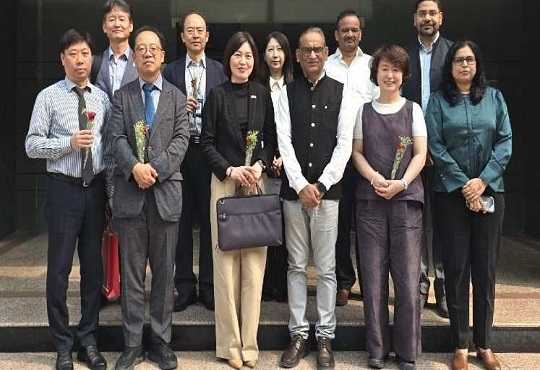
A delegation representing five South Korean institutions visited India on November 2 and 3, 2026, to explore student recruitment and academic partnerships. The delegation included Yeungjin University, Seojeong University, Dong-Eui Institute of Technology, Chungbuk Health and Science University and Mokpo Science University.
Also read: Dentistry Career Paths to Consider after BDS
On November 3, the five institutions signed Memoranda of Understanding with Manipur Technical University. The agreements aim to support academic cooperation, technical training, student exchanges and Korean-language education. The delegation also held discussions with education officials in New Delhi to explore ways to introduce the programme to prospective Indian applicants.
The Korean Education Centre in India is expected to support awareness and language preparation. Discussions are also underway for a possible education expo in April or May 2027, ahead of the September intake. Students are advised to follow updates from participating institutions for confirmed admission dates, eligibility conditions, course details and application procedures.
Current Issue