World Youth Skills Day: Building Skills for a Shared Future
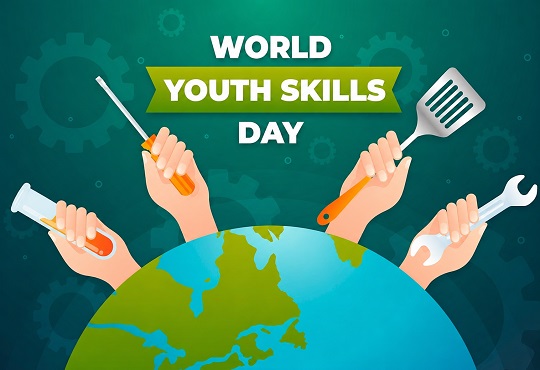 World Youth Skills Day, observed on July 15, highlights the importance of equipping young people with the technical, digital, and professional skills needed to thrive in an evolving global economy. As industries embrace Artificial Intelligence, automation, and emerging technologies, continuous learning and future-ready competencies have become essential.
The day serves as a reminder that investing in skill development empowers youth, enhances employability, fosters innovation, and drives sustainable economic growth worldwide. Here is what the Education leaders and Industry Experts had to say about World Youth Skills Day and its importance.
Professor Richard Grose, Provost, University of Liverpool
 Today's students are graduating into a fast-evolving global marketplace. They are the leaders and change-makers of tomorrow. Maximizing their potential demands teaching at the cutting edge of their respective fields and a focus on developing the skills required to excel in a dynamic work environment.
Key to this is partnership between universities and industry, ensuring curricula stay ahead of the latest advances in the workplace and that students have a range of opportunities to engage in workforce-aligned learning. We are proud to have a broad network of industry leaders with whom we work closely to maximize the student experience. From providing placement opportunities and real-world challenges to delivering expert lectures, industry input is a vital component of our offer. In return, we develop high-quality, work-ready graduates, ready to make a positive impact from day one.
Abhishek Sarmah, Head of Corporate Strategy and Strategic Marketing, ESG and CSR, Delta Electronics India
 The future of work isn't some distant conversation - it is happening right now, evolving faster than most institutions can keep pace with. We believe skilling can no longer be treated as a one-time intervention. It has to be a continuous, living bridge between industry and academia. Young professionals entering the workforce need far more than static technical know-how; they need resilience, systems thinking, and the agility to learn as the ground shifts beneath them.
Vishal Khurma, Group CEO, Woxsen University
 If students are outsourcing their thinking to AI, universities have already failed them. Most are quietly turning students into AI's assistants and calling it an education. In my opinion, that's a catastrophic mistake. Classrooms must reflect real industry problems, case studies and project assignments and not passive lecture halls. Critical thinking cannot be outsourced. Ethical judgment cannot be automated. Resilience cannot be downloaded. The new currency is the ability to think, adapt, and question the very tools you use for sustained lifelong learning.
Dr. Anand Jacob Verghese, Chairman, Hindustan Group of Institutions & Chancellor, Hindustan Institute of Technology and Science
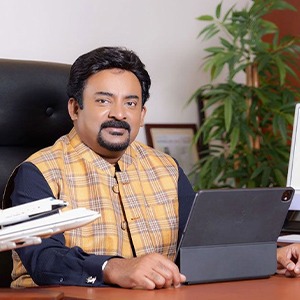 The conversation around youth skills must move beyond employability to adaptability. As technology continues to reshape industries at an unprecedented pace, the ability to learn, unlearn and relearn will define long-term success.
This calls for a stronger partnership between academia, industry and policymakers to create learning ecosystems that combine technical expertise with critical thinking, creativity, ethical leadership and real-world problem-solving.
Digital transformation is not merely changing the way we work; it is redefining the skills we value. Equipping young people with the mindset and capabilities to thrive in this evolving landscape is essential to building an innovative, inclusive and globally competitive workforce.
Krishna Sai Tanneeru, Chief Information Officer - Information Technology, Matrix Pharmacorp
 For years, we have measured learning by what people know. I believe the next decade will measure it by how quickly they can learn something new, question what they already know, and apply that knowledge in unfamiliar situations. What is actually needed is the ability to learn, unlearn, and relearn continuously.
Every industrial revolution changed the way people worked. The AI revolution is different because it is beginning to change the way we think, decide, and create. As knowledge becomes instantly accessible and intelligence increasingly augmented, technical expertise alone will no longer be enough.
When knowledge becomes a commodity, human judgment becomes the premium. The ability to ask the right questions, make ethical decisions, collaborate across disciplines, and create value for society will become more important than simply having the right answers.
This is why the conversation must shift from preparing students for their first job to preparing them for a lifetime of reinvention and shared progress. In a world where change is exponential, education cannot remain linear. Learning must become more experiential, interdisciplinary, and closely connected to industry, equipping learners with the skills and mindset needed to build a more resilient, inclusive, and shared future.
Dr. B.K Chakravarty, Dean, School of Design Innovation, Mahindra University
 Skills for a Shared Future demands far more than preparing students for their first job, it requires preparing them to solve problems that do not yet exist. Future-ready graduates must combine technological competence with creativity, empathy, critical thinking, sustainability and an entrepreneurial mindset.
This calls for a new model of education where experiential learning, interdisciplinary collaboration, and strong industry partnerships become the norm rather than the exception. As digital transformation reshapes every sector, continuous learning and adaptability will be the defining skills of the future.
We believe education must integrate academic rigour with real projects from industry, enabling students not only to succeed in a rapidly evolving global workforce but also to become innovators and responsible leaders who create meaningful impact for society.
Abhishek Sharma, Chief Operating Officer, Victoria University India
 True empowerment lies in reimagining education to meet the demands of an unpredictable future. This requires learning models that prioritize deep, focused skill development over rote memorization.
By fostering continuous learning and strengthening real-world collaboration between education and industry, institutions can ensure that students are not merely passive recipients of knowledge but become highly adaptable, future-ready professionals. Equipping young people with these essential skills is fundamental to building a shared future, giving them the agility to thrive, lead, and innovate in an evolving global workforce.
Bibek Bhattacharya, Assistant Professor, Indian Institute of Management, Ahmedabad
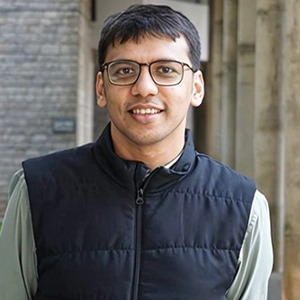 As we prepare young people for the future of work, we often emphasize digital skills, AI, and emerging technologies. While these are undoubtedly important, an equally critical lesson is that technology alone rarely creates value.
The benefits organizations derive from digital transformation are often contingent on the people who use it and the organizational politics that shape its adoption. Even the most sophisticated technological solutions can fail if they overlook incentives, power dynamics, resistance to change, or the everyday realities of different stakeholders.
Educational institutions should therefore encourage students to think beyond technical solutions and develop the ability to understand organizations as social systems. Future professionals must learn to view challenges through the perspectives of employees, managers, customers, and leaders alike.
This combination of technological competence with organizational empathy and systems thinking will be essential for building solutions that are not only innovative but also practical, scalable, and impactful.
Srinivas Nandigam, Managing Director, GCC, Advance Auto Parts India
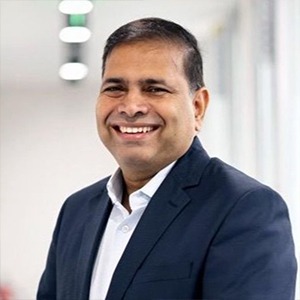 The future of work will be shaped by how effectively we prepare young people to learn, adapt, and lead in an increasingly digital economy. As Global Capability Centers take on a larger role in driving innovation and enterprise transformation, there is a growing need for talent that combines strong technical expertise with sound judgement, creativity, and the ability to solve complex business challenges.
This calls for deeper collaboration between academia and industry so that learning reflects the realities of a constantly evolving modern workplace. Digital technologies will continue to redefine every profession, making continuous learning an essential mindset rather than a career milestone.
By investing in skills that are relevant, practical, and future focused, we can empower the next generation to create meaningful impact for businesses, communities, and society.
Dr. Pushpendra Singh, Project Director ANNAM.AI, IIT Ropar
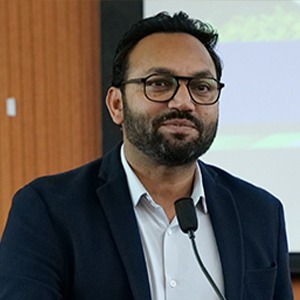 Future-ready talent requires an ecosystem where education, industry collaboration, and digital transformation, continuous learning goes hand in hand, and as India prepares for the future, the most valuable skill we can equip youngsters with is the ability to apply technology to solve real-world challenges. One of the fields that offers the most meaningful opportunity to put these skills into action is Agriculture. AI and other digital technologies can help young innovators to solve challenges in farming, climate change & food security, which will help them not only for the jobs of tomorrow but to create solutions that have lasting societal impact. It is our duty to empower the youth of today with the right skills in order to build a more inclusive, sustainable, and technology-driven India for the future.
Svetlana Knyazeva, Senior Human Resources Business Partner - Consulting International at International SOS
 One of the biggest mistakes we can make today is to think that we can prepare young people for the future simply by teaching them a set of currently relevant skills. The world is changing too quickly, and the skills that seem critical today may become basic or even lose their relevance in just a few years.
Over the years working in HR, I have seen that the people who grow and succeed are not always those with the most knowledge, but those who remain curious, ask questions, adapt, and are willing to keep learning.
Education should not try to predict a single profession of the future. Its role is to help people develop the ability to learn, think critically, and confidently navigate change.
At the same time, we need to rethink our relationship with technology and AI. We have access to more tools than ever before, but there is also a risk of becoming too dependent on ready-made answers, copying, accepting, and moving on without deeper thinking. The real skill is learning how to use technology as a partner that enhances human potential, not as a replacement for curiosity and independent thinking.
The future will belong to those who can continue learning faster than the world around them changes.
Prof. Michelle Jones, Executive Dean and Director, University of Bristol MEC
 Future-ready skills are essential for empowering young students to navigate a rapidly evolving global economy and contribute meaningfully to society. Preparing the workforce of tomorrow requires a strong focus on developing our distinctly human skills such as critical thinking, creativity, empathy, influence and dealing with uncertainty alongside digital fluency that align with the changing needs of industries.
Closer collaboration between education institutions and industry is key to bridging the gap between learning and employability. By bringing real-world insights into classrooms, encouraging innovation-driven active learning, and creating opportunities for practical exposure, young people can be better prepared to address emerging challenges and opportunities. Continuous learning and upskilling will remain fundamental to building a resilient, agile, and future-ready workforce.
Shilpa Sharma, HR Director, People & Culture, TELUS Digital
 The future of work will be defined by the ability to continuously learn, adapt, and collaborate with technology. While AI and automation are rapidly transforming industries, the skills that will differentiate tomorrow's workforce are uniquely human - critical thinking, creativity, empathy, ethical decision-making, and resilience. Bridging the gap between academia and industry is no longer optional; it is a shared responsibility to ensure young talent is equipped with both digital fluency and practical, real-world experience.
Dr. Sanjay Gupta, Vice Chancellor at World University of Design
 World Youth Skills Day is a reminder that the most valuable skills of the future will not simply be technical. They will be deeply human. As artificial intelligence automates routine tasks and even augments specialised knowledge, the real differentiators will be creativity, critical thinking, empathy, ethical judgement and the ability to solve complex problems across disciplines. The jobs of tomorrow will increasingly belong to those who can imagine possibilities, design meaningful experiences and translate ideas into innovations that improve lives.
Piyush Gupta VP – India, APAC & Middle East, Vultr
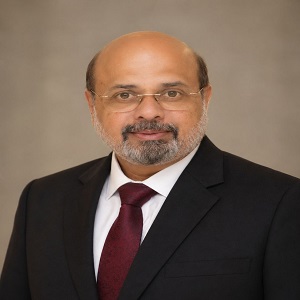 India is entering a defining phase of its AI journey, where competitive advantage will come less from having access to AI, and more from how quickly organisations can build, deploy and scale it. The country has the talent, developer ecosystem, and ambition to lead the next wave of AI innovation, but sustaining that momentum requires accessible, high-performance cloud infrastructure. As AI workloads become more compute-intensive, businesses need platforms that offer performance, flexibility and global reach without adding complexity. The next wave of AI breakthroughs will come from democratising access to advanced infrastructure, which will enable innovation to emerge from every corner of India's technology ecosystem.
Current Issue