How Constant Upskilling Defines the Future of Medical Training
 “Medicine is a science of uncertainty and an art of probability,” said Sir William Osler, one of the founding fathers of modern medicine. His words ring truer today than ever before. The pace of discovery in medicine is relentless with what was cutting-edge a decade ago, outdated today. In this dynamic environment, the only constant for a medical professional is learning.
The modern-day clinician is not just a healer but also a researcher, data analyst, communicator, and sometimes even a legal expert. The idea of lifelong learning in medical education is not merely an aspiration, it’s an ethical responsibility.
The human body remains the same, but our understanding of it evolves every day. What doctors once knew as absolute truth can be rewritten overnight by a new study, a genetic discovery, or an unexpected outbreak. Every year, we discover new information about old diseases, identify newer pathogens, and introduce advanced drugs and therapies.
Take tuberculosis, for instance - a disease as old as civilization itself. While the basic pathology remains, recent advances in drug-resistant TB management, molecular diagnostics, and vaccine research have completely transformed treatment strategies. At the same time, newer diseases continue to challenge our understanding of health and illness. From emerging viral infections like COVID-19, Nipah to lifestyle-related epidemics such as obesity and metabolic syndrome, the modern doctor must be ready to respond to conditions that did not even exist in textbooks a few decades ago.
Technology as a Catalyst
Digitization has transformed healthcare delivery. From electronic medical records (EMRs) to teleconsultations, AI-based diagnostics, and DNA microarray technology, today’s practitioners must be as comfortable with data as they are with diagnosis.
For instance, the use of theranostics, where therapy is tailored based on diagnostic information is revolutionizing cancer care. Similarly, CAR-T cell therapy, a cutting-edge form of immunotherapy, has opened new horizons in treating blood cancers and is now being explored for solid tumors. Understanding such advanced treatments requires not only clinical acumen but also familiarity with biotechnology, pharmacogenomics, and data analytics.
Moreover, today’s doctor must also understand the economics and legalities of healthcare. From managing costs and resource allocation to navigating medico-legal frameworks and patient rights, modern medicine demands far more than scientific knowledge. Health economics helps clinicians make informed, ethical, and cost-effective choices, while legal awareness safeguards both patients and practitioners.
Barriers to Upskilling
Despite its importance, lifelong learning faces real-world barriers. Time constraints, professional burnout, and the egoistic belief of “knowing it all” often hold practitioners back. Some resist change even when confronted with scientific evidence, a dangerous mindset in an evidence-driven field. The biggest challenge is not a lack of opportunity but resistance to change. Medicine rewards curiosity, humility, and adaptability.
Self-reflection plays a crucial role in overcoming these barriers. Simple yet powerful questions like “What went well? What didn’t? How can I do it better next time?” help physicians refine their practice. Many institutions now encourage doctors to document these reflections formally. Simulation labs equipped with VR and task trainers even allow repetitive practice and objective skill measurement - an approach that bridges theory with hands-on expertise.
Evolving Learning Methods
What is really exciting is how medical education is breaking down walls. It is no longer just doctors talking to doctors. Today’s physicians are learning from all kinds of experts - statisticians who validate research, finance professionals who make care cost-effective, biomedical engineers designing advanced tools, and data scientists turning raw information into life-saving insights. Everyone brings something unique to the table, and the result is better, more holistic care for patients.
The Role of Mentors
Behind every great learner is a mentor who ignited their curiosity. In medicine, mentors act as neural beacons, guiding young professionals through uncertainty. They connect mentees to networks, nominate them for opportunities, and model the art of reflective practice.
“Mentorship is the hidden curriculum of medical education. While textbooks teach science, mentors teach the humanity of medicine.”
A good mentor doesn’t just answer questions - they help students learn how to ask better ones. They encourage self-directed learning, where learners identify their own knowledge gaps and actively seek solutions.
Unlearning and Relearning: The Future of CPD
Continuous Professional Development (CPD) now demands not just learning new skills but unlearning outdated ones. Surgery offers a powerful example. Procedures have evolved from open surgery to laparoscopic and now to robotic-assisted surgery. Surgeons have had to constantly relearn techniques, adapt to new instruments, and trust technology while retaining their human judgment.
Similarly, medicine itself is moving toward predictive algorithms driven by big data. AI systems can now anticipate disease risks, recommend interventions, and even assist in diagnosis. Yet, this raises a paradox - will overreliance on technology erode clinical reasoning? To my mind, as AI takes over routine decision-making, the challenge will be to ensure that physicians remain active thinkers, not passive operators.
Curricular Reforms and the Institutional Role
Recognizing this paradigm shift, many medical curricula have begun integrating AI, bioethics, health economics, medical audits, and data analytics. These additions prepare students not just for clinical excellence but also for leadership in a tech-driven healthcare world.
Institutions now use programmatic metrics to assess engagement, learning metrics to gauge knowledge application, and institutional metrics - like alumni success - to measure long-term impact. A college’s pride lies not just in producing good doctors but in nurturing lifelong learners.
Measuring the Impact of Lifelong Learning
While lifelong learning is a deeply personal commitment, its effectiveness can and should be measured. Institutions today are moving beyond traditional examinations and looking at structured ways to evaluate whether their programs are truly driving growth and change among learners.
Programmatic Metrics evaluate how effectively upskilling programs are designed and delivered. They measure participation rates, engagement levels, and the overall uptake of learning initiatives - essentially assessing whether the opportunities offered are reaching and resonating with healthcare professionals.
Learning and Transfer Metrics assess whether new knowledge is being meaningfully applied in practice. It’s not enough to attend a workshop or complete a course; the real test lies in whether those insights translate into improved clinical decision-making, better patient outcomes, or more efficient teamwork in the hospital environment.
Finally, Institutional Metrics provide a broader, long-term view. They reflect how well an organization fosters a culture of continuous learning and are often measured through alumni engagement, research contributions, and the professional achievements of graduates. In many ways, they are a mirror of an institution’s reputation - evidence that it not only imparts knowledge but also instills the spirit of lifelong curiosity.
Together, these metrics create a 360-degree framework for assessing growth - from individual learning to institutional excellence - ensuring that the pursuit of knowledge remains both meaningful and measurable.
Ultimately, constant upskilling is not about collecting certificates - it is about cultivating a mindset. A mindset that values curiosity over complacency, adaptability over arrogance, and reflection over routine. The goal is not to master medicine once, but to keep mastering it every day.
About the Author:
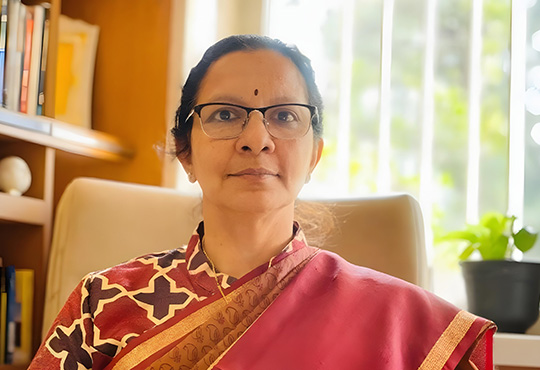
Dr. Arcot Rekha, is a highly accomplished General Surgeon (MS, FRCS) and distinguished academic leader with extensive experience in medical administration and education. She currently holds the position of Dean at Dr. DY Patil Medical College, Hospital and Research Centre, Pimpri, Pune, and has previously served as Dean, Dean Academics, and Associate Dean at multiple prestigious institutions, including the Apollo Institute of Medical Sciences and Research, Sri Ramchandra Medical college and Saveetha University, etc
Current Issue