Future Skills for Managers: What Employers Will Demand by 2030
Why the Next Decade Will Redefine Leadership More Than the Last Fifty Years
For over a century, management has been built on a familiar foundation: experience, hierarchy, control, and decision authority. By 2030, that foundation will be largely obsolete. Employers are not quietly preparing for this shift - they are already living it. Artificial intelligence is absorbing routine decisions, data is overwhelming judgment, workforces are younger and more vocal, and crises arrive without invitation. In this environment, the future manager will not be the most knowledgeable person in the room, but the one best equipped to lead when the room itself is unstable.
The question employers are now asking is no longer who can manage best? But who can remain human, credible, and decisive when machines do most of the thinking?
When AI Takes the Wheel, Humanity Becomes the Advantage
As AI systems increasingly handle scheduling, forecasting, optimisation, and even hiring recommendations, managerial differentiation will shift decisively toward what machines cannot replicate. The high-performing leader of 2030 will not compete with algorithms on speed or precision. Instead, they will excel at judgment under ambiguity, emotional intelligence, and moral reasoning.
Employers will favour managers who can read a room, sense unspoken resistance, and navigate contradictions without rushing to simplistic answers. The ability to inspire trust, hold uncertainty without panic, and make values-based decisions will define leadership quality. In an era of intelligent automation, these once-undervalued human capabilities will become the rarest and most prized assets in organisations.
Data Is Power - But Only If Managers Can Think With It
Data may be the new corporate currency, but by 2030, data illiteracy will be a leadership liability. Many organisations already suffer from an uncomfortable paradox: abundant analytics, but poor interpretation. Managers who rely blindly on dashboards or defer thinking to specialists slow organisations down and dilute accountability.
Employers will demand leaders who can interrogate numbers, question assumptions embedded in models, and translate analytics into strategic judgment. This does not mean every manager must code or build algorithms. It means they must be fluent enough to challenge data, contextualise insights, and recognise when numbers obscure more than they reveal. Competitive advantage will belong to organisations where managers combine analytical fluency with critical thinking - not where data is worshipped uncritically.
Behaviours Companies Will Quietly Stop Tolerating
As Gen Z and AI-native professionals become the dominant workforce, certain management behaviours will lose legitimacy - quickly and irreversibly. Authoritarian leadership, performative authority, emotional distance, and information hoarding will no longer be excused as “experience.” Younger employees expect transparency, psychological safety, and meaningful dialogue, not command-and-control supervision.
By 2030, employers will stop tolerating managers who equate leadership with dominance or hierarchy. Instead, credibility will come from accessibility, listening ability, and the capacity to engage people as thinking contributors rather than controllable resources. Managers who cannot adapt their behaviour will not merely struggle to retain talent; they will struggle to remain relevant.
Leading Teams That Are No Longer Fully Human
One of the most underappreciated shifts ahead is this: managers will increasingly lead teams composed of both humans and autonomous AI agents. Algorithms will recommend actions, predict outcomes, and sometimes execute decisions independently. This will fundamentally alter the nature of oversight.
The future manager’s role will be less about supervision and more about orchestration. Human team members will require empathy, coaching, and contextual understanding. AI systems will require governance, calibration, and ethical control. Employers will value managers who can decide what should be automated, what must remain human, and how accountability is maintained when outcomes are co-created by people and machines. Leadership will mean governing complexity, not managing tasks.
Crisis Is No Longer an Exception - It Is the Job
By 2030, stability will be the exception, not the norm. Fragile supply chains, geopolitical volatility, climate disruptions, and rapid technological shifts will make crisis management a permanent leadership condition. Employers will prioritise managers who can think in scenarios, detect weak signals early, and act decisively without waiting for certainty.
Traditional operational excellence will matter less than anticipatory judgment and composure under pressure. Leaders will be evaluated on how they communicate during uncertainty, how quickly they recalibrate strategy, and how effectively they prevent fear from paralysing teams. The most valued managers will not be those who avoid crises, but those who navigate them with clarity and confidence.
Ethics Moves from Policy to Practice
Ethical leadership in 2030 will no longer be about compliance manuals or annual training sessions. It will be lived daily, at the intersection of technology, power, and human impact. Surveillance tools, predictive analytics, and algorithmic decision systems will place extraordinary authority in managerial hands.
Employers will expect managers to exercise moral judgment, not hide behind systems. Ethical leadership will mean questioning what technology enables versus what responsibility demands. Managers will be judged by how they handle data privacy, algorithmic bias, and digital dignity - often in situations where there is no clear rulebook. Moral courage, not procedural adherence, will define leadership integrity.
Learning Velocity Becomes the New Promotion Currency
Perhaps the most unsettling reality for today’s leaders is this: experience alone will no longer guarantee advancement. By 2030, the half-life of managerial skills will be dramatically shorter. Employers will care less about how long someone has led and far more about how fast they can learn.
Learning velocity - the ability to unlearn outdated assumptions, absorb new knowledge, and apply it rapidly - will become the primary criterion for leadership selection. Managers who remain curious, experiment without ego, and learn alongside their teams will outpace those who rely on legacy expertise. In the next decade, adaptability will outweigh tenure.
The Real Test of Leadership
The manager of 2030 will not succeed by controlling more, knowing more, or working harder. They will succeed by thinking better under pressure, acting ethically in technologically complex environments, and learning faster than disruption unfolds. In a world where machines grow smarter every day, employers will ultimately seek something machines cannot provide: judgment, courage, and humanity.
That is not the end of management. It is its most demanding reinvention.
About the Author:
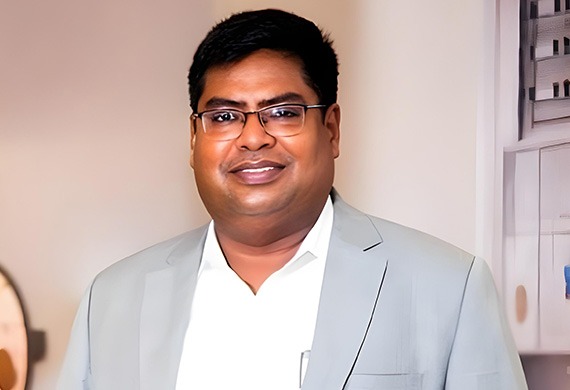
Dr. Praveen Kumar is the Dean, Faculty of Management, at SRM Institute of Science and Technology (SRMIST), Ramapuram Campus, Chennai. An experienced academic leader and management educator, he has over two decades of engagement in business education, leadership development, and institutional strategy.
Current Issue
.jpg)