St. Xavier's College Jaipur: Offering Holistic Educational Experience Focused On Learning, Leadership, And Responsibility
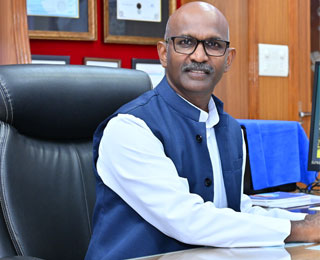
Dr (Fr.) Arokya Swamy SJ, Principal, St. Xavier's College Jaipur
India’s higher education sector is undergoing a rapid transformation, focusing on bridging the gap between academics and employability while fostering innovation, sustainability, and digital inclusivity. The growing emphasis on quality education that combines knowledge, ethics, and adaptability is redefining the role of colleges. The NEP 2020 envisions institutions as spaces that promote multidisciplinary learning, integrated research, and character development as core elements of academic excellence.
Colleges are now evolving into centers of innovation and integrity, equipping students to think critically, embrace technology, and address global challenges such as sustainability and equity. A balanced approach that connects technology with values, research with real-world impact, and global perspectives with local relevance is essential to building a dynamic and inclusive learning ecosystem.
Against these challenges, St. Xavier’s College Jaipur presents a model of how value-based education can evolve within contempo¬rary academic and social expectations. Established in 2010 under the Jaipur Xavier Educational Association and affiliated with the University of Rajasthan, St. Xavier’s College Jaipur is a Christian minority, co-educational institution known for its academic integrity and community focus. Accredited ‘A’ Grade by NAAC and ISO 14001:2015 certified, the college operates under the Jesuit motto “Competence, Character, and Compassion”.
Its 25-acre eco-friendly campus at Nevta–Mahapura Road houses undergraduate, postgraduate, and doctoral programs supported by ICT-enabled classrooms, digital resources, and research-oriented facilities. The college emphasizes inclusive education, blending academic structure with social engagement and ethical development. The leadership team comprising Principal Dr (Fr.) Arokya Swamy SJ, Vice Principal Dr (Fr.) Raymond Cherubin SJ, Dean Research Dr (Fr.) M. Amaldass SJ, and Campus Administrator Fr. Pradeep Indwar SJ continue the Jesuit tradition of education.
Academic Structure & Learning Environment
The institution offers nine undergraduate, three postgraduate, and two Ph.D. programs across sciences, arts, and commerce. The curriculum is designed to promote coherent and multi-dimensional thinking, learning through experience, creative learning, and early engagement in research activities.
Beyond classroom instruction, the college promotes skill development through seminars, fieldwork, workshops, and internships. The Xavier Centre for Career Advancement (XCCA) is a distinct initiative that integrates preparation for competitive examinations, including Civil Services, alongside degree programs. The dual model gives students opportunities to align their career ambitions with academic learning within the same campus environment.
”At a time when higher education faces scrutiny over relevance and adaptability, St. Xavier’s College Jaipur offers a compelling model, rooted in tradition yet responsive to contemporary challenges”
Research, Innovation, and Sustainability
The institution maintains a clear focus on research-led learning. “Our Lab to Land initiative connects classroom research with practical outcomes, encouraging students and faculty to address issues of sustainability, agriculture, and entrepreneurship”, says Dr (Sr.) Ligimol Louis CMC, Head, Department of Science at St. Xavier’s College Jaipur. Guided by Krishnendu Acharya, University of Calcutta, a globally recognised scientist ranked among Stanford University’s top 2 percent of Scientists, this initiative translates academic inquiry into field applications.
In addition, the Sustainable Mycofarm Project, which is Rajasthan's first sustainable, college-level mushroom farm, is a model of both applied learning and environmental stewardship. The Centre for Sustainability employs organic food production, waste management, and renewable energy to engage the campus in eco-centric education more effectively. Both these initiatives also envision providing an alternative source of income for farmers and supporting budding agripreneurs from the institution.
The campus has been coined "Green Desert," which signifies responsible management of resources, with 25 acres of flourishing ecosystem and over 4,000 trees planted, all within the dry ecosystem in Rajasthan. The college engages in local and global initiatives to advance the UN Sustainable Development Goals and conducts environmentally con¬scious research.
Experiential Learning through Modern Laboratories
Under the guidance of Dr (Sr.) Ligimol Louis CMC, the Science Department emphasizes experiential learning through modern laboratories in Physics, Chemistry, Botany, and Zoology and Maths. “Our students engage in faculty-guided projects, mini-research assignments and collaborative studies connecting science to social and environmental needs”, says Dr (Sr.) Ligimol Louis.
The Department of Computer Science, led by Dr Arpita Banerjee, aligns its curriculum with the rapid evolution of digital technology. Courses in artificial intelligence, data science, and cybersecurity are structured around problem-solving and practical applications. Assignments focused on research, hackathons, and workshops with industry participation help students connect theory to innovation. Facilities such as R&D cells, high-performance computer labs, and incubators for entrepreneurship underpin the learning of applied technology and the development of the next-generation professionals in the digital world.
Integrating Theoretical Foundations with Experiential Learning
The Arts faculty brings together disciplines that explore human behaviour, governance, communication, and culture. The Economics Department trains students in analytical reasoning and policy interpretation, empowering them to drive informed decisions for a more equitable future. The Department of English merges literary studies with creative writing, digital media, and impactful communication training, preparing students for diverse cultural and professional landscapes where storytelling and expression matter.
The Political Science Department fuels civic participation through parliaments, policy debates, and experiential learning, shaping governance. The Department of Psychology combines academic research with practical counselling, promoting mental health literacy and applied practices to make a difference in people's lives through empathy and Science. Complementing their academic strengths, the departments actively organise a wide range of events - workshops, seminars, expert lectures, film screenings, field engagements, and annual fests - that foster holistic development and ex-periential learning.
These events address contemporary and socially relevant issues, encouraging students to think critically, engage in dialogue, and apply their knowledge beyond the classroom. The Departments regularly invite distinguished scholars, industry experts, and practitioners to broaden students’ perspectives. Notably, the Department of English also functions as a recognised research centre, hosting research scholars and promoting an environment of inquiry, innovation, and advanced academic work.
The departments take pride in their alumni who have progressed to join prestigious institutions and secure positions in multinational companies.Across these departments, transdisciplinary collaboration occurs through joint seminars and community-based projects focusing on sustainability, gender equity, and social justice because inclusivity matters.
Holistic Development & Global Exposure
The institution focuses on student development programs under NCC, NSS, the Swachhta Action Plan (SAP), and Rovers–Rangers, which engage students in service learn¬ing, environmental initiatives, and civic outreach. By collaborating with Unnat Bharat Abhiyan and the Innovation & Incubation Cell, students participate in village development programs, entrepreneurial projects, and innovation challenges.
This approach connects learning and social responsibility, ensuring that graduates leave not only with degrees but with a sense of civic and environmental accountability. The campus also supports a range of cultural, literary, and athletic activities, with facilities for major sports and regular inter-collegiate tournaments promoting teamwork and inclusivity.
With 70 national and 3 international collaborations, the institution is facilitating research and cultural exchange partnerships. Its partnerships with Nanzan University and Sophia University in Japan reflect the commitment to developing cross-cultural academic opportunities. In addition to meaningful opportunities for bilateral research, student exchange, and curriculum enrichment, these partnerships will also allow students to experience, develop, and implement academic work across cultures.
St. Xavier’s College Jaipur is redefining professional readiness through strong industry partnerships and research collaborations. These networks expose students to real-world academic and economic shifts, preparing them for advanced studies and global careers. From internships and live projects to international exchanges, students engage with evolving challenges beyond the classroom. The institution, through its innovative pedagogies, aims to nurture professionals who can think critically, adapt globally, and lead responsibly.
Future Pathway
St. Xavier’s College Jaipur is poised for a major transformation as it prepares to transition into Xavier University Jaipur (XUJ), signalling its ambition to expand academic and research horizons. The proposed university will integrate liberal arts with technology-driven disciplines, launching new schools in Communication, Engineering and Technology, Biosciences, Design, and Education. This phased evolution includes infrastructure growth, interdisciplinary learning, and deeper industry-academia ties. With a sharpened focus on research, innovation, and social engagement, XUJ aims to emerge as a vibrant academic hub in Rajasthan.
At a time when higher education faces scrutiny over relevance and adaptability, St. Xavier’s College Jaipur offers a compelling model, rooted in tradition yet responsive to contemporary challenges. The college has positioned itself as a key stakeholder in Rajasthan’s evolving academic landscape through its focus on research, sustainability, and inclusive growth. As it prepares to transition into Xavier University Jaipur, the institution continues to redefine higher learning—not just as a measure of achievement, but as a commitment to reflection, responsibility, and lifelong pursuit of knowledge.
Colleges are now evolving into centers of innovation and integrity, equipping students to think critically, embrace technology, and address global challenges such as sustainability and equity. A balanced approach that connects technology with values, research with real-world impact, and global perspectives with local relevance is essential to building a dynamic and inclusive learning ecosystem.
Against these challenges, St. Xavier’s College Jaipur presents a model of how value-based education can evolve within contempo¬rary academic and social expectations. Established in 2010 under the Jaipur Xavier Educational Association and affiliated with the University of Rajasthan, St. Xavier’s College Jaipur is a Christian minority, co-educational institution known for its academic integrity and community focus. Accredited ‘A’ Grade by NAAC and ISO 14001:2015 certified, the college operates under the Jesuit motto “Competence, Character, and Compassion”.
Its 25-acre eco-friendly campus at Nevta–Mahapura Road houses undergraduate, postgraduate, and doctoral programs supported by ICT-enabled classrooms, digital resources, and research-oriented facilities. The college emphasizes inclusive education, blending academic structure with social engagement and ethical development. The leadership team comprising Principal Dr (Fr.) Arokya Swamy SJ, Vice Principal Dr (Fr.) Raymond Cherubin SJ, Dean Research Dr (Fr.) M. Amaldass SJ, and Campus Administrator Fr. Pradeep Indwar SJ continue the Jesuit tradition of education.
Academic Structure & Learning Environment
The institution offers nine undergraduate, three postgraduate, and two Ph.D. programs across sciences, arts, and commerce. The curriculum is designed to promote coherent and multi-dimensional thinking, learning through experience, creative learning, and early engagement in research activities.
Beyond classroom instruction, the college promotes skill development through seminars, fieldwork, workshops, and internships. The Xavier Centre for Career Advancement (XCCA) is a distinct initiative that integrates preparation for competitive examinations, including Civil Services, alongside degree programs. The dual model gives students opportunities to align their career ambitions with academic learning within the same campus environment.
”At a time when higher education faces scrutiny over relevance and adaptability, St. Xavier’s College Jaipur offers a compelling model, rooted in tradition yet responsive to contemporary challenges”
Research, Innovation, and Sustainability
The institution maintains a clear focus on research-led learning. “Our Lab to Land initiative connects classroom research with practical outcomes, encouraging students and faculty to address issues of sustainability, agriculture, and entrepreneurship”, says Dr (Sr.) Ligimol Louis CMC, Head, Department of Science at St. Xavier’s College Jaipur. Guided by Krishnendu Acharya, University of Calcutta, a globally recognised scientist ranked among Stanford University’s top 2 percent of Scientists, this initiative translates academic inquiry into field applications.
In addition, the Sustainable Mycofarm Project, which is Rajasthan's first sustainable, college-level mushroom farm, is a model of both applied learning and environmental stewardship. The Centre for Sustainability employs organic food production, waste management, and renewable energy to engage the campus in eco-centric education more effectively. Both these initiatives also envision providing an alternative source of income for farmers and supporting budding agripreneurs from the institution.
The campus has been coined "Green Desert," which signifies responsible management of resources, with 25 acres of flourishing ecosystem and over 4,000 trees planted, all within the dry ecosystem in Rajasthan. The college engages in local and global initiatives to advance the UN Sustainable Development Goals and conducts environmentally con¬scious research.
Experiential Learning through Modern Laboratories
Under the guidance of Dr (Sr.) Ligimol Louis CMC, the Science Department emphasizes experiential learning through modern laboratories in Physics, Chemistry, Botany, and Zoology and Maths. “Our students engage in faculty-guided projects, mini-research assignments and collaborative studies connecting science to social and environmental needs”, says Dr (Sr.) Ligimol Louis.
The Department of Computer Science, led by Dr Arpita Banerjee, aligns its curriculum with the rapid evolution of digital technology. Courses in artificial intelligence, data science, and cybersecurity are structured around problem-solving and practical applications. Assignments focused on research, hackathons, and workshops with industry participation help students connect theory to innovation. Facilities such as R&D cells, high-performance computer labs, and incubators for entrepreneurship underpin the learning of applied technology and the development of the next-generation professionals in the digital world.
Integrating Theoretical Foundations with Experiential Learning
The Arts faculty brings together disciplines that explore human behaviour, governance, communication, and culture. The Economics Department trains students in analytical reasoning and policy interpretation, empowering them to drive informed decisions for a more equitable future. The Department of English merges literary studies with creative writing, digital media, and impactful communication training, preparing students for diverse cultural and professional landscapes where storytelling and expression matter.
The Political Science Department fuels civic participation through parliaments, policy debates, and experiential learning, shaping governance. The Department of Psychology combines academic research with practical counselling, promoting mental health literacy and applied practices to make a difference in people's lives through empathy and Science. Complementing their academic strengths, the departments actively organise a wide range of events - workshops, seminars, expert lectures, film screenings, field engagements, and annual fests - that foster holistic development and ex-periential learning.
These events address contemporary and socially relevant issues, encouraging students to think critically, engage in dialogue, and apply their knowledge beyond the classroom. The Departments regularly invite distinguished scholars, industry experts, and practitioners to broaden students’ perspectives. Notably, the Department of English also functions as a recognised research centre, hosting research scholars and promoting an environment of inquiry, innovation, and advanced academic work.
The departments take pride in their alumni who have progressed to join prestigious institutions and secure positions in multinational companies.Across these departments, transdisciplinary collaboration occurs through joint seminars and community-based projects focusing on sustainability, gender equity, and social justice because inclusivity matters.
Holistic Development & Global Exposure
The institution focuses on student development programs under NCC, NSS, the Swachhta Action Plan (SAP), and Rovers–Rangers, which engage students in service learn¬ing, environmental initiatives, and civic outreach. By collaborating with Unnat Bharat Abhiyan and the Innovation & Incubation Cell, students participate in village development programs, entrepreneurial projects, and innovation challenges.
This approach connects learning and social responsibility, ensuring that graduates leave not only with degrees but with a sense of civic and environmental accountability. The campus also supports a range of cultural, literary, and athletic activities, with facilities for major sports and regular inter-collegiate tournaments promoting teamwork and inclusivity.
With 70 national and 3 international collaborations, the institution is facilitating research and cultural exchange partnerships. Its partnerships with Nanzan University and Sophia University in Japan reflect the commitment to developing cross-cultural academic opportunities. In addition to meaningful opportunities for bilateral research, student exchange, and curriculum enrichment, these partnerships will also allow students to experience, develop, and implement academic work across cultures.
St. Xavier’s College Jaipur is redefining professional readiness through strong industry partnerships and research collaborations. These networks expose students to real-world academic and economic shifts, preparing them for advanced studies and global careers. From internships and live projects to international exchanges, students engage with evolving challenges beyond the classroom. The institution, through its innovative pedagogies, aims to nurture professionals who can think critically, adapt globally, and lead responsibly.
Future Pathway
St. Xavier’s College Jaipur is poised for a major transformation as it prepares to transition into Xavier University Jaipur (XUJ), signalling its ambition to expand academic and research horizons. The proposed university will integrate liberal arts with technology-driven disciplines, launching new schools in Communication, Engineering and Technology, Biosciences, Design, and Education. This phased evolution includes infrastructure growth, interdisciplinary learning, and deeper industry-academia ties. With a sharpened focus on research, innovation, and social engagement, XUJ aims to emerge as a vibrant academic hub in Rajasthan.
At a time when higher education faces scrutiny over relevance and adaptability, St. Xavier’s College Jaipur offers a compelling model, rooted in tradition yet responsive to contemporary challenges. The college has positioned itself as a key stakeholder in Rajasthan’s evolving academic landscape through its focus on research, sustainability, and inclusive growth. As it prepares to transition into Xavier University Jaipur, the institution continues to redefine higher learning—not just as a measure of achievement, but as a commitment to reflection, responsibility, and lifelong pursuit of knowledge.
Current Issue
.jpg)