India, Russia Discuss Stronger Higher Education Cooperation
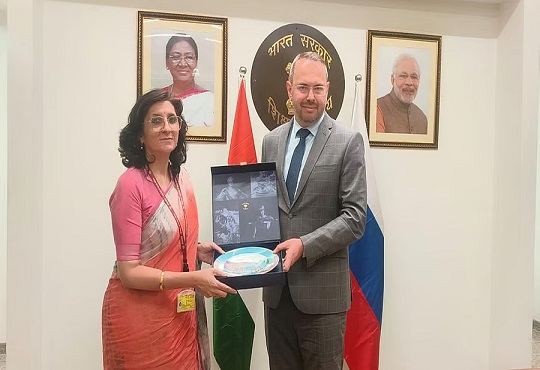
India and Russia seek to strengthen higher education cooperation through university partnerships, joint research, student mobility and faculty exchanges, while expanding collaboration in science, technology, medicine and other advanced fields.
India and Russia are looking to deepen cooperation in higher education, research and academic exchanges as both countries seek to expand institutional partnerships and create new opportunities for students and researchers. The discussions highlight the growing role of education and knowledge-sharing in the broader India-Russia strategic relationship.
The two sides are exploring ways to strengthen collaboration between universities and academic institutions, with emphasis on joint research, student mobility, faculty exchanges and institutional partnerships. Cooperation in science, technology and other advanced disciplines is also expected to gain greater attention as both countries work to align their higher education ecosystems with emerging global requirements.
Also read: IIM Kozhikode Recruitment 2026, Apply Online for 28 Posts
Russia has been seeking to expand its international education outreach, with Indian students representing an important component of its overseas student community. Russian Ambassador to India Denis Alipov has said Russia is committed to increasing the number of international students in the country to 500,000 by 2030. Russia currently hosts around 300,000 international students, including nearly 40,000 from India.
Academic collaboration between the two countries is already expanding across areas such as engineering, medicine, economics, governance and advanced technologies. Several Russian and Indian universities have established institutional partnerships involving student exchanges, internships, joint research and academic programmes. Medical education has emerged as another important area, with Russian institutions working with Indian universities on research and academic exchanges.
The two countries are also promoting language and cultural engagement as part of their education cooperation. Russian language centres have been established in several Indian cities, including Bengaluru, Thiruvananthapuram and Ahmedabad, reflecting growing interest in strengthening educational and people-to-people links.
Research collaboration is another key area of the partnership. India and Russia have maintained long-standing cooperation in science and technology, including joint work involving advanced research and technological development. Recent BRICS discussions have also highlighted the importance of expanding cooperation in science and education.
Also read: Building Careers in Cancer Therapies
The latest focus on higher education comes as both countries seek to broaden bilateral engagement beyond traditional areas. Stronger academic partnerships can support knowledge exchange, research capacity, student mobility and innovation while creating new pathways for Indian students to access Russian universities.
By strengthening university-to-university links and expanding opportunities for joint research and academic mobility, India and Russia aim to build a more comprehensive higher education partnership that supports innovation, talent development and long-term bilateral cooperation.
Current Issue