Higher Education Outlook 2026: Learning in the AI Era
Higher education across the world is entering a period of profound transformation. Rapid technological change is no longer a peripheral influence. It is actively shaping how we teach, learn, work, communicate, and even how we understand ourselves as social beings. Technology has moved beyond being an enabling tool to becoming a decisive force that is redefining socio-cultural norms and educational expectations. In this new reality, learning is no longer purely an individual cognitive activity; it is simultaneously personal, social, and deeply collaborative.
This transformation is not unique to India. Globally, universities are responding to a complex mix of forces that are reshaping higher education systems. Among the most significant are the needs for efficiency, rapid technological advances, evolving employer expectations, changing student aspirations, the growing emphasis on entrepreneurship and innovation, and an urgent global commitment to sustainable growth.
The need for efficiency is becoming unavoidable. Higher education institutions operate in an environment of constrained resources and rising expectations. The central challenge is to optimize the use of scarce financial, human, and physical resources while maximizing learning outcomes, research productivity, and societal impact. This calls for smarter governance, data-driven decision-making, and technology-enabled administrative systems.
Technological advances are the most visible drivers of change. Breakthroughs in information and communication technologies (ICT), biotechnology, genetics, and nanotechnology are transforming every discipline. Among these, ICT has a uniquely pervasive influence. From classrooms and laboratories to boardrooms and living rooms, digital technologies are reshaping how knowledge is created, disseminated, and consumed.
A historical view of industrial evolution, from steam power in the 18th century to electricity and automation, and now to microprocessor-driven systems, reveals a clear pattern. Each revolution replaced certain forms of labour while creating new demands for skills. Today’s Industry 4.0, powered by the Internet of Things and artificial intelligence, represents a qualitatively different shift that will transform both industry and higher education.
One of the most pressing challenges for universities is not whether students should use AI tools, but how they should be trained to use them wisely. The critical task is to develop students’ ability to evaluate AI-generated outputs, discern what can be accepted with confidence, and identify what requires deeper scrutiny. Equally important is faculty development. Teachers must become experts not only in their disciplines, but also in designing AI-enabled and AI-augmented pedagogies that enhance learning rather than replace thinking.
As technology reshapes work, future jobs will become increasingly cognitively complex and ethically demanding. Machines will handle much of the routine analysis and synthesis, leaving humans to make judgments that require contextual understanding, values, and responsibility. Universities must therefore prepare graduates to navigate ambiguity, make ethical decisions, and integrate knowledge across domains.
Finally, student expectations, especially those of Gen Z, are evolving rapidly. The question is no longer just “Will this degree get me a job?” Students are asking deeper questions: “How can I make the world a better place? How do we design a sustainable future? How can I innovate responsibly?” Higher education in 2026 must respond by aligning employability with purpose, innovation with ethics, and excellence with sustainability.
About the Author:
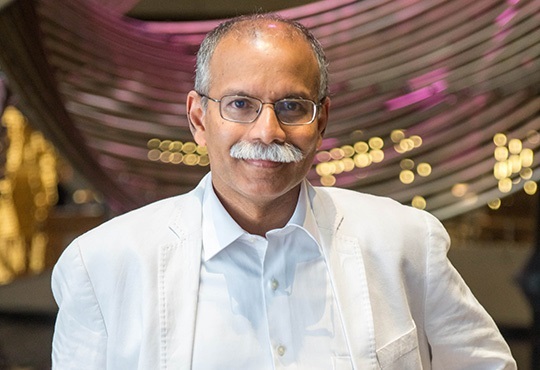
Dr. Nair, Vice Chancellor, Thapar Institute of Engineering & Technology has worked both in academia and industry and has a combined experience of more than 30 years in various industries. He has taught, consulted, researched and conducted executive and leadership development workshops in the US, India, Japan, the Netherlands, China, UK and South Korea, in companies such as Ericsson, Texas Capital Bank, Citi Bank, Hitachi, NEC, Kao, Alcatel-Lucent, Compucom, Genesys Labs, Pfizer etc.
Before joining LM Thapar School of Management, he was a Clinical Professor of Organization, Strategy and International Management and the Academic Director of the Leadership Center at the University of Texas at Dallas. He has a Ph.D. from the University of Twente in the Netherlands and a Doctor of Engineering (Dr. Engineering) from the University of Tokyo, Japan, an MBA from Heriot-Watt University in the UK and an M.Tech in metallurgical engineering from IIT, Kharagpur, India.
Current Issue